

Teach English in the UAE
Tax-free salary up to $5,500/month. Free housing or generous allowance. Return flights. Health insurance. The UAE is consistently ranked among the world’s highest-paying TEFL destinations — with Dubai’s global lifestyle and Abu Dhabi’s world-class institutions as the prize.
Why the UAE is one of the world’s best TEFL markets

The UAE consistently ranks alongside Saudi Arabia at the absolute top of global TEFL salary tables. Average monthly earnings of around 14,378 AED (~$3,900) are tax-free. International school positions run to AED 20,000–22,000/month (~$5,300–$6,000) for experienced, qualified teachers. Free or heavily subsidised housing, annual return flights, and comprehensive health insurance compress living costs to the point where monthly savings of $1,000–$3,000 are routinely achievable.
What separates the UAE from Saudi Arabia in practical terms: Dubai is substantially more open socially. Alcohol is available in licensed hotels, bars, and restaurants in Dubai and Abu Dhabi (not Sharjah). The dress code for foreigners in public is more relaxed. The entertainment infrastructure — restaurants, cultural venues, nightlife, sporting events — is extraordinary. For teachers who want Gulf-level salaries with a significantly more Western-compatible lifestyle, the UAE is the answer.
The honest qualifier: UAE positions are more competitive to secure than Saudi Arabia’s. The UAE’s Education Professional Licence (TLS system) is a genuine qualification hurdle — you must pass pedagogy and subject assessments before you can legally teach. Experience requirements are higher. First-time teachers typically cannot access top-tier positions. The financial rewards are exceptional, but the entry bar is set to match.
The regulatory framework: KHDA regulates private schools in Dubai; ADEK regulates Abu Dhabi; SPEA regulates Sharjah. All teachers in UAE schools must obtain the national Education Professional Licence via the Ministry of Education’s Teacher Licensing System (TLS). Your school manages the application, but you must pass the assessments. This is one of the most rigorous teacher licensing frameworks in the TEFL world.
The UAE’s English teaching job market

International schools
The UAE’s premium employer tier. Dubai and Abu Dhabi together host hundreds of international schools following British, American, IB, and other curricula. Salaries of AED 12,000–22,000/month (~$3,270–$6,000). Best benefit packages in the market. Require formal teaching qualification (PGCE, QTS, or state teaching licence) plus 2+ years of experience. Highly competitive, particularly in Dubai.
Government / public schools
Abu Dhabi’s ADEK operates one of the most significant public school recruitment programmes in the Middle East, placing foreign teachers alongside Emirati staff. Strong structured package, government backing, and professional development. AED 9,000–15,000/month. Require teaching licence and experience. Most placements are in Abu Dhabi and the Northern Emirates.
Private language schools
Language schools and training centres operate throughout Dubai, Abu Dhabi, and Sharjah. Teach adults, professionals, and students seeking Cambridge or IELTS preparation. More accessible than international schools; may accept TEFL certificate plus degree without formal teaching licence at some institutes. AED 8,000–14,000/month.
Universities
UAE university sector is significant: UAE University, Khalifa University, Zayed University, American University of Sharjah, New York University Abu Dhabi, and many others. EAP (English for Academic Purposes) and foundation-year English positions. Master’s degree strongly preferred. Excellent conditions with structured academic year.
Vocational colleges (HCT)
Higher Colleges of Technology (HCT) operate across the UAE, teaching Emirati students English and vocational skills as part of the national workforce development agenda. Government-backed. Strong salaries and benefits. Require teaching qualification and relevant expertise. A consistent, well-regarded option for qualified teachers.
Corporate / Business English
Dubai’s position as a global business hub generates significant corporate English demand from financial institutions, airlines (Emirates, Etihad), logistics companies, and tech firms. Premium rates of AED 200–400/hour for specialist trainers. Usually arranged through corporate training providers or as supplement to school position.
Ready to teach English abroad?
Browse TEFL Heaven’s full range of teacher placement programs — from Southeast Asia to Europe and Latin America.
What English teachers earn in the UAE
| Position type | Monthly (AED) | Monthly (USD approx.) |
|---|---|---|
| Language school / training centre | AED 8,000–14,000 | ~$2,180–$3,810 |
| Private school (qualified teacher) | AED 12,000–18,000 | ~$3,270–$4,900 |
| International school (experienced) | AED 15,000–22,000+ | ~$4,080–$6,000+ |
| Government / ADEK school | AED 9,000–15,000 | ~$2,450–$4,080 |
| University (EAP/foundation) | AED 11,000–18,000 | ~$3,000–$4,900 |
| HCT vocational | AED 12,000–17,000 | ~$3,270–$4,630 |
| Average across all types | ~AED 14,378 | ~$3,914 |
Exchange rate: AED is pegged to USD at approximately 3.67 AED per dollar — a stable, fixed rate. All salaries are tax-free. Free or subsidised housing, annual flights, and health insurance are standard across most employer tiers, making the real compensation value significantly higher than the nominal monthly figure.
Standard benefit package
Realistic monthly savings
- Language school: $700–$1,200/mo
- Private school (qualified): $1,200–$2,000/mo
- International school: $2,000–$3,500/mo
- Abu Dhabi (lower costs): +$200–$500 vs Dubai
Dubai costs more than Abu Dhabi. Cost of living roughly $2,700/month total in Dubai, $2,300 in Abu Dhabi, $1,500 in Sharjah.
Requirements to teach English in the UAE
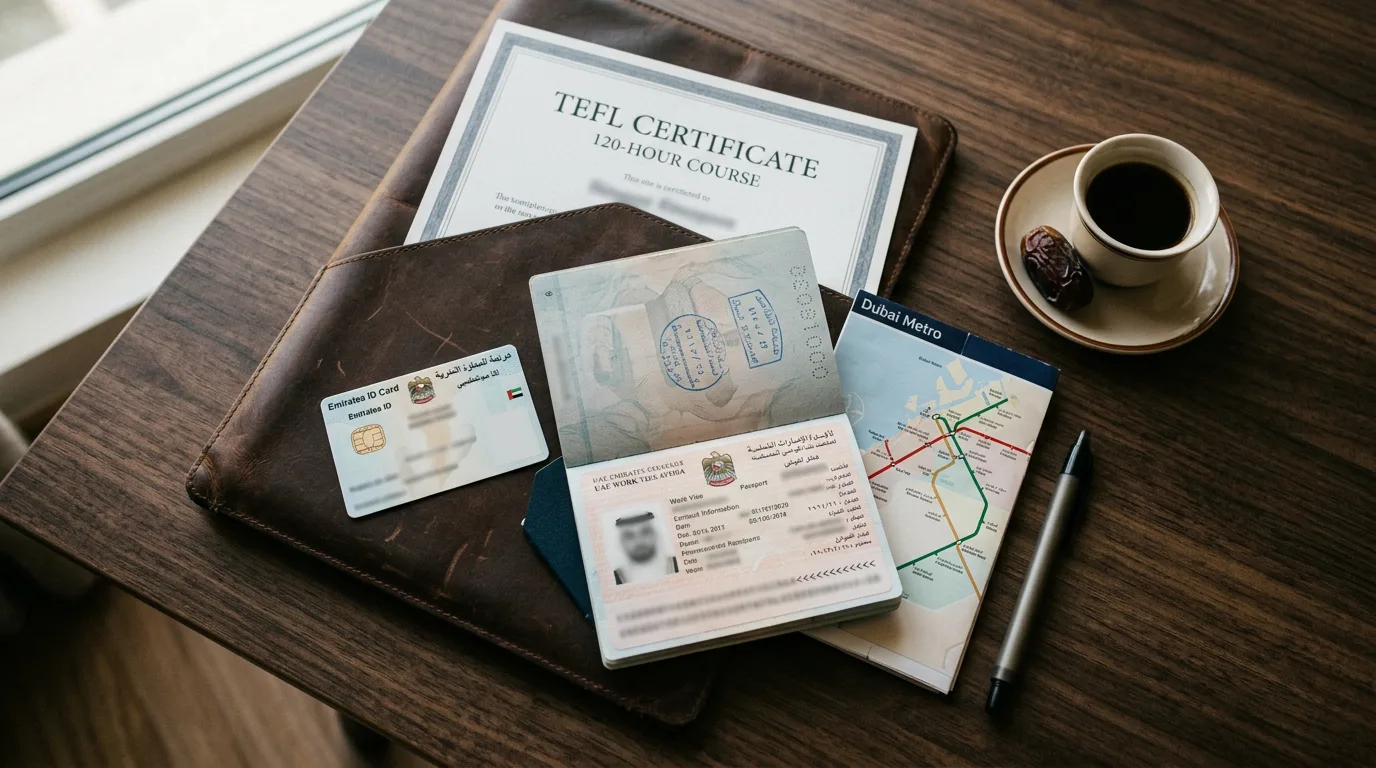
The UAE has one of the most rigorous qualification frameworks in the TEFL world. A bachelor’s degree is mandatory for all positions and legally required for the work visa. The national Education Professional Licence (TLS) adds pedagogy and subject assessments on top of your qualifications. These are the entry requirements by category.
Bachelor’s degree
Mandatory for all UAE teaching positions and a legal requirement for the work visa. Non-negotiable. Degree must be authenticated and attested through a multi-step process (home country → UAE embassy → UAE MOFA → KHDA/ADEK).
TEFL / CELTA (Level 5+)
The UAE market has moved beyond 120-hour online certificates as the standard. Most reputable schools and the Education Professional Licence process require Level 5 TEFL or CELTA. A 180-hour Level 5 qualification is the effective floor at most employer tiers in 2026.
UAE Education Professional Licence (TLS)
Mandatory for teaching in any UAE school. Obtained by passing pedagogy and subject assessments through the national Teacher Licensing System (TLS). Your school initiates and manages this process. KHDA handles Dubai; ADEK handles Abu Dhabi; SPEA handles Sharjah. Takes 6–12 weeks with complete documents.
Teaching experience
The UAE is not a first-timer’s market for top positions. International schools and ADEK public schools expect 2–5 years of classroom experience. Language schools are more accessible but still prefer candidates with demonstrable experience. Teachers with no classroom experience will struggle to access the best positions.
Native or near-native English
Native speakers (UK, USA, Canada, Australia, New Zealand, Ireland, South Africa) are strongly preferred, particularly for language schools. Non-native speakers with IELTS 7.5+ or equivalent proof of proficiency can teach at some institutions. International schools care less about native status and more about qualified teacher status.
Clean criminal record
Full background check required — apostilled national police clearance plus any countries lived in during the previous 5 years. Medical examination on arrival (HIV test, TB, general health). HIV-positive individuals cannot obtain UAE residence visas.
Visa and Education Professional Licence overview
The UAE combines the standard Gulf employer-sponsorship visa model with an additional education-specific licensing requirement that is unique to teachers. You cannot work as a teacher in the UAE without both a valid residence visa and an Education Professional Licence. Both are initiated by your employer.
✍ Residence visa process
- Entry permit issued by employer through GDRFA
- Medical examination + Emirates ID on arrival
- Residence visa stamped in passport
- Total: 6–12 weeks from job offer
- Employer handles all submissions and fees
🏫 Education Professional Licence (TLS)
- School submits your documents to KHDA / ADEK / SPEA
- You complete online pedagogy + subject assessments
- 3 attempts permitted per assessment; retake rules apply
- Licence issued as PDF; valid 3 years, renewed with CPD
- 6–12 weeks with complete documents
Full visa and licensing guide on the UAE Visa & Licensing page.
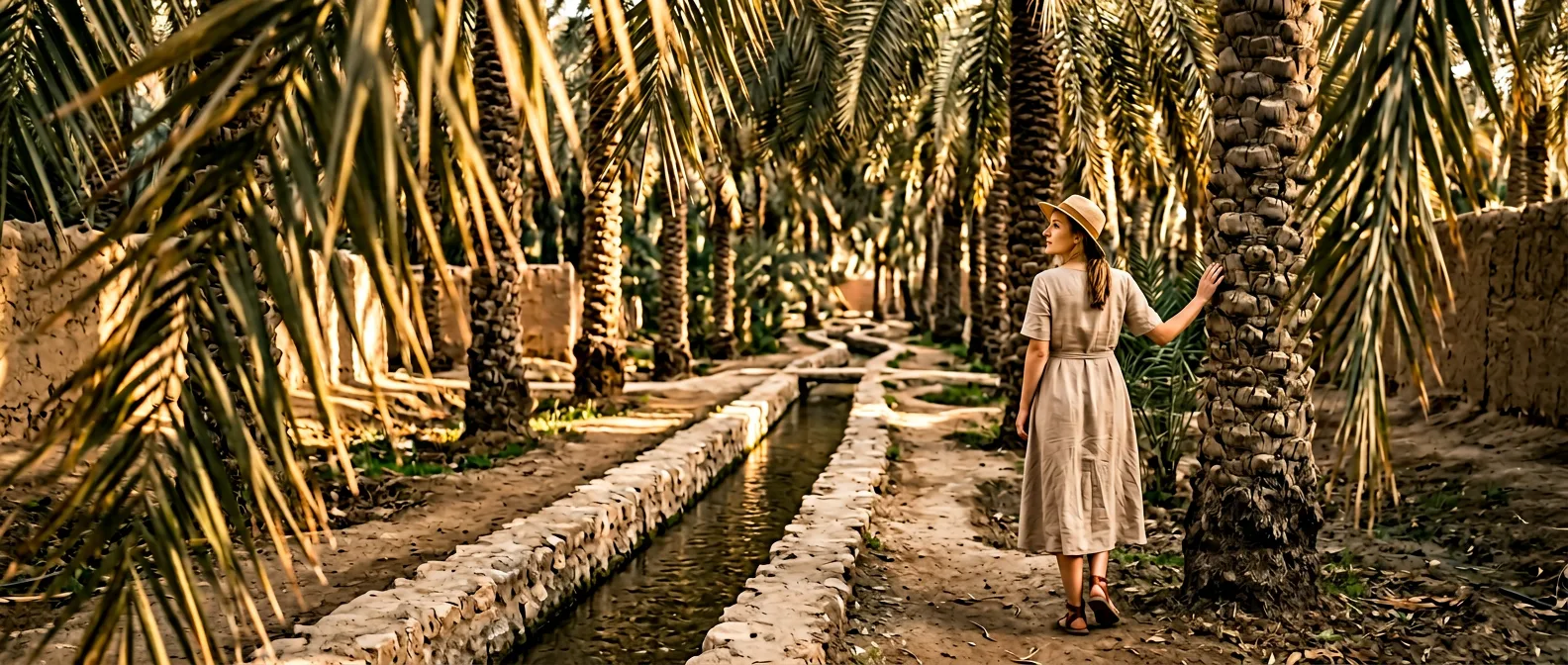
Best emirates for English teachers





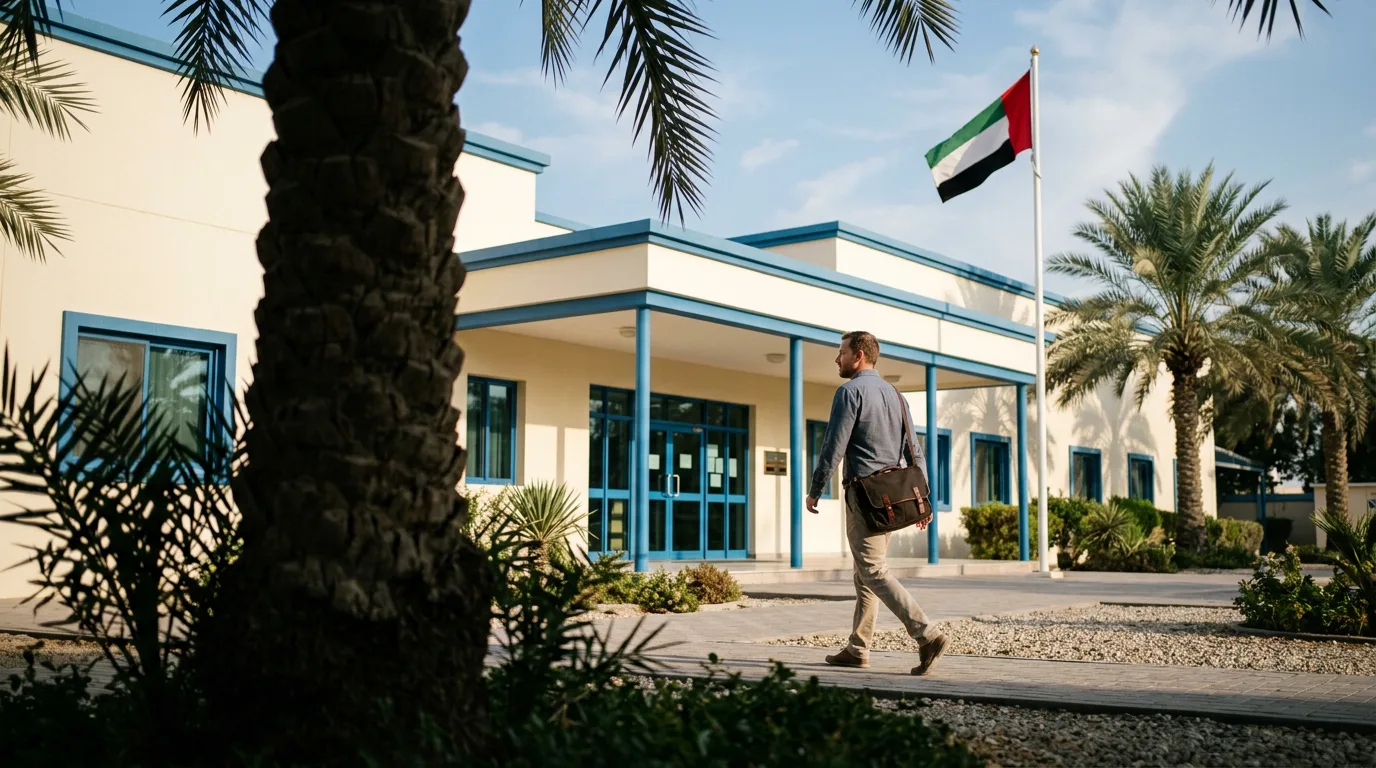
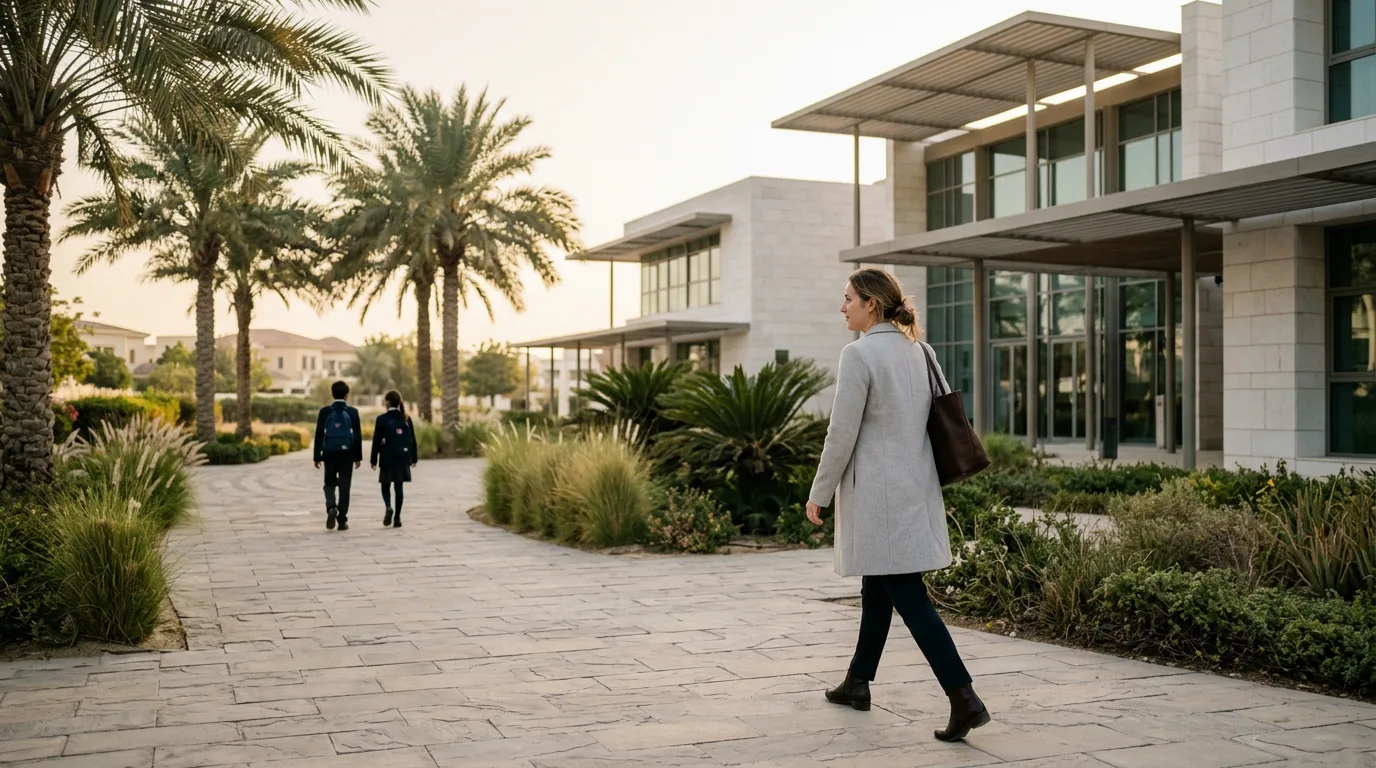
Three school types in the UAE

What teaching in the UAE actually feels like




Life as a teacher in the UAE
The UAE’s school day typically runs 7:30am–2:30pm or 3pm — a morning-heavy schedule that leaves afternoons free. Most schools work Sunday–Thursday (though an increasing number, particularly international schools following Western curricula, have shifted to Monday–Friday). This schedule means teachers have long weekend windows for regional travel: Oman is 2 hours from Dubai, Jordan 3 hours by plane, and India 3 hours from Abu Dhabi.
The expat community in Dubai and Abu Dhabi is enormous — approximately 90% of the UAE’s population is foreign-born. Arriving in Dubai as a teacher means joining one of the world’s most international cities, with the social infrastructure that implies: every cuisine imaginable, every nationality represented, and a social scene calibrated to the expectations of expats from across the world.
The cultural context matters: the UAE is an Islamic society. Public dress is modest (though Dubai is notably relaxed about this in tourist areas). Ramadan affects daily life significantly. Same-sex activity is illegal under UAE law — LGBTQ+ teachers need to factor this in carefully. Public displays of affection can draw attention. The combination of Islamic social framework and globally cosmopolitan infrastructure is distinctly Emirati — neither fully Western nor what Western media often portrays as “the Gulf.”
FAQ: Teaching English in the UAE
How does the UAE compare to Saudi Arabia as a TEFL destination?
Both are among the world’s best-paying TEFL markets. The key differences: the UAE is more socially open (alcohol available in Dubai and Abu Dhabi, more relaxed dress codes, more cosmopolitan social infrastructure) and more competitive to access (higher qualification requirements, mandatory TLS licence). Saudi Arabia pays comparably or slightly more at equivalent career stages but has stricter social restrictions. Teachers who prioritise social openness and global-city lifestyle choose the UAE; teachers who prioritise maximum financial return with a more straightforward application process sometimes favour Saudi Arabia.
Can first-time teachers get jobs in the UAE?
It’s difficult at the top-tier positions. International schools and ADEK public schools expect 2–5 years of classroom experience plus a formal teaching licence. Language schools and some private institutes are more accessible with a TEFL certificate and degree. Teachers without experience who want to enter the UAE market typically start at a language school or at a less competitive emirate (Sharjah, Ras Al Khaimah), build 1–2 years of UAE teaching experience and TLS credentials, and then move to international school or ADEK positions.
Is alcohol available in the UAE?
Yes, in Dubai and Abu Dhabi — in licensed hotels, bars, and restaurants. It’s significantly more expensive than in Europe (approximately AED 40 / $11 for a beer, AED 185 / $50 for a bottle of wine). In Sharjah, alcohol is entirely prohibited. In Ras Al Khaimah and other Northern Emirates, licensed venues have become more available in recent years. This is a meaningful practical distinction from Saudi Arabia, where alcohol is illegal everywhere.
What is the KHDA and why does it matter?
The Knowledge and Human Development Authority (KHDA) regulates all private schools in Dubai. Every teacher in a Dubai private school must have their appointment approved by KHDA, which checks qualifications, experience, and criminal background. KHDA also manages the deregistration list — teachers who have left Dubai schools improperly may be barred from future Dubai school employment. Your school handles KHDA submissions; your role is to provide complete, correctly attested documents promptly.
Ready to teach English abroad?
The UAE is one of the world’s most financially rewarding TEFL destinations. TEFL Heaven places teachers across Southeast Asia, Europe, and Latin America — browse our full program range to find your best fit.
TEFL Heaven · Placing teachers abroad since 2007 · 3,000+ teachers placed worldwide