

Teach English in Thailand:
Salary, Visa & Requirements (2026)
The world's most established TEFL destination — with the largest ESL job market in Southeast Asia, a clear legal route for foreign teachers, and a cost of living that makes a teaching salary go remarkably far.
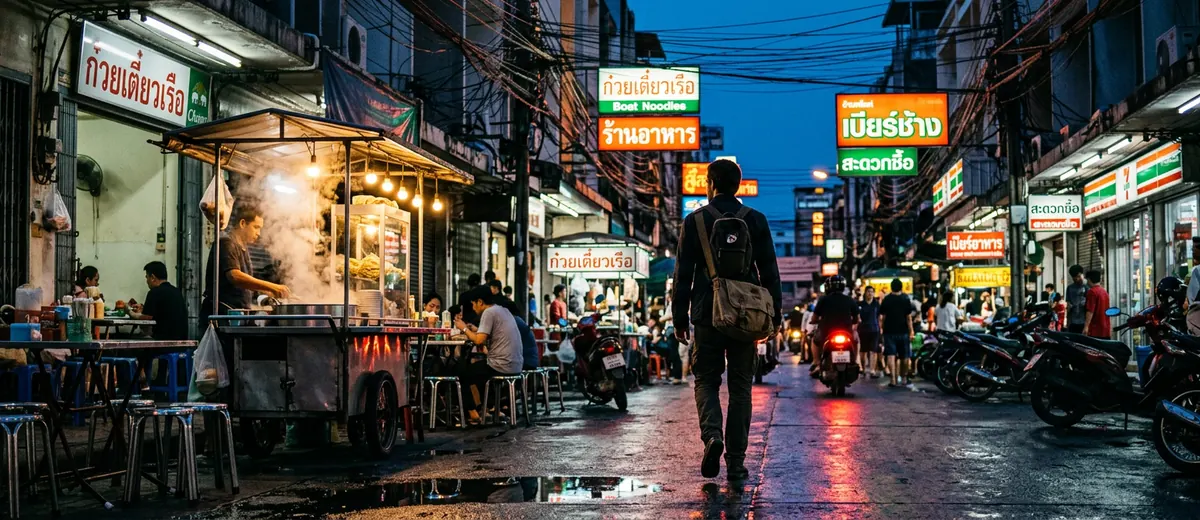
Bangkok — Thailand's capital and the heart of the TEFL market
In this
guide
Why teach English in Thailand?
Thailand has been the world's most popular TEFL destination for over two decades. The reasons are concrete, not just lifestyle appeal. Here's what actually makes it work for foreign teachers.
Southeast Asia's largest ESL job market
Thailand has over 10,000 English teaching positions opening each year across public schools, private language centers, international schools, and corporate programs. Qualified teachers with a solid TEFL certificate and a degree don't typically struggle to find work.
A clear, established legal route
Thailand has one of the most defined legal pathways for foreign English teachers in Asia. The Non-Immigrant B Visa and work permit system is well understood and widely supported by reputable schools. Thousands of teachers navigate it successfully every year.
A cost of living that changes what a salary means
Pad Thai from a street cart costs under $1. A comfortable one-bedroom apartment in Bangkok runs $300–$500 per month. Teachers earning $1,000–$1,500/month live well, travel regularly, and often save $300–$600 per month. The numbers work.
Southeast Asia on your doorstep
Koh Samui, Koh Tao, Krabi, Chiang Mai — Thailand's own travel options are extraordinary. Budget flights connect Bangkok to the rest of the region cheaply. Cambodia, Vietnam, Bali, and Singapore are all within a two-hour flight.
A culture that genuinely rewards curiosity
Thailand's nickname — the Land of Smiles — is earned. Thai hospitality toward foreigners is genuine. The Buddhist culture, temple architecture, food, festivals, and language all reward teachers who engage with it seriously, not just pass through.
An enormous community of foreign teachers
Thailand has the largest community of foreign English teachers in the region. In Bangkok alone, thousands of teachers from the UK, US, Australia, and Canada are already established. You arrive into a social network, not isolation.
Requirements to teach English in Thailand
To teach English legally in Thailand, you need to meet a set of requirements that apply across almost all schools and employers. Here's exactly what's needed — and what's worth having even when it isn't strictly mandatory.
Bachelor's degree — any subject
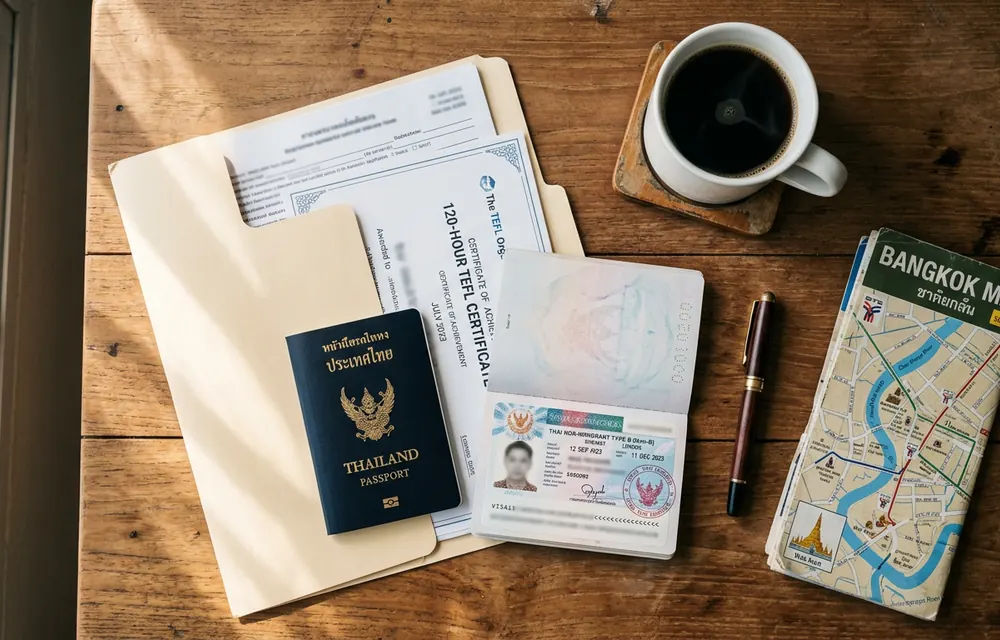
A bachelor's degree in any field is legally required to obtain a Non-Immigrant B Visa and work permit in Thailand. Your original diploma and transcripts will be required — not photocopies. Start preparing these early.
TEFL/TESOL certificate (120 hours minimum)
Not a strict legal requirement for the visa itself, but required by nearly all reputable schools. A 120-hour accredited certificate is the industry standard. Level 5 TEFL qualifications are increasingly preferred by the best schools in Bangkok.
Criminal background check
A clean background check from your home country is required for the Non-Immigrant B Visa. Background checks can take several weeks — start the application well before your intended departure date.
English proficiency (non-native speakers)
Native English speakers from the UK, US, Canada, Australia, Ireland, and New Zealand are strongly preferred. Non-native speakers can still teach but may need to provide a TOEIC score of 600+ or IELTS 5.5+ to satisfy school and visa requirements.
Medical fitness certificate
A basic medical examination from an approved Thai clinic or hospital is required for the work permit. This is completed after arrival in Thailand and your school will usually help arrange it. Straightforward for healthy applicants.
No teaching experience required. Thailand is one of the most accessible TEFL markets for first-time teachers. A 120-hour TEFL course with a teaching practicum is designed specifically to prepare people entering a classroom for the first time. A large proportion of teachers placed in Thailand every year had no prior classroom experience.
Ready to teach in Thailand?
TEFL Heaven has been placing teachers in Thailand since 2007. Get the full program details — training, visa guidance, placement, and costs — sent straight to you.
Salary and cost of living in Thailand
The salary isn't Western-level. The cost of living is genuinely low. That combination is what makes Thailand work financially — and why teachers regularly save money while living a life they couldn't afford at home.
| School Type | Monthly (THB) | Monthly (USD approx.) | Experience Needed |
|---|---|---|---|
| Government public school | 30,000–45,000 | $870–$1,300 | None required |
| Private language center | 35,000–55,000 | $1,000–$1,600 | None required |
| Bilingual / private school | 40,000–70,000 | $1,150–$2,000 | Some experience preferred |
| International school | 55,000–170,000+ | $1,600–$4,900+ | 2–5+ years + qualifications |
| University / academic | 35,000–60,000 | $1,000–$1,750 | MA often preferred |
| Private tutoring (hourly) | 300–1,500/hr | $8–$43/hr | Flexible |
Monthly costs — Bangkok
Monthly costs — Chiang Mai
Benefits at better schools commonly include health insurance, visa sponsorship, flight reimbursement, and paid holidays. Teachers with specialisations in Business English, IELTS preparation, or Young Learner teaching command 20–35% higher salaries. The cost of living outside Bangkok drops significantly — teachers in Chiang Mai or provincial cities often find the same salary covers considerably more.
→ Read the full breakdown: Thailand teacher salary guide 2026 — what you earn, what life costs, and where the saving potential comes from
Types of English teaching jobs in Thailand
Thailand's teaching market covers a broad range of institution types, each with different schedules, salary levels, student profiles, and classroom experiences. Understanding the differences helps you choose the right fit.
Government Public Schools
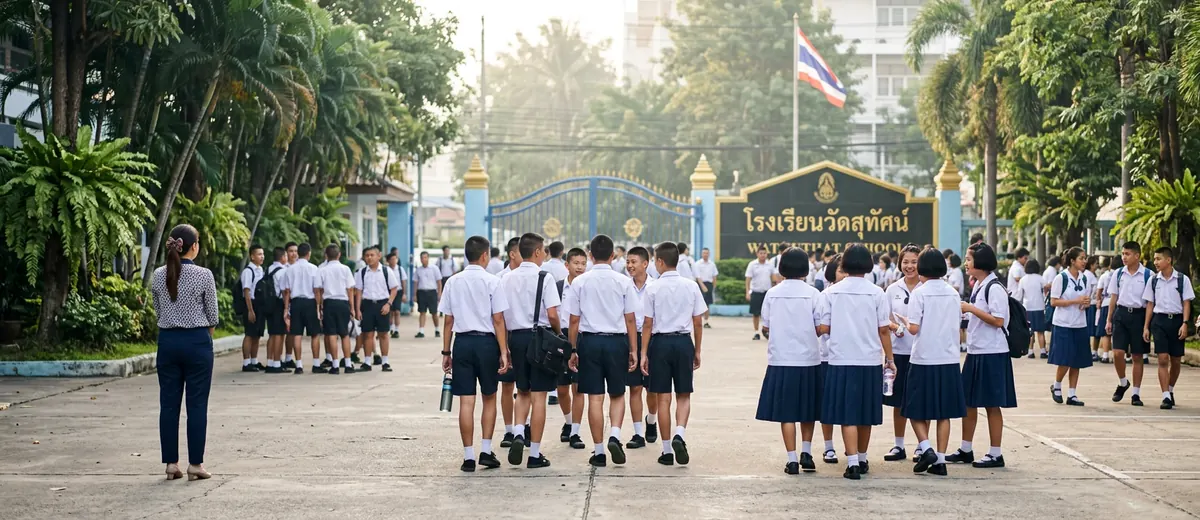
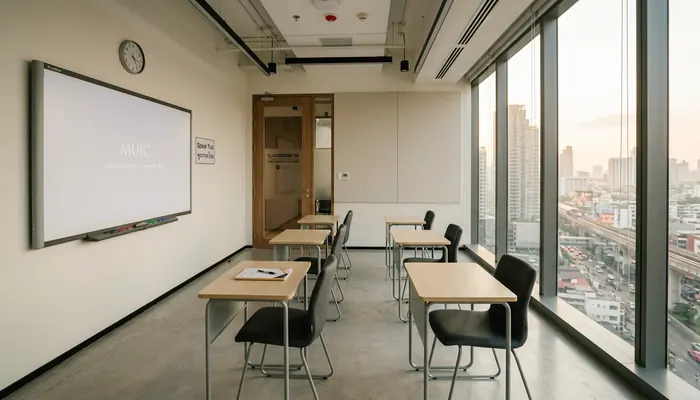
The most well-trodden route for first-time teachers. Teaching English to children aged 6–18 across Thailand's nationwide public school system. Large class sizes, daytime hours, and a schedule that mirrors the Thai school year — with long holiday periods in April and October.
Private Language Centers
Teaching students of all ages — children, teens, adults, and business professionals — at Bangkok's hundreds of private language schools. Split schedules are common (afternoons, evenings, and weekends). Year-round hiring and a broader range of student types.
International & Bilingual Schools
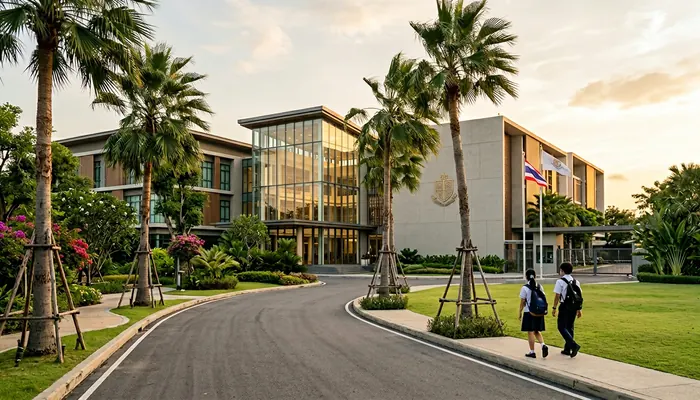
Bangkok's international schools teach a full Western curriculum entirely in English to expat families and affluent Thai families. Significantly higher salaries, smaller class sizes, and better-resourced classrooms. Often requires prior teaching experience or a home-country teaching qualification.
Universities & Academic Institutions
University English teaching positions are less common for new teachers but available at many Thai institutions, particularly for those with a master's degree or specialist English skills. More structured academic environment and often more professional development opportunities.
How to legally live and work as a teacher in Thailand
Teaching in Thailand legally requires a Non-Immigrant B Visa, a work permit, and a temporary teaching license. All three are interconnected, all three are manageable — and all three require your employer's cooperation to complete correctly.
"The legal route in Thailand is clear — when you follow it properly. The schools that manage the Non-B visa and work permit correctly are well known to people who've been in this market for years. The ones that cut corners are, too."
Prepare your pre-departure documents
Before applying for your visa, gather your original bachelor's degree, official transcripts, and begin your criminal background check application. Background checks can take several weeks — starting early is essential. Your TEFL certificate and health documentation will also be needed later in the process.
Start 8–12 weeks before departureSecure a job offer and employer documentation
Before you can apply for a Non-B visa, you need a confirmed job offer from a school willing to sponsor you. Your employer provides a letter of invitation and supporting documentation required for the embassy application. This is why school selection and employer credibility matters enormously.
Required before visa applicationApply for the Non-Immigrant B Visa
The Non-B visa is applied for at a Thai embassy or consulate — most commonly in your home country before you fly, or from a neighboring country like Laos (Vientiane) or Singapore. The Non-B permits you to enter Thailand and proceed to the work permit stage. Single-entry Non-B visas are valid for 90 days.
At Thai embassy — home country or abroadArrive in Thailand and obtain your work permit
After entering Thailand on a Non-B visa, your school applies for a work permit on your behalf at the Ministry of Labour. Your school has 90 days from visa issuance to obtain your work permit. The permit specifies your employer and role — working for a different school without updating your permit is illegal.
School applies on your behalf within 90 daysObtain your temporary teaching license
Thailand legally requires a teaching license for anyone working in a classroom. Foreign teachers who don't hold a home-country teaching qualification are issued a temporary teaching license by the Teachers' Council of Thailand — applied for by your school as part of the onboarding process. Renewal is straightforward once established.
Applied for by your schoolDon't navigate the visa process alone
TEFL Heaven walks you through every step — from pre-departure documents to in-country work permit submission. We've been doing this in Thailand since 2007.
Best cities to teach English in Thailand
Thailand is a long country with a genuinely diverse geography. Where you teach affects your salary, your lifestyle, and the type of schools available to you. Here's an honest guide to the main options.

The beating heart of Thailand's English teaching market and the most dynamic city in Southeast Asia. More teaching jobs than anywhere else in the country — public schools, language centers, international schools, and corporate programs. Higher salaries and a fast, modern city that functions exceptionally well.
Full Bangkok teaching guide
Thailand's second-most popular city for foreign teachers. A strong language center market, a lower cost of living than the capital, and a relaxed, creative atmosphere that attracts long-term expats and digital nomads alike. Cooler climate and close to stunning mountain scenery.
Full Chiang Mai teaching guide
Thailand's most famous island destination also has a genuine English teaching market, with strong demand at language centers and bilingual schools. Competition for jobs is higher than in less tourist-heavy cities. The lifestyle trade-off is obvious — beaches, diving, and island living.
Phuket teaching overview
Thailand's northeast region (Isaan) offers some of the lowest living costs in the country and consistent demand for public school teachers. Competition is minimal and the cultural immersion is authentic. Cities like Korat (Nakhon Ratchasima), Udon Thani, and Khon Kaen all have active teaching markets.
Find jobs across Thailand
Hua Hin, Pattaya, and Thailand's southern coastal towns all have English teaching demand. Hua Hin in particular has a well-established expat community and several international schools. A more relaxed pace than Bangkok with beach access and good transport links to the capital.
Explore all regions
Chiang Rai and smaller northern cities offer teaching positions that attract fewer applicants, making placements easier for first-time teachers. Exceptionally low cost of living, a cooler climate, and close to Chiang Mai for weekend access. A strong choice for teachers who want authentic Thailand.
Northern Thailand overviewWhat life actually looks like as a teacher in Thailand
The job is only part of the picture. Here's what teachers who are already there consistently describe about the experience of actually living in Thailand.

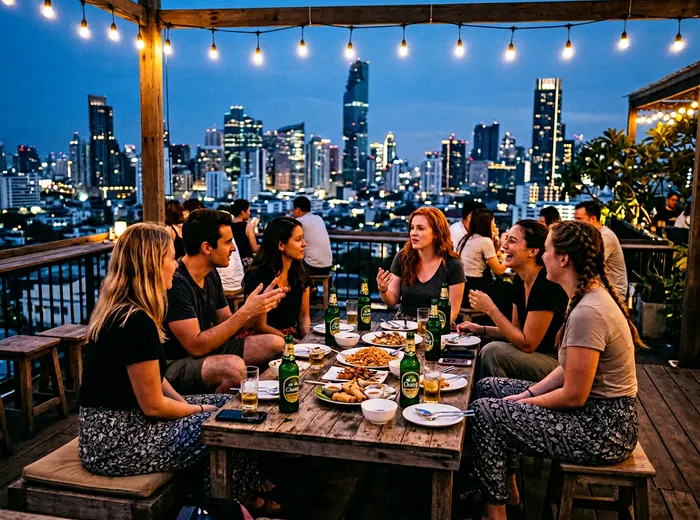
Food that stops people in their tracks
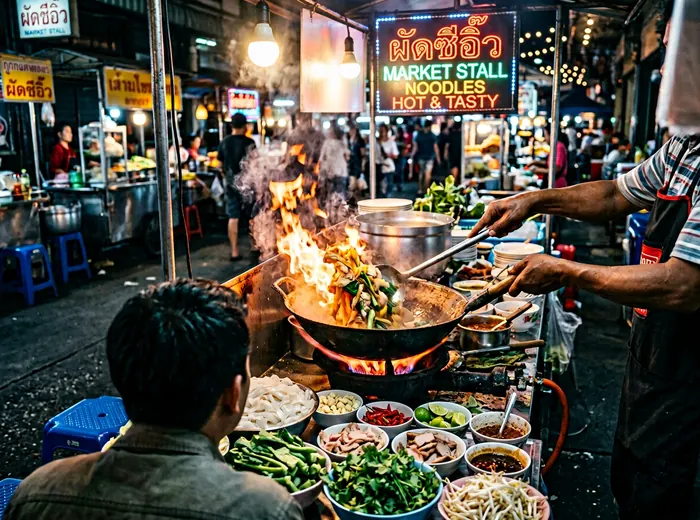
Pad Thai, green curry, mango sticky rice, khao man gai — Bangkok's street food is world-class and extraordinarily cheap. A full meal costs $1–$3 from a cart or market stall. Michelin-starred restaurants also exist at prices that are reasonable by Western standards.
Modern infrastructure that works
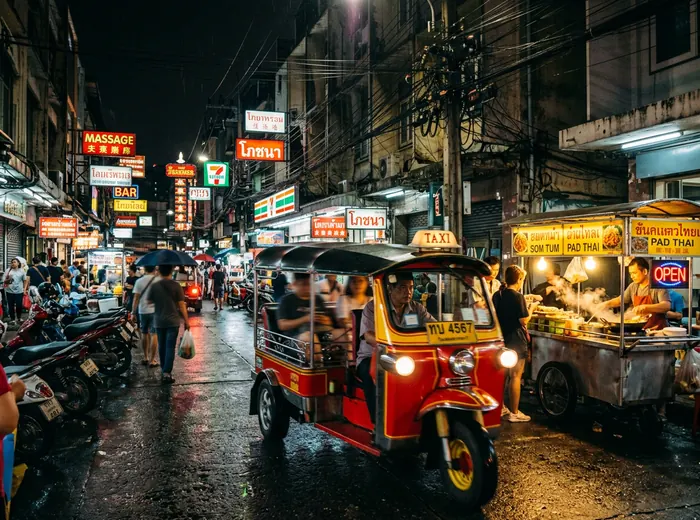
The BTS Skytrain and MRT give Bangkok better public transit than most European capitals. International hospitals, fast internet, co-working spaces, and modern shopping malls — Bangkok is a fully functioning modern city, not a rural adventure.
Weekend escapes throughout the region
Chiang Mai is 45 minutes by air. Koh Samui, Krabi, and the southern islands are under two hours. Pai, Ayutthaya, and Hua Hin are easy weekend destinations. On a teacher's salary, regular domestic travel is realistic rather than aspirational.
A culture with genuine depth
The Grand Palace, Wat Arun, Wat Pho — Bangkok has more significant Buddhist temples than most countries have cultural sites. Thai culture is woven into every neighbourhood, every school, every meal. Teachers who engage with it describe it as one of the most transformative experiences of their lives.
A teacher community already established
You arrive into a social network, not isolation. Bangkok's foreign teacher community is the largest in the region. Finding your people — across nationalities, backgrounds, and career stages — happens faster in Thailand than almost anywhere else in the TEFL world.
Hiring seasons and the best time to start
Thailand's language center market hires year-round. Public schools follow the Thai academic calendar. Understanding both gives you the best chance of fast placement.
Public school peak — start of academic year
The strongest public school hiring window. Thailand's academic year runs May to March. Arriving for the May intake gives you access to full-year contracts. Apply February–April for best options.
Public school mid-year intake
A second, smaller hiring window for public schools at the start of Thailand's second term. Fewer positions than the May intake, but still a valid entry point for public school roles.
Language centers — always hiring
Private language centers hire continuously across Thailand. Demand is highest during school term times. Most cities always have openings for certified teachers — no single best month, but consistent opportunity from June through January is strong.
Songkran (mid-April): Thailand's Thai New Year water festival marks the official school break. Not a barrier for teachers, but worth knowing for timing your arrival. Language center hiring continues through this period.
How to find English teaching jobs in Thailand
There are several routes into the Thailand teaching market. Understanding the tradeoffs between them helps you choose the right approach for your situation.
Through a TEFL placement program
The most supported route. A reputable program like TEFL Heaven combines your TEFL training, visa guidance, and school placement into one structured process. Schools are vetted for correct visa and work permit management. Best for first-time teachers who want a legal, supported start.
ESL job boards and school websites
Sites like Ajarn.com, Dave's ESL Café, and Teast's job board list hundreds of Thailand teaching positions. Active job boards are useful for experienced teachers or those already in-country. Research each school's visa sponsorship practices carefully before applying.
Arriving in Thailand and applying directly
Some teachers fly to Bangkok and apply to schools in person. This works well for language center roles where in-person interviews are common. Requires you to arrive on the correct visa category — not a tourist visa — if you intend to start work quickly.
Government and educational programs
Thailand's Ministry of Education operates official English program initiatives including the English Program (EP) in Thai schools. These positions are competitive but well-structured, with government-backed visa processes. Applications are typically processed through schools or provincial education offices.
Recruitment agencies
Thailand has a number of teaching recruitment agencies that place foreign teachers with schools. Some charge fees; reputable ones work on behalf of schools and charge nothing to the teacher. Verify that any agency ensures your school manages the Non-B visa and work permit correctly.
Social networks and teacher communities
Facebook groups like "Thailand ESL Teachers" and Bangkok expat communities are active sources of job leads, school reviews, and visa advice. Useful for cross-referencing information and hearing real teacher experiences with specific schools or agencies.
TEFL Heaven's Thailand placement
TEFL Heaven has been placing teachers in Thailand since 2007. The program combines in-person TEFL certification in Bangkok, full Non-B visa and work permit guidance, and guaranteed paid placement with schools that manage the legal process correctly.
View the Thailand program and see what's included →Who can teach English in Thailand?
Thailand's teaching market is more open than many people expect — but there are specific requirements that apply, and clear differences in how the market treats different teacher profiles.
Can non-native English speakers teach in Thailand?
Yes — but the market strongly favours native speakers from the UK, US, Canada, Australia, New Zealand, and Ireland. Non-native speakers can qualify if they can demonstrate strong English fluency: typically a TOEIC score of 600+ or IELTS 5.5+, alongside a strong TEFL certificate and ideally some teaching experience.
Schools in rural areas and provincial cities are more open to non-native speakers, particularly where teacher shortages are most acute. Language centers are also more flexible than public schools on this point.
Full guide: Teaching English in Thailand as a non-native speaker →
Can I teach in Thailand without a degree?
Legally, a bachelor's degree is required to obtain the Non-Immigrant B Visa and work permit. Without a degree, you cannot legally teach in a formal school setting in Thailand. Informal, short-term, and volunteer positions exist — but they don't come with legal work authorisation.
If you don't yet have a degree and want to teach abroad, Thailand is not the right starting point. Countries like Cambodia and some Latin American markets have lower formal requirements for entry-level teaching roles.
The Thailand program suits a specific kind of person
Thailand is the right choice for a lot of people — but not everyone. Here's an honest look at who thrives here, and who might be better served by a different destination.
✓ This is probably right for you if...
- You have a bachelor's degree in any subject
- You want to work legally — not risk teaching on a tourist visa
- You're willing to do the pre-departure document preparation
- You're genuinely drawn to Thailand and Southeast Asia
- You can adapt your lifestyle to a local salary supplemented by low costs
- You want in-person training rather than an online-only certification
- You want support that continues after you start teaching
- You're open to language center hours (evenings and weekends)
→ It's probably not right if...
- You don't have a bachelor's degree
- You want a Western-level salary — Thailand salaries are competitive locally, not globally
- You need to start working within a week of arrival — the visa and permit process takes time
- You want only weekday daytime hours — language center roles often require evenings and weekends
- You expect guaranteed placement in a specific city — preferences are taken but depend on available positions
- You're not ready to engage seriously with a new culture and language
Not sure if you qualify? Enquire anyway — TEFL Heaven will give you a straight answer about whether Thailand is the right fit for your situation, and if it isn't, point you toward what is.
Frequently asked questions about teaching in Thailand
Do I need a degree to teach English in Thailand?
Yes, if you want to work legally. A bachelor's degree in any subject is legally required to obtain a Non-Immigrant B Visa and work permit in Thailand. Without one, you cannot legally work as a teacher in a formal school. Some informal and volunteer positions exist without this requirement, but they don't come with legal work authorisation or the employment protections that go with it.
What is the Non-Immigrant B Visa and how do I get one?
The Non-Immigrant B Visa (Non-B) is the visa category that allows foreign nationals to work legally in Thailand, including as English teachers. Most teachers apply at a Thai embassy or consulate in their home country before flying — your employer provides supporting documentation (an invitation letter and relevant paperwork) to support your application. Once you've entered Thailand on a Non-B visa, your school manages the work permit application at the Ministry of Labour. TEFL Heaven guides you through every step of this process, starting before you leave home.
How much can I realistically earn and save in Thailand?
At a government public school, expect $870–$1,300/month. At a private language center, $1,000–$1,600. At a bilingual or well-funded private school, $1,150–$2,000. On those salaries, in Bangkok, teachers who live locally — rather than in the most expensive expat neighbourhoods — regularly save $300–$600 per month after rent, food, transport, and lifestyle costs. Private tutoring can increase take-home significantly. The cost of living outside Bangkok (Chiang Mai, Chiang Rai, or provincial cities) drops considerably, improving savings potential further.
Do I need prior teaching experience?
No — not for most positions. Thailand is one of the most accessible TEFL markets for first-time teachers, particularly at government schools and language centres. A 120-hour TEFL course that includes a teaching practicum is specifically designed to prepare people who have never taught before. A large proportion of teachers placed in Thailand every year had no prior classroom experience. Prior experience does help you compete for better-paid roles, but it isn't a barrier to entry.
Can I teach on a tourist visa while I find a job?
No. Teaching on a tourist visa is illegal in Thailand and carries serious risks — fines, deportation, and entry bans. More importantly, employers willing to hire teachers without correct visa documentation are often the same employers who don't manage the work permit and teaching license process properly. Working without legal documentation leaves you with no employment rights and no legal protection if something goes wrong with your school or contract.
What's the best time of year to arrive?
For public school positions, the May intake (applying February–April) gives you the strongest access to full-year contracts. There's a second, smaller intake in October–November. For language center roles, year-round hiring means there's no single best month — though June through January tends to see the highest volume of openings. Language centers are also generally faster to place teachers, with hiring timelines of one to three weeks rather than months.
Can I extend my contract or move to a different city?
Yes — both are common. Many teachers in Thailand renew for a second or third year, either at the same school or with a new employer. Moving between cities between contracts is also possible. The Non-B visa and work permit system is renewable annually through your employer. TEFL Heaven's lifetime placement network covers positions across Thailand, not just Bangkok.
What is a teaching license and do I need one?
Yes — Thailand legally requires a teaching license for anyone working in a classroom. Foreign teachers who don't hold a home-country teaching qualification or education degree are issued a temporary teaching license by the Teachers' Council of Thailand. This is applied for by your school as part of the onboarding process and is not something you have to navigate independently. Your school has 90 days from visa issuance to obtain your work permit and initiate the teaching license process.
What is the TEFL Heaven Digital Marketing Program?
A structured program unique to TEFL Heaven that teaches you to build and monetise digital income streams alongside your teaching career. Skills covered include content creation, SEO, social media growth, affiliate income, personal brand building, and online income strategies. It's designed to produce real results over time and is included as part of the TEFL Heaven Thailand program. No other TEFL program offers anything comparable.
Real teachers. Real placements in Thailand.
From teachers who've been through the TEFL Heaven Thailand program — on what the experience was actually like.
"The Non-B visa process sounds intimidating until someone walks you through it properly. TEFL Heaven made it feel completely manageable — I knew exactly what documents to prepare, in what order, and what to expect at each step. I arrived in Bangkok ready, not panicking."
"I came for a year and stayed for three. The teaching practicum during training was the thing that made the difference — I had real classroom experience before my first solo lesson, which most teachers don't have. Bangkok surprised me completely. I didn't expect to love city life this much."
"The cultural orientation week is underrated. By the time I started TEFL training I already felt like I lived in Bangkok, not just visited it. Basic Thai phrases, the local food scene, the transport system — you hit the ground running instead of spending your first month lost."
"The Digital Marketing side has become a serious secondary income for me now. I teach mornings at a government school, work on my online content in the afternoons, and have genuinely more money at the end of the month than I ever did working full-time at home. Thailand did that."
"I'd tried to research the visa process on my own and got completely lost. Having someone who'd done it hundreds of times just tell me exactly what to do — and when — made the whole thing straightforward. Three years later I'm still here and still teaching."
"As a career changer in my late 30s I was nervous about whether I could do this. Within three months of arriving I had a school I loved, a salary that covered everything, and a life that people back home couldn't believe. The in-country support made me confident I wasn't doing it alone."
4.8 ★ based on verified reviews across GoOverseas, Google, and Facebook · 3,000+ teachers placed since 2007
Get the full Thailand program details
Training structure, Non-B visa step-by-step, salary and cost breakdown, accommodation information, and current intake dates — sent straight to you after enquiry. No pressure. No hard sell.
Everything you need to know about teaching in Thailand
Deep-dive guides on every aspect of teaching in Thailand — from the visa process and salary details to city guides and day-to-day life.
Requirements guide
Degree, TEFL, background check, documents — everything you need to prepare before you fly.
Salary & cost of living
What teachers earn by school type, what Bangkok actually costs, and where the savings come from.
Non-B Visa & work permit
The full legal route — step by step — from pre-departure documents to in-country permit submission.
Teaching in Bangkok
School types, neighbourhoods, salaries, and what life in Thailand's capital really looks like.
Teaching in Chiang Mai
The relaxed alternative to Bangkok — lower costs, strong language center market, cooler climate.
Finding jobs in Thailand
Job boards, agencies, direct applications — and what to look for when vetting a school.
Teaching with no degree
What the options are if you don't yet have a bachelor's degree — and what to consider instead.
Thailand is where TEFL Heaven began.
Nineteen years later, it's still where we do our best work.
The program includes 120-hour Level 5 TEFL certification in Bangkok, guaranteed paid placement, full Non-B visa and work permit guidance, accommodation during training, cultural orientation, and ongoing in-country support throughout your placement.
TEFL Heaven · Bangkok · Placing teachers abroad since 2007 · 3,000+ teachers placed worldwide