

Teach English in Colombia
The salsa capital of the world. Magical-realist cities with street art on every corner. Coffee grown in the shadow of the Andes. Colombia has completed one of the most remarkable country transformations of the 21st century — and its TEFL market is growing to match.
 The case for Colombia
Why Colombia is Latin America’s most exciting TEFL market
Colombia stands apart from Peru and Guatemala in one crucial way: it has a functioning, employer-sponsored M-visa framework that makes legal work significantly more accessible than in most of Latin America. While many teachers in Peru and Guatemala work on tourist visas in a technical grey area, established Colombian language schools and international schools routinely sponsor proper work visas for foreign teachers. This is Colombia’s most important structural advantage for teachers who want genuine employment protection.
Colombia also has a national bilingualism programme — the government has set national goals for English proficiency, and this commitment drives consistent public and private investment in English education. The result: English teaching demand in Colombia is structural, not incidental. It comes from government policy, business need, and a growing middle class that increasingly sees English as essential for professional advancement. This demand has created a market that is growing faster than any other in Latin America.
The cities add a dimension few TEFL markets can match. Bogotá is South America’s most culturally complex capital — 7.5 million people, extraordinary museums and street art, and the continent’s most concentrated professional English-learning demand. Medellín’s “City of Eternal Spring” climate and extraordinary urban transformation story have made it the most popular expat and digital nomad destination in Latin America. Cali is the world’s salsa capital — a city whose cultural identity is built around music and dance in a way that no description fully captures until you’re there.
Colombia’s transformation: understanding the country teachers arrive in
Colombia’s safety reputation from the 1980s and 1990s remains in circulation globally but does not reflect the country that English teachers experience today. The specific progress since 2000 has been dramatic: homicide rates have fallen by over 80% from their peak; Medellín specifically was transformed from the world’s most dangerous city in the early 1990s to a globally celebrated model of urban innovation, winning the Lee Kuan Yew World City Prize; Bogotá’s Ciclovía — Sunday cycling infrastructure that closes major roads to cars — is one of the world’s great urban public health initiatives; and Colombia’s tourism sector has grown dramatically as a result of improved safety and infrastructure.
Honest caveats: Colombia’s transformation is real but uneven. Some regions remain genuinely dangerous — particularly specific rural corridors with ongoing conflict. Major cities like Bogotá, Medellín, Cali, and Cartagena are meaningfully safer than their 1990s reputations but require the same urban awareness any large Latin American city demands. Teachers who arrive with realistic expectations — neither dismissing safety concerns nor treating the country as uniquely dangerous — consistently describe positive, safe experiences that affirm the transformation.
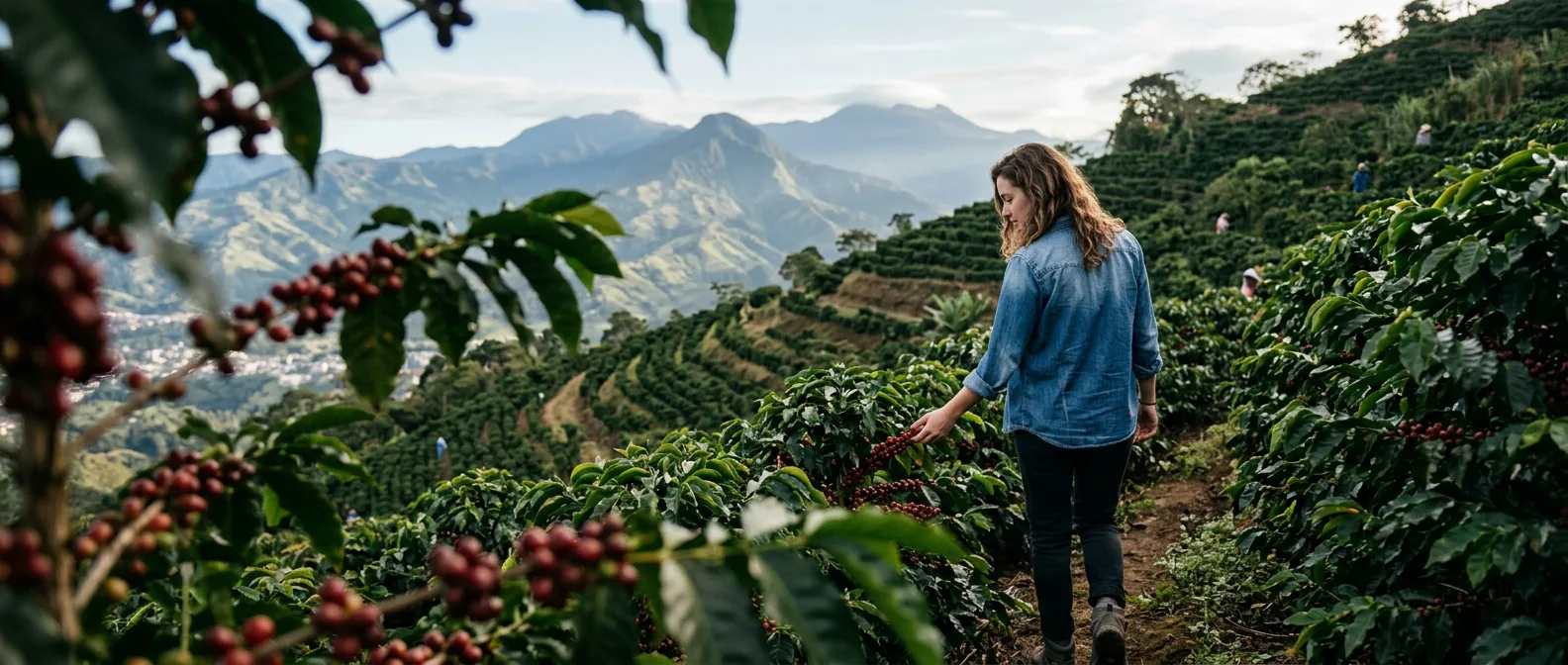
Colombian coffee: Colombia produces some of the world’s finest single-origin coffee — particularly from the Eje Cafetero (Coffee Axis) highland region around Manizales, Armenia, and Salento. Visiting a coffee finca (farm) is a standard weekend trip from Medellín or Bogotá. The daily coffee culture — tinto (black espresso), café con leche — is part of the social fabric of Colombian working and teaching life.
Colombia’s English teaching job market
Private language schools
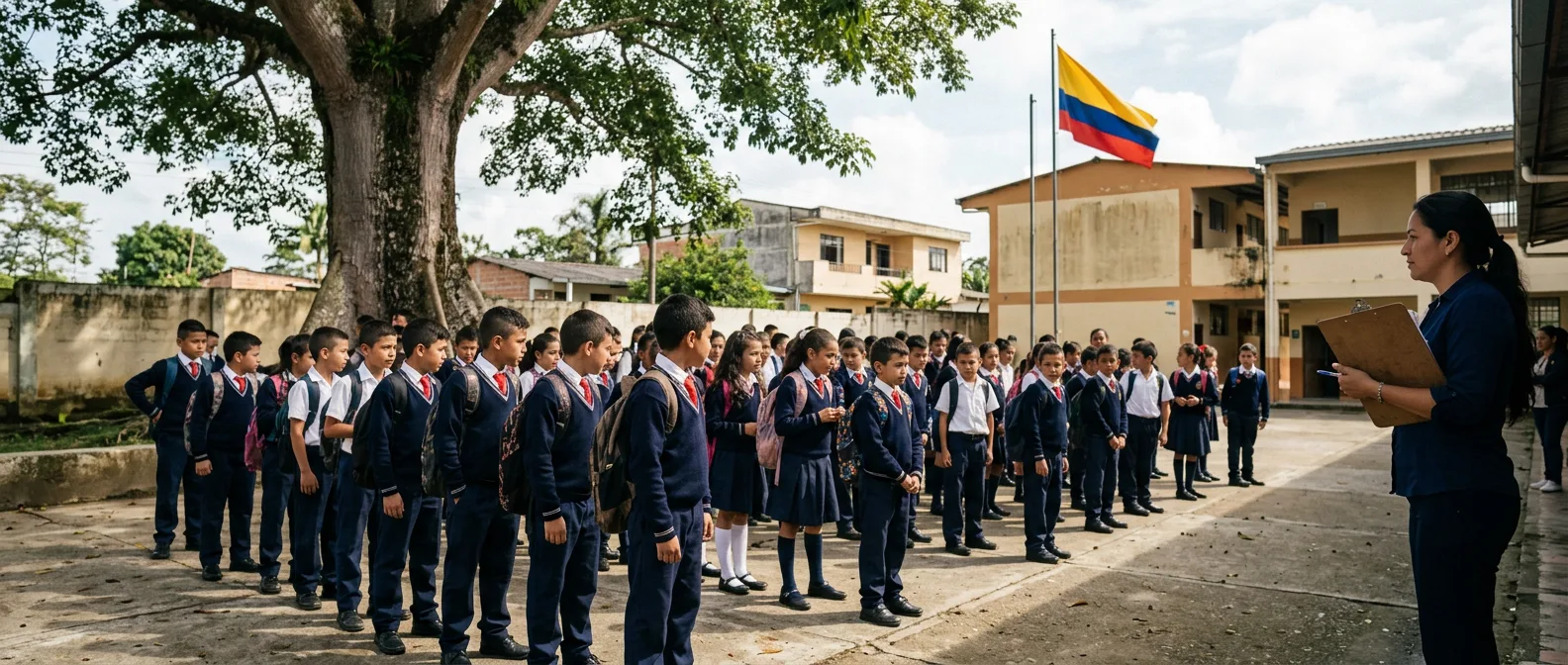
The largest employer segment. Berlitz Colombia, English First, Wall Street English, and hundreds of independent institutes across all major cities. Teach adults, professionals, and university students. Average salary COP 3.4–4.2M/month (~$850–$1,050). Year-round hiring with peaks November–January. Many sponsor M visas. The most accessible paid entry point for new teachers.
International schools
Colombia’s Colegio Gran Bretaña (Bogotá), Colombo Americano (Medellín and other cities), American School of Bogotá, and others. Follow international curricula (British, American, IB). Salaries COP 6–10M/month ($1,500–$2,500). Comprehensive benefits. Require formal teaching licence and 2+ years’ experience. Recruit through specialist recruiters September–November. Best-paid positions in Colombia.
Private bilingual schools
Colombia’s growing sector of bilingual (English-Spanish) private schools (colegios bilés) serving aspirational Colombian families. More accessible than international schools. Require TEFL plus degree. Salary between language school and international school levels. Consistent demand as Colombia’s middle class grows and bilingual education becomes a premium product.
Universities
Los Andes, Universidad Javeriana, EAFIT (Medellín), Universidad del Norte (Barranquilla), and many others employ EAP and English language teachers. Master’s degree preferred; competitive. Light teaching loads, professional environments. Some university positions are among Colombia’s most respected for English teachers at mid-career stage.
Government programmes
TEC (Teach English in Colombia — US citizens only; $500/month stipend). SENA (volunteer; small stipend). Colombia English Ambassador Programme. These government-linked routes provide structure and support for new teachers but are not income-generating positions. The TEC programme is best for US citizens wanting government-programme credibility without needing maximum income.
Corporate English
Bogotá’s business concentration — financial sector, multinationals, BPO companies, tech firms — creates the strongest corporate English market in Latin America outside São Paulo. Rates of $15–$25/hour through corporate contracts. Colombia’s growing BPO and tech sectors specifically require Business English at scale. Accessible after 6–12 months establishment in Bogotá or Medellín.
Ready to teach English abroad?
Browse TEFL Heaven’s full range of teacher placement programs — from Southeast Asia to Europe and Latin America.
What English teachers earn in Colombia
Colombia pays better than Guatemala or Peru and offers more genuine legal employment structure — but remains a break-even to modest-savings market on language school salary alone. The average COP 3.4–4.2M/month (~$850–$1,050) covers Colombia’s very affordable living costs with some room for savings. International school positions ($1,500–$2,500) and corporate English rates ($15–$25/hour) genuinely change the savings picture. Private tutoring and online teaching are the primary supplements for language school teachers.
| Position type | Earnings (COP) | Earnings (USD approx.) |
|---|---|---|
| Language school (standard) | COP 2.5–3.5M/mo | ~$625–$875 |
| Language school (CELTA/experienced) | COP 3.4–4.2M/mo | ~$850–$1,050 |
| Private bilingual school | COP 3–5M/mo | ~$750–$1,250 |
| International school | COP 6–10M/mo | ~$1,500–$2,500 |
| University | COP 3–6M/mo | ~$750–$1,500 |
| Private tutoring | COP 40–80K/hr | ~$10–$20/hr |
| Online teaching (from Colombia) | $15–$25/hr | Principal supplement |
| TEC program (US citizens) | ~COP 2M/mo | ~$500/mo stipend |
Exchange rate: approximately 4,000 COP per USD (2026). 1 COP million = approximately $250 USD.
Requirements to teach English in Colombia
Colombia’s M-visa framework makes legal employment more accessible than most Latin American markets. Requirements are structured but manageable with proper preparation.

TEFL certificate
120-hour accredited TEFL or TESOL certificate is required for most language school positions. CELTA or Level 5 TEFL commands better rates and accesses the strongest employers (Berlitz, English First). In-country CELTA is available through COLOMBO BRITANICO language schools and others in Bogotá and Medellín.
Degree
Bachelor’s degree preferred by established language schools and required for international schools, universities, and formal M-visa applications. Some language schools hire without degrees — particularly smaller independent institutes — but degree-holders access better positions throughout. International schools require education degree or subject degree plus teaching licence.
Native or fluent English
Native speaker status (USA, UK, Canada, Australia, NZ, Ireland, South Africa) is preferred. Colombia is moderately open to non-native speakers with near-native proficiency and strong TEFL qualifications. Government programmes (TEC) are exclusively for US citizens. Language schools assess proficiency informally during in-person or video interviews.
Spanish
Not required to teach English, but Spanish is strongly recommended for daily life in Colombia. Bogotá and Medellín have functional English infrastructure in expat areas — but markets, transport, healthcare, and most social interactions operate in Spanish. A2–B1 Spanish dramatically enriches the experience and is achievable within 3–4 months of Colombian immersion.
Best cities for English teachers in Colombia





Colombia’s academic calendar
Colombia’s school year runs roughly January through November or December, with a summer break in June–July. This is broadly aligned with the Northern Hemisphere in the sense that January is the academic new year. Peak hiring for K-12 and international schools happens November–January; language schools hire year-round with peaks in November–January and July–August. Unlike Peru and Guatemala, Colombia does not have a dramatically different academic calendar that confuses Northern Hemisphere expectations.
Three school types in Colombia

What teaching in Colombia actually feels like




FAQ: Teaching English in Colombia
How does Colombia compare to Peru as a TEFL destination?
Colombia pays better than Peru (average $850–$1,050/month vs Peru’s $500–$1,000), has a more structured legal work framework (M visa vs tourist visa norm in Peru), and has a stronger national bilingualism mandate driving consistent English demand. Peru has more dramatic adventure travel (Machu Picchu, Amazon, Andean landscapes), is slightly more accessible for first-time teachers with lower requirements at some schools, and has Peru’s uniquely celebrated food culture. Colombia has better music and dance culture, a stronger transformation narrative, and better legal employment protection. Both are excellent markets — the choice typically comes down to lifestyle preference between the two countries rather than any objective superiority.
Is Colombia safe for English teachers?
Significantly safer than its reputation from the 1990s suggests, but requiring the same active urban awareness any large Latin American city demands. Bogotá, Medellín, Cali, and Cartagena all have expat teacher communities that function safely. Teachers consistently describe feeling safe in the established expat and tourist-friendly areas of these cities while maintaining sensible urban precautions — not flashing valuables, using Uber rather than street taxis, and being aware in unfamiliar areas at night. Some specific districts in each city warrant more caution. Build local knowledge from the established teacher community quickly on arrival.
What is Colombia’s national bilingualism programme?
The Colombian government has run successive National Bilingualism Plans since 2004, most recently “Colombia Bièngüe” and successor programmes, with the national goal of significantly improving English proficiency across the population. This has translated into English being mandatory in public schools, government investment in teacher training, the TEC programme (Teach English Colombia, for US citizens), and consistent expansion of the private language school sector. For teachers: the national bilingualism agenda is one of the structural reasons why Colombia’s English teaching demand is more durable and less cyclical than markets without this policy backing.
Ready to teach English abroad?
Colombia is one of Latin America’s most exciting and fastest-growing TEFL markets. TEFL Heaven places teachers across Southeast Asia, Europe, and Latin America — browse our full program range to find your best fit.
TEFL Heaven · Placing teachers abroad since 2007 · 3,000+ teachers placed worldwide