

Teach English in South Korea: Salary, Visa & Requirements (2026)
Free housing. Return flights reimbursed. A month’s severance on top of your final pay. South Korea’s hagwon market offers one of the world’s best entry-level TEFL packages — and TEFL Heaven places teachers here with full E2 visa support and guaranteed placement.
Why South Korea is one of the world’s best TEFL markets

South Korea has one of the most developed English education industries in the world. English has been a compulsory subject in Korean public schools since 1995, and the private hagwon (academy) sector has grown to extraordinary scale — there are an estimated 80,000+ hagwons across the country. The demand for native English-speaking teachers is structural, sustained, and shows no signs of declining.
What makes South Korea distinctive as a TEFL destination isn’t the salary alone — it’s the package. Free housing eliminates the single largest expense for most teachers. Return flights are reimbursed. On completing your 12-month contract, you receive a severance bonus equivalent to one full month’s salary. The national pension scheme deducts from both you and your employer — and the full lump sum is returned to you when you leave Korea. Teaching here for a year leaves many teachers with significantly more savings than any other Asian market.
The savings reality: With housing covered, taxes low (approximately 3–4% effective rate for first-year teachers), and living costs manageable, most hagwon teachers save ₩1.0–1.5 million per month — roughly $700–$1,100 USD. Over a 12-month contract, that’s $8,400–$13,200 in savings before severance and pension. This is why Korea attracts teachers who come for one year and stay for three.
Teach in South Korea with TEFL Heaven
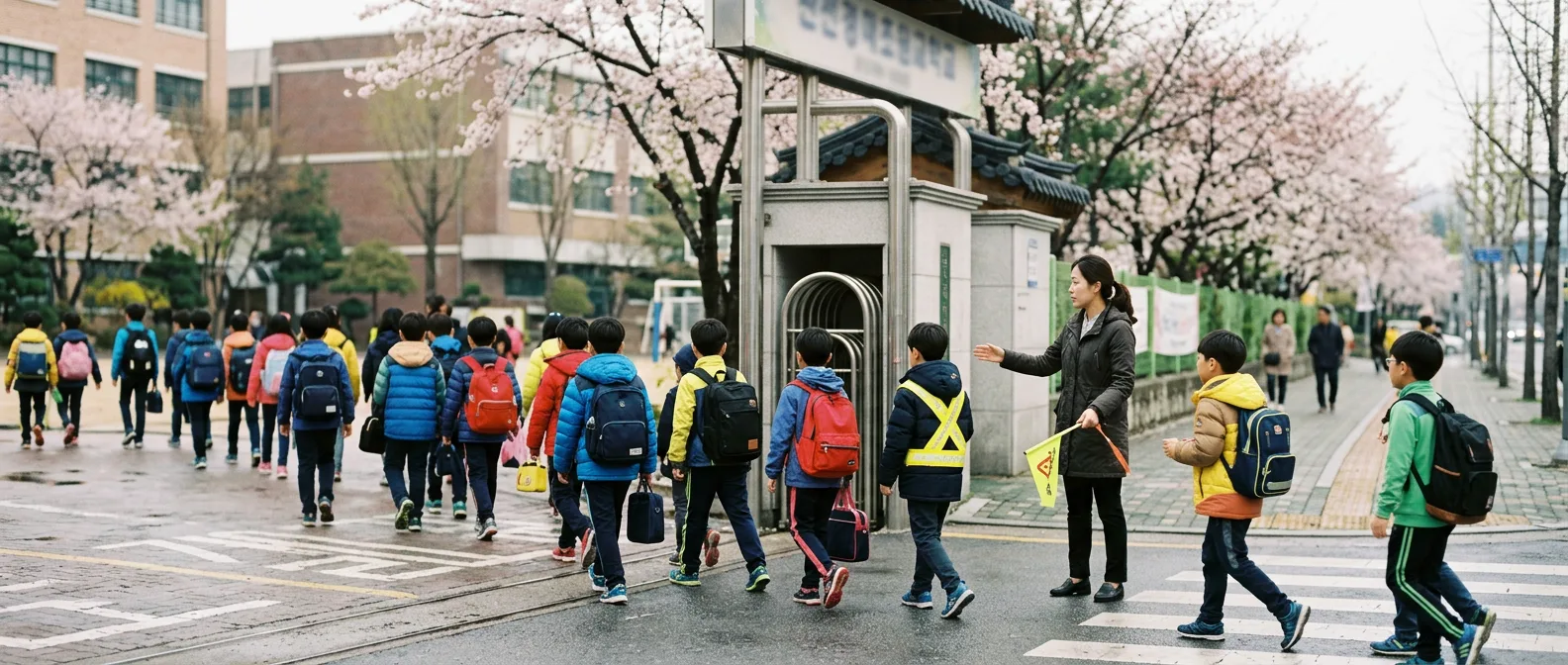
TEFL Heaven places teachers in South Korean hagwons with full support from application through to your first year.
- ✓Accredited TEFL certification included
- ✓Guaranteed hagwon placement
- ✓Full E2 visa guidance and document support
- ✓Free housing coordinated by your school
- ✓In-country support throughout your contract
Why TEFL Heaven for Korea?
- 3,000+ teachers placed since 2007
- Placement in vetted, reputable hagwons only
- E2 visa document support from day one
- Contract review before you sign
- On-the-ground support if issues arise
TEFL Heaven places teachers in South Korea
Accredited TEFL certification, guaranteed hagwon placement, full E2 visa support, and in-country backing throughout your contract.
South Korea’s English teaching job market
Hagwons (private academies)
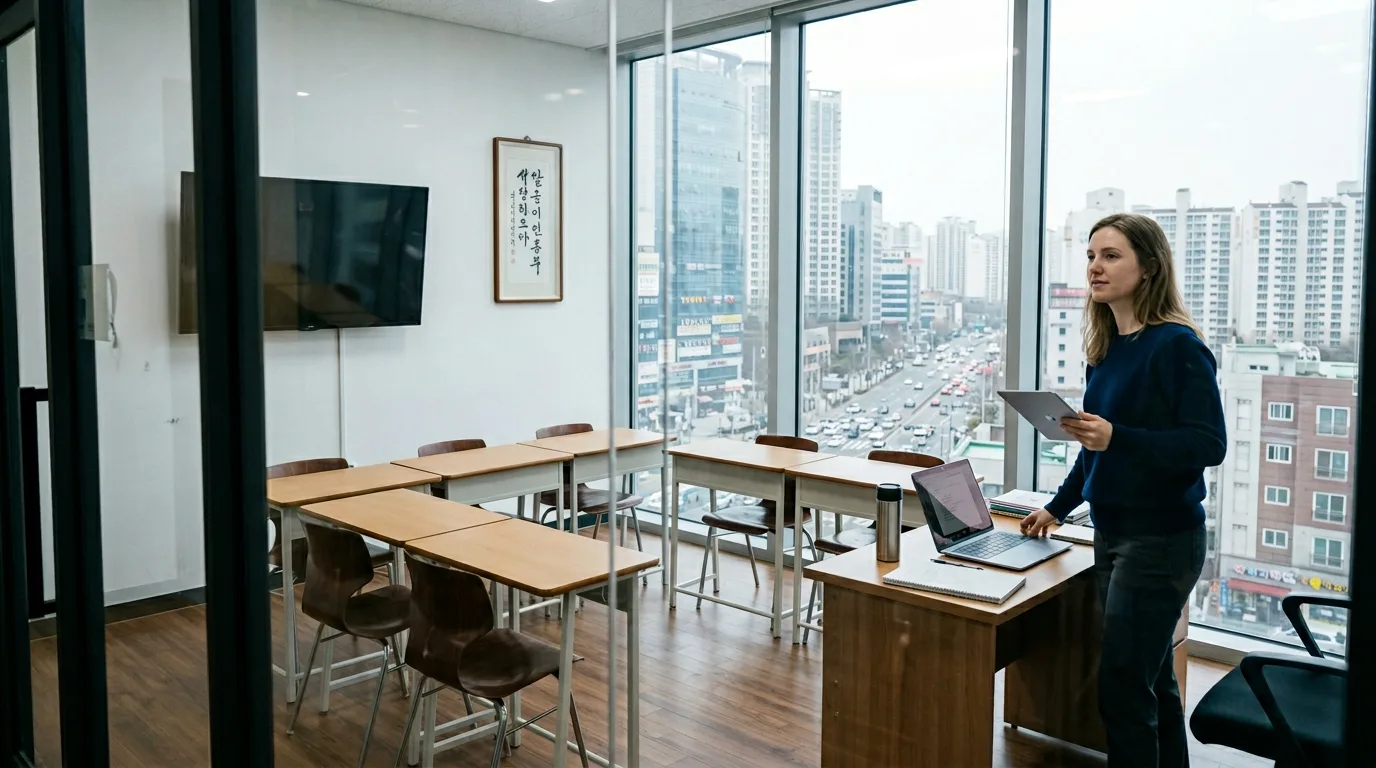
The backbone of the market. Over 80,000 private academies operate across Korea, teaching English to children and adults outside regular school hours. Hagwons hire year-round, pay more than public schools, and are the primary placement route for first-time teachers. Classes of 5–11 students. Afternoon and evening schedules for most.
Kindergarten hagwons
Morning-focused hagwons teaching young learners (ages 3–7). Typically 9am–5pm schedule. Often higher pay than standard after-school hagwons. High-energy, demanding work that suits teachers who enjoy early childhood education. Housing and flight benefits standard.
International schools
Higher salaries (₩3.0–5.0M/month) with premium benefits. Require degree plus teaching license plus experience. Extremely competitive. Seoul International School, Korea International School, and others. Not the first-year route but a strong career goal for qualified teachers.
Hagwon quality varies significantly. Korean law regulates hagwons but enforcement varies. Reputable schools with proper contracts, on-time salary payments, and genuine support exist alongside poor employers. Choosing your school carefully — with TEFL Heaven’s contract review and vetted placement network — is the most important decision you make before signing.
What English teachers earn in South Korea
Hagwon salaries for first-time teachers typically run ₩2.3–2.5 million per month in 2025–2026. Experienced teachers and those with stronger qualifications can reach ₩2.5–3.0 million. The salary only tells part of the story — it’s the total package that makes Korea extraordinary.
Requirements to teach English in South Korea
South Korea requires a bachelor's degree (any field) and citizenship from an English-speaking country for E-2 visa eligibility. A TEFL certificate strengthens applications. Criminal background check and apostilled documents are mandatory. The EPIK programme offers the most structured entry path.

South Korea’s E2 visa requirements are strict and set by the Korean government. Unlike Spain or other markets, there is very little flexibility around these requirements.
Eligible nationalities
The E2 visa is restricted to citizens of seven countries: USA, UK, Canada, Australia, New Zealand, Ireland, and South Africa. Citizens of other countries, including India (with some CEPA exceptions), are not eligible for the standard E2 visa. Naturalised citizens of the seven eligible countries do qualify.
Bachelor’s degree
A full 3–4 year bachelor’s degree from an accredited university is required. The degree can be in any subject — it does not have to be in English, Education, or a related field. Two-year associate degrees are not accepted. The degree must be apostilled for the E2 visa application.
Clean criminal record
A spotless national-level background check is required. Korea has zero tolerance for drug-related convictions. Traffic violations (speeding, parking) generally do not affect eligibility, but any misdemeanour or felony conviction is disqualifying. The check must be apostilled and is valid for 6 months from issuance.
TEFL certificate
Most reputable hagwons require a minimum 120-hour TEFL/TESOL certificate. It is not a legal E2 visa requirement, but it is effectively a market requirement for any desirable position. A strong TEFL certificate (120hr+, with practical component) also unlocks higher starting salaries.
Health check
A mandatory medical exam is required within 30 days of arriving in Korea. This is done at a designated Korean medical centre and tests for general health, tuberculosis, HIV, and drugs. Failing this exam can result in visa revocation. A self-declaration health form is also required pre-departure.
Native-level English
You must be a native or native-level English speaker, educated primarily in English. Citizens of the 7 eligible countries who were educated in non-English speaking countries may face additional documentation requirements or be ineligible for some positions.
The E2 visa: how it works
The E2 (Foreign Language Instructor) visa is the standard teaching visa for South Korea. It is employer-linked — your school sponsors the visa, and it is valid for 13 months. Every renewal requires a new application.
| E2 visa fact | Detail |
|---|---|
| Validity | 13 months, linked to your employer |
| Who sponsors it | Your hagwon or school — they initiate the visa issuance number from Korean Immigration |
| Processing time | 7–12 business days for visa issuance number; consulate visa issuance under a week |
| Cost | Approximately $45 USD at the Korean consulate (subject to change) |
| Health check | Mandatory within 30 days of arrival; done at designated Korean hospitals |
| ARC card | Alien Registration Card — apply within 90 days of arrival; required for banking, SIM, etc. |
| Renewal | Required with each new or continued contract; full document resubmission needed |
| Extra work | E2 visa ties you to your employer — private tutoring and side work require F-class visa or employer permission |
TEFL Heaven provides full E2 visa document guidance for all program participants — from apostille requirements to consulate appointment preparation.
Best cities for English teachers in South Korea
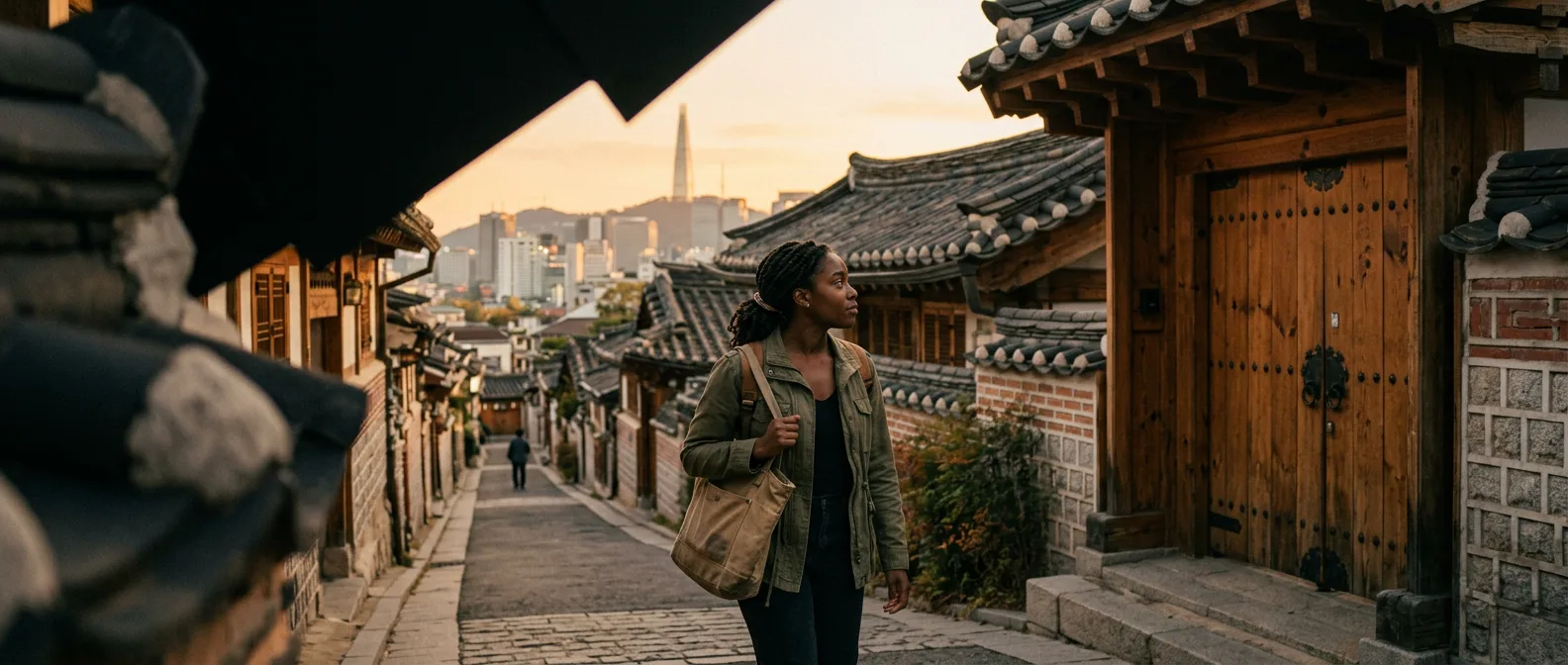



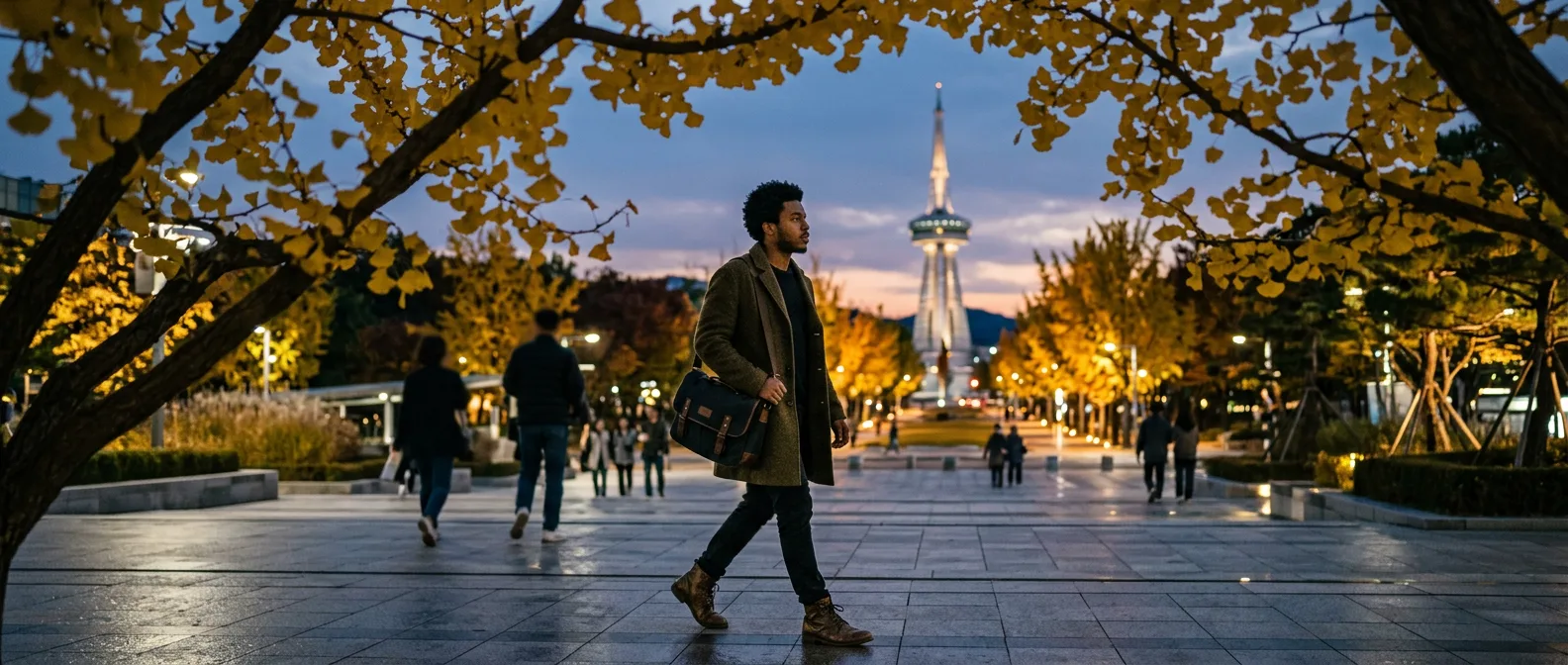

Types of English teaching positions in South Korea
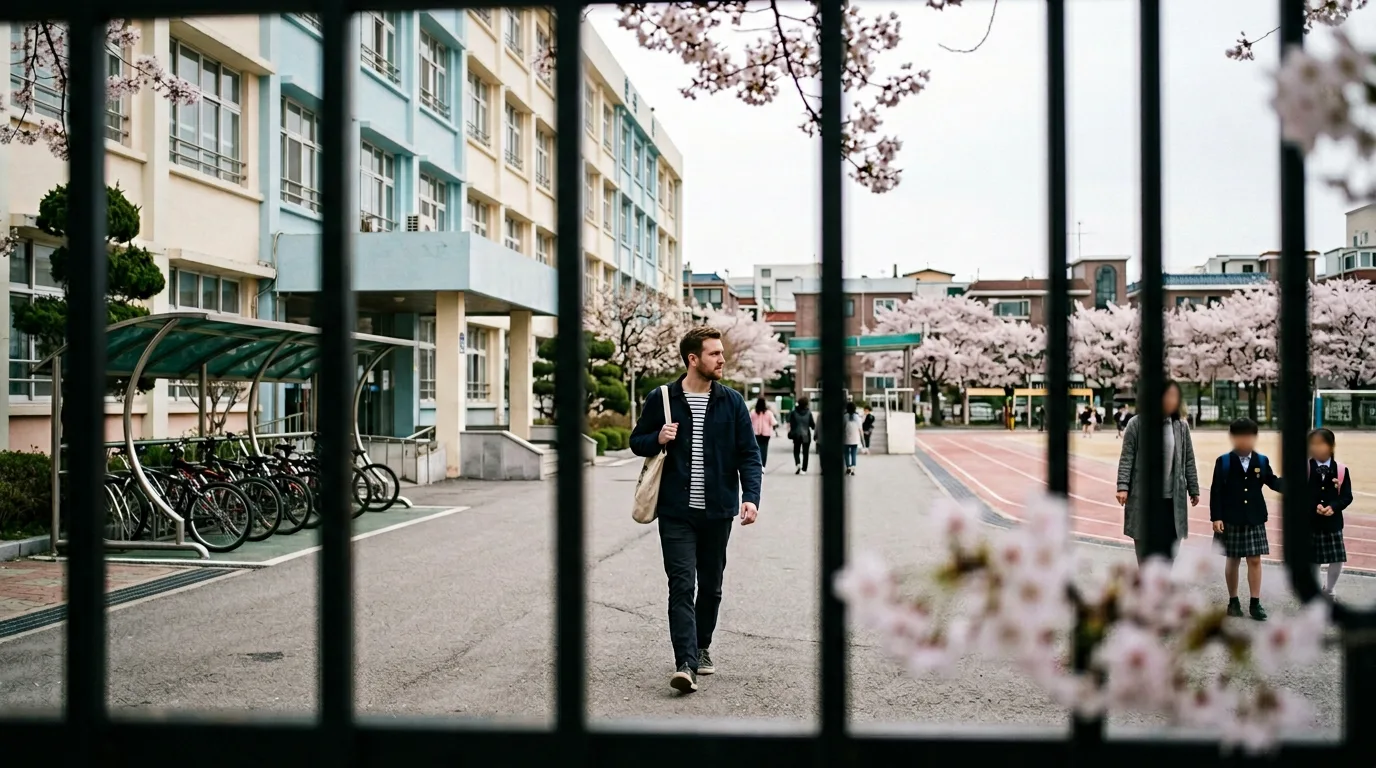
Living in South Korea as an English teacher


What life as a teacher in South Korea is actually like
Korea is one of Asia’s most technologically advanced societies — 5G everywhere, world-class public transport, fast internet as standard in every apartment, and a healthcare system that’s both excellent and affordable. It is a country that functions extremely well at a practical level, which removes much of the friction that complicates life for teachers in developing markets.
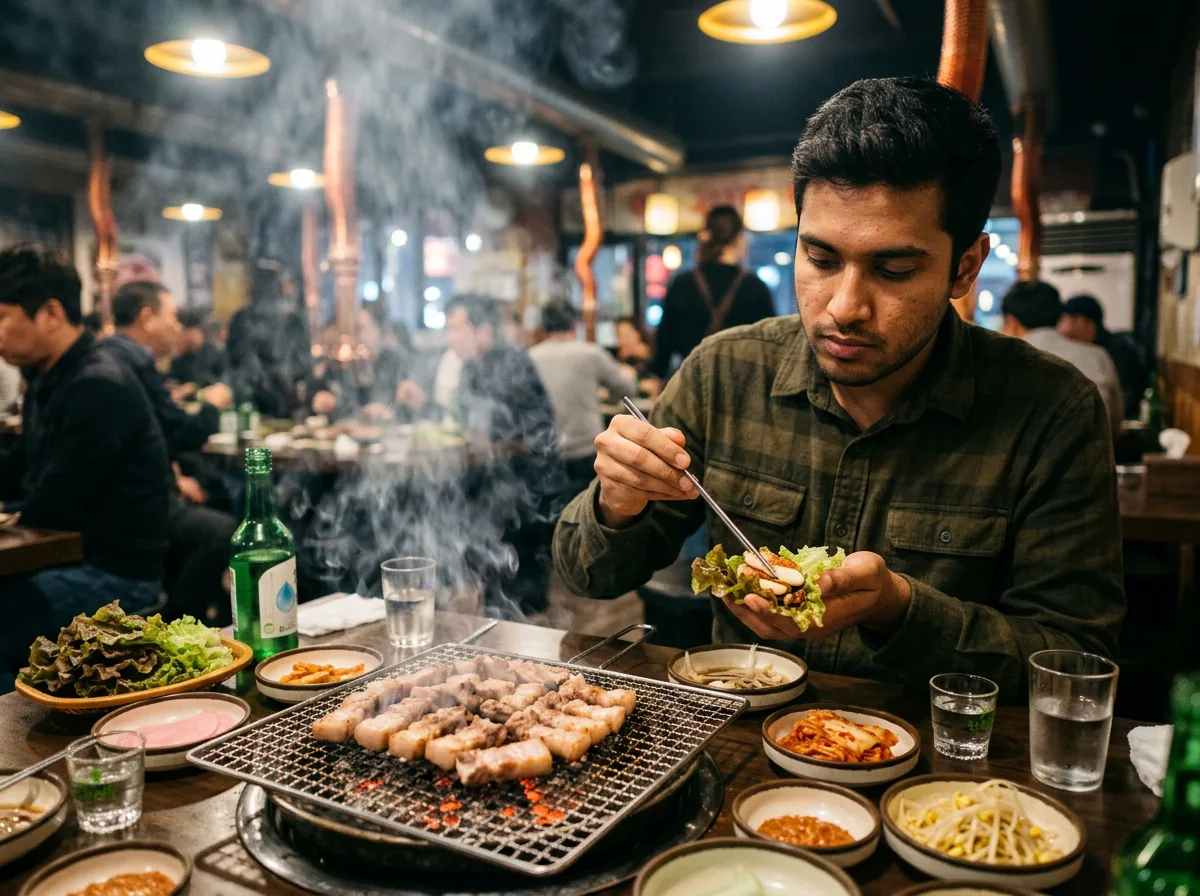
Korean food culture is genuinely extraordinary — and cheap. Street food, convenience store meals (Korean convenience stores are among the best in the world), and sit-down Korean restaurants all offer good food for very little money. An evening of Korean BBQ with colleagues costs less than a pub meal in London. Eating well here is not expensive.
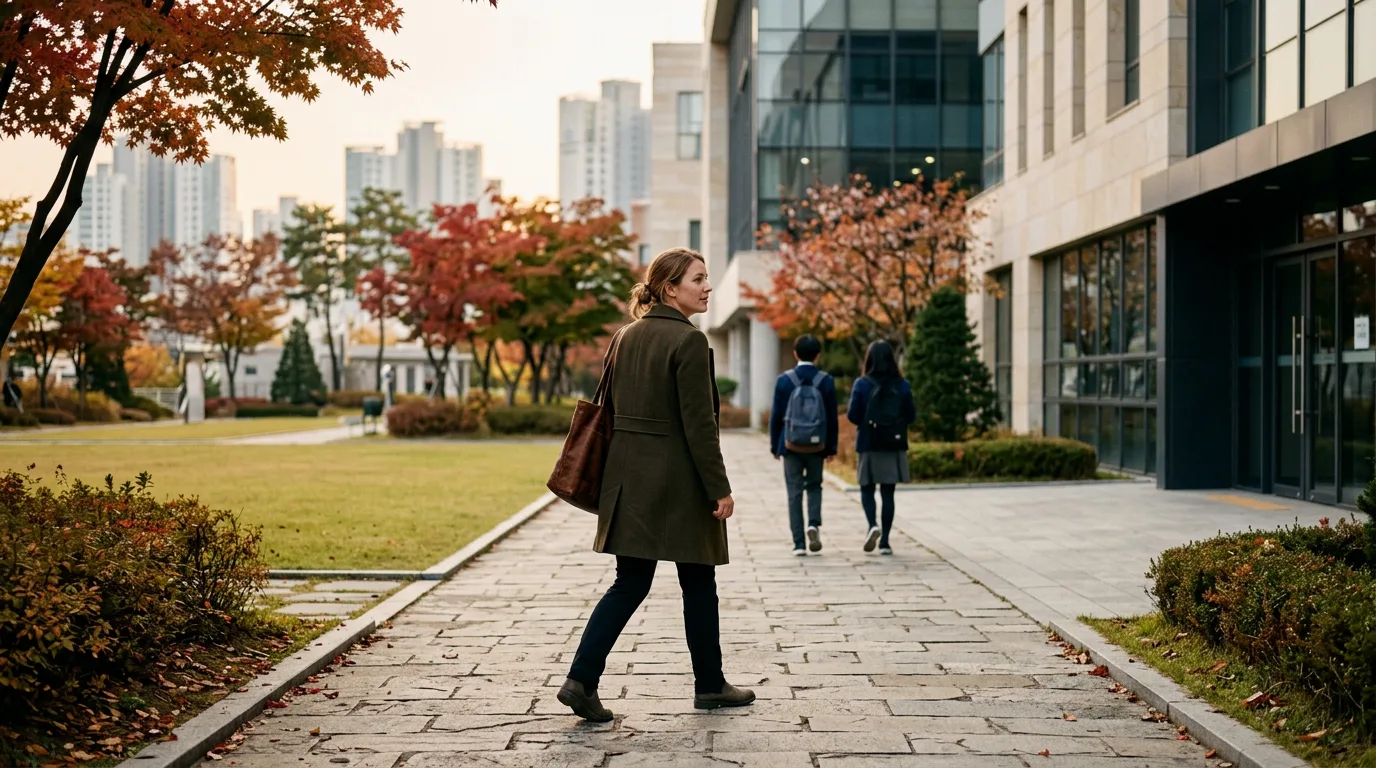
The social life for expat teachers is well-developed — particularly in Seoul and Busan, where the foreigner community is large, active, and welcoming. Teaching at a hagwon alongside 2–6 other foreign teachers provides an instant community. The Korean expat bar and social scene in Hongdae (Seoul), Haeundae (Busan), and university districts across the country is vibrant and accessible.
What teachers love about Korea
- Free housing is genuinely transformative for savings
- Severance and pension payouts make year-end finances excellent
- Korean food culture is world-class and inexpensive
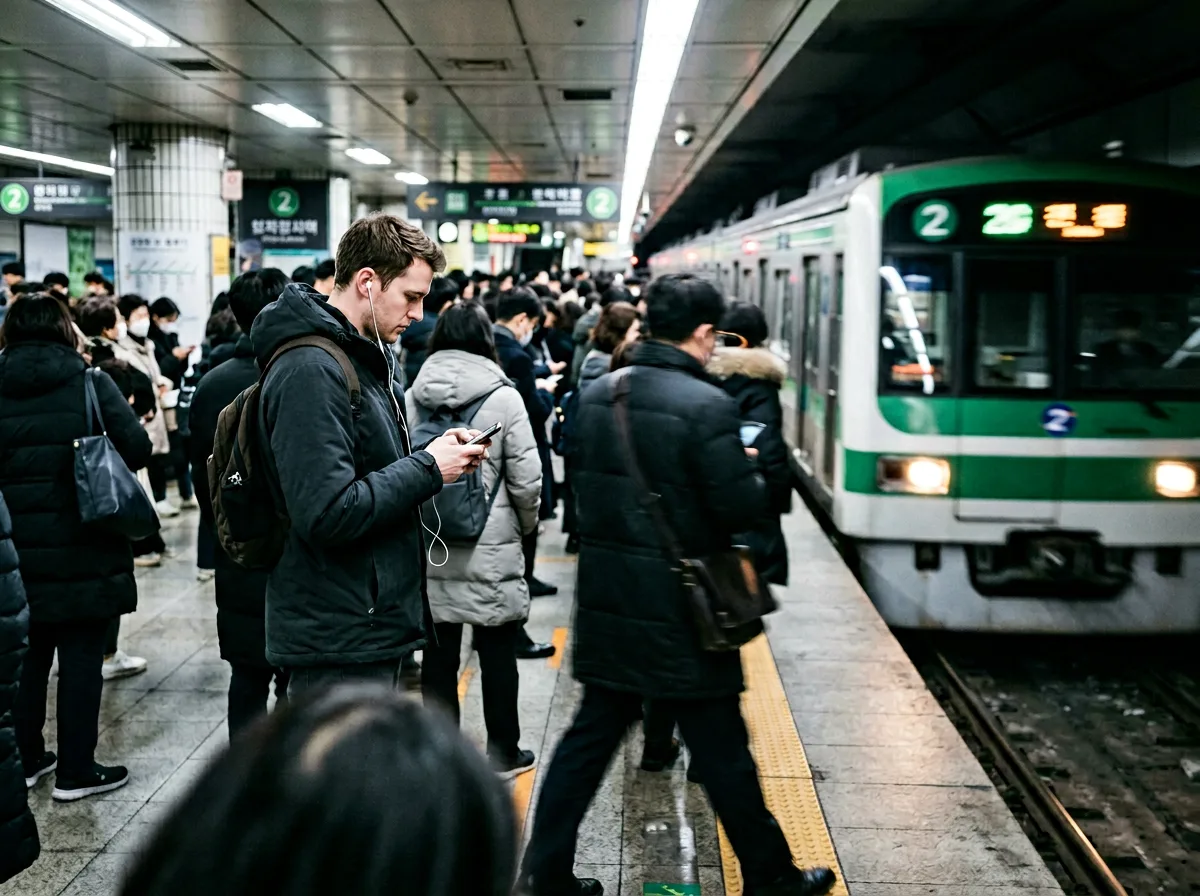
- Public transport is among the world’s best — fast, cheap, 24hr in Seoul
- Technology infrastructure makes daily life easy
- Travel to Japan, Taiwan, Southeast Asia all accessible cheaply
- Small hagwon classes (5–11 students) make teaching manageable
- Korean students are generally engaged and motivated
Honest challenges to prepare for
- E2 visa document process is complex — allow 8–12 weeks prep time
- Evening/late schedule (1pm–9pm) takes adjustment for most Western teachers
- Hagwon quality varies enormously — vetting your school matters
- Limited vacation (7–10 days) at hagwons vs public schools (18+ days)
- Cultural adjustment is real — Korean workplace norms differ from Western ones
- Language barrier outside major cities; English not universally spoken
- Korean winters are cold — heating bills in December–February are significant
Complete South Korea teaching guides
FAQ: Teaching English in South Korea
Can Americans teach English in South Korea?
Yes — the USA is one of the seven eligible countries for South Korea’s E2 visa. Americans need a bachelor’s degree, apostilled FBI background check, valid passport, and a school willing to sponsor their E2 visa. TEFL Heaven’s South Korea program guides American teachers through every step of the process.
Do I need a degree to teach in South Korea?
Yes — a full 3–4 year bachelor’s degree from an accredited university is a legal requirement for the E2 visa. The degree can be in any subject. Two-year associate degrees are not accepted. This is set by Korean immigration law and cannot be waived.
Is free housing actually guaranteed?
Free employer-provided housing is the near-universal standard for hagwon positions in South Korea — and it is written into your contract. The housing is typically a studio or one-room apartment within commuting distance of your school. Some schools provide a housing allowance instead of a direct apartment — confirm which arrangement your contract offers before signing.
What are Korean hagwon working hours?
After-school hagwons (the most common type) typically run 1pm–9pm, Monday–Friday, with approximately 30 teaching hours per week. Kindergarten hagwons run 9am–5pm or 11am–8pm. The evening schedule is the adjustment most new teachers need to make — but it comes with useful free mornings for language learning, exercise, and exploring Korea.
What does TEFL Heaven’s South Korea program include?
TEFL Heaven’s South Korea program includes accredited TEFL certification, guaranteed placement at a vetted hagwon, full E2 visa document guidance, contract review before signing, and in-country support throughout your placement. See the South Korea program page for current intake dates and full details.
Teach English in South Korea with TEFL Heaven
Accredited TEFL certification, guaranteed hagwon placement, full E2 visa support, free housing coordination, and in-country backing. The structured way into South Korea’s market.
TEFL Heaven · Placing teachers in South Korea since 2007 · 3,000+ teachers placed worldwide