

Teach English in China
300 million students learning English. The Great Wall, the Forbidden City, dumplings at 7am, the high-speed rail network that makes every city accessible. The world’s largest TEFL market — with some of the best salaries and savings potential of any destination on earth.
 The case for China
Why China is the world’s premier English teaching destination
No other country on earth combines China’s scale of English teaching demand, quality of salary packages, and depth of cultural immersion into a single proposition. Over 300 million people are actively learning English in China — more than the entire population of the United States. This demand is structural, driven by government education policy, parental investment in children’s futures, and the business sector’s recognition that English is the language of international commerce. It generates more English teaching positions, more consistently, than any other country on earth.
The financial proposition is transformative rather than merely acceptable. While most TEFL destinations offer break-even to modest-savings income, China’s combination of competitive salaries (RMB 9,000–18,000/month average), free or heavily subsidised housing, return flight reimbursement, health insurance, and end-of-year bonuses creates total packages worth $25,000–$60,000+ annually at international school level. Teachers consistently report saving $10,000–$30,000 in a single year — a financial outcome unavailable in any other TEFL market in this guide.
China itself is one of the world’s most extraordinary countries to live in. A civilisation spanning 5,000 years expressed in intact architectural heritage, cuisine that varies so dramatically between regions it might be different countries’ food, landscapes ranging from subtropical southern coasts to Gobi Desert to Tibetan plateau. The high-speed rail network (the world’s largest, covering 45,000km) makes every region of this vast country accessible from any teaching base. This is TEFL as life-changing adventure rather than simply a career move.
What makes China categorically different from every other market in this guide
China requires more preparation and more genuine mindset shift than any other TEFL destination. Four things must be understood before deciding:
1. The Great Firewall is real and significant
Google (Gmail, Maps, Drive, Translate), Facebook, Instagram, WhatsApp, YouTube, Twitter/X — all blocked. You operate on a parallel Chinese internet. WeChat replaces WhatsApp and much else. Baidu replaces Google. Didi replaces Uber. Download your VPN before boarding your flight — you cannot access most VPN download pages from inside China. This is the single most important practical preparation step.
2. Nationality is legally restricted
China’s Z visa (the only legal work visa for teachers) officially requires a passport from one of seven countries: USA, UK, Canada, Ireland, Australia, New Zealand, South Africa. Some provinces are expanding this list. If your passport is not from one of these countries, check current rules carefully — options may exist but are significantly more limited and variable by province.
3. The Z visa is non-negotiable
Unlike Argentina (tourist visa norm), Peru (tourist visa widespread), or even Brazil (complex but flexible), China has one legal employment route: the Z visa. Schools that offer employment on tourist (L) or business (M) visas are offering illegal arrangements with serious consequences — fines, detention, deportation, entry bans. The Z visa process is manageable but requires completing it properly. Never compromise on this.
4. Cultural adjustment is deeper than in other markets
China’s cultural operating system — face (miànzi), relationships (guānxi), collective vs individual orientation, relationship to authority — is more fundamentally different from Western cultural norms than any other market in this guide. This is not a barrier — it is part of what makes China so extraordinary and transformative. But it requires genuine curiosity and genuine adaptation, not just tolerance.
China’s English teaching job market
Private language centres (training institutes)
Before-and-after school centres (课绍机构 — xùnxí jîgòu) serving children, teens, and adults. Most common employer for new foreign teachers. EF Education First, Wall Street English, New Oriental’s associated centres, and thousands of independents. Flexible schedules; evening and weekend-heavy. Salary RMB 10,000–18,000. Free housing often included. Good entry-level positions.
Public schools
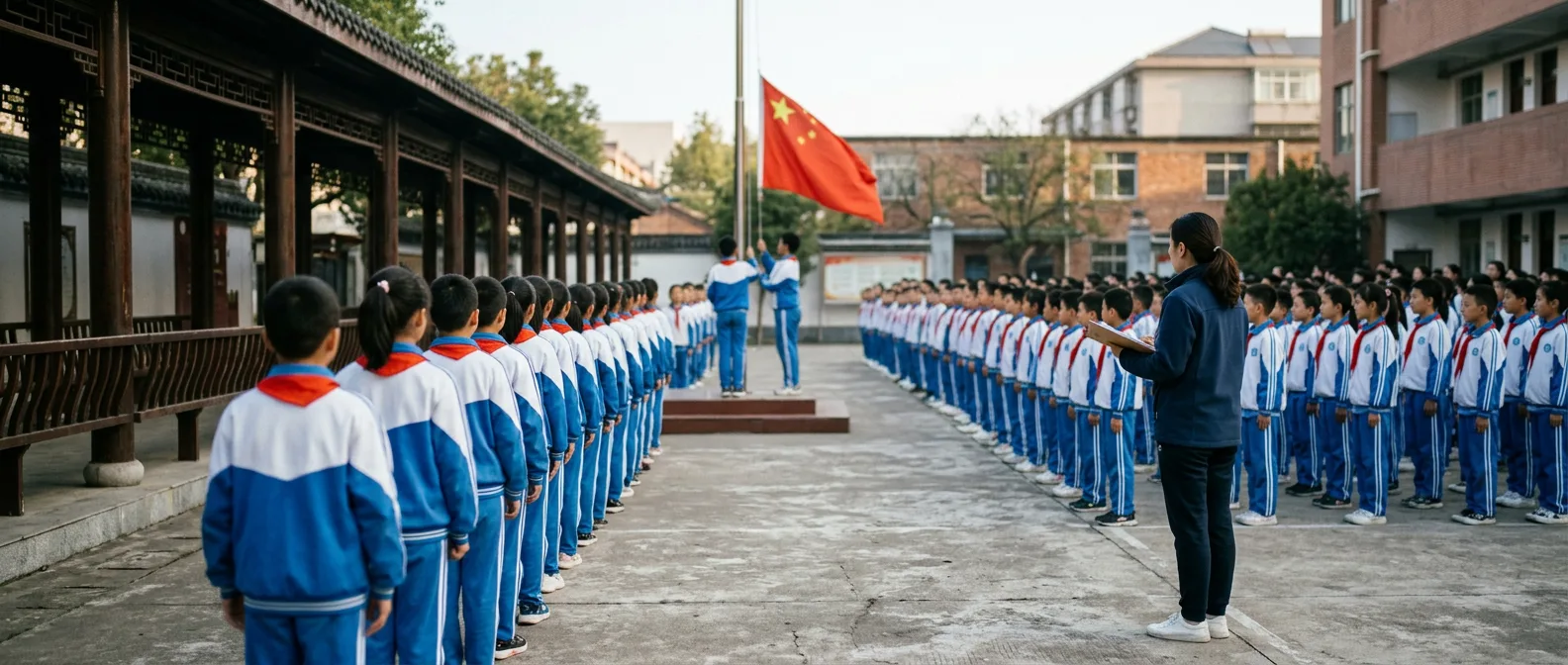
Government schools hiring foreign English teachers under the Ministry of Education’s foreign expert framework. Monday–Friday daytime schedule; summer and winter holidays aligned with Chinese school calendar. Salary RMB 8,000–15,000. Good housing packages. More structured and culturally immersive than language centres. Best for teachers who want authentic Chinese school experience.
International schools
China has 1,124+ international schools — more than any other country in Asia. Wellington College, Dulwich College, British Schools (BSB), Harrow Beijing, Yew Chung, ISS, Nord Anglia, and dozens of Chinese-developed international brands. Salary RMB 25,000–40,000+ with comprehensive packages. Require teaching licence and experience. The best-compensated positions in the build.
Bilingual schools
China’s fastest-growing sector — domestic Chinese private schools teaching part of the curriculum in English. Serving aspirational Chinese families who cannot access international school fees but want English-medium education. Salary RMB 15,000–25,000 with good benefits. Often more accessible than international schools. Strong growth trajectory in Tier 1 and Tier 2 cities.
Universities
Foreign Expert positions at Chinese universities — teaching EAP, oral English, and academic writing to undergraduates and postgraduates. Salary RMB 6,000–12,000 but with excellent benefits (free housing, subsidised meals, research time, summer/winter holidays). Required: Master’s degree preferred; PhD for better positions. Prestigious and intellectually rewarding. Best for teachers wanting academic careers in China.
Corporate English
Business English training for Chinese companies and multinationals operating in China. Conducted through training companies, language centres’ corporate divisions, or directly. Rates RMB 200–500+/hour for experienced trainers. Best in Shanghai, Beijing, Shenzhen, and Guangzhou’s business districts. Chinese companies increasingly investing in English training for international expansion.
Ready to teach English abroad?
Browse TEFL Heaven’s full range of teacher placement programs — from Southeast Asia to Europe and Latin America.
Salary and savings in China
China offers the most compelling financial proposition in this entire guide — not because individual salary figures are the highest on paper (the UAE pays more per month at international school level), but because the combination of competitive salaries, free housing, return flights, health insurance, and China’s affordable living costs creates a savings environment no other TEFL market matches. The total package value, not just the monthly salary, is the number that matters.
| Position | Salary (RMB/month) | USD approx. | Typical benefits |
|---|---|---|---|
| Language centre (entry) | RMB 8–12K | ~$1,100–$1,650 | Free housing, health insurance |
| Language centre (experienced) | RMB 12–18K | ~$1,650–$2,475 | Housing, flights, bonus |
| Public school | RMB 8–15K | ~$1,100–$2,060 | Free housing, paid holidays, food |
| Bilingual school | RMB 15–25K | ~$2,060–$3,425 | Housing allowance, insurance, bonus |
| International school | RMB 25–40K+ | ~$3,425–$5,480+ | Full package; flights, housing, insurance |
| University (Foreign Expert) | RMB 6–12K | ~$825–$1,650 | Free housing, subsidised meals, research time |
Annual savings reality: A language centre teacher in a Tier 2 city earning RMB 12,000/month with free housing spends approximately RMB 3,000–5,000/month on food, transport, and social life — saving RMB 7,000–9,000/month. Over 12 months with a flight bonus and end-of-year completion bonus: total savings of RMB 90,000–120,000 (~$12,000–$16,500). An international school teacher saving RMB 20,000–25,000/month saves $33,000–$41,000 annually. No other TEFL market in this guide comes close.
China’s tier city system explained
Tier 1 Cities
Beijing, Shanghai, Shenzhen, Guangzhou. Highest salaries, most international schools, best expat infrastructure, most foreign teachers. Also highest costs — but salaries more than compensate.
Salary: RMB 15,000–40,000+ · Int’l schools: Most · Expat community: Large · Best for: Career development, international school track
Tier 2 Cities
Chengdu, Hangzhou, Xi’an, Nanjing, Wuhan, Qingdao, Suzhou, Dalian, Chongqing. Strong teaching markets. Lower costs than Tier 1. Often better savings ratios. Growing international school presence.
Salary: RMB 10,000–25,000 · Int’l schools: Growing · Expat community: Established · Best for: Savings, China immersion, quality of life
Tier 3+ Cities
Hundreds of smaller cities with genuine teaching markets, very low costs, fewer expats, and the most authentic Chinese daily life experience. Best savings ratios in absolute terms for language centre teachers.
Salary: RMB 8,000–15,000 · Int’l schools: Limited · Expat community: Small · Best for: Maximum savings, authentic China, adventurous teachers
The tier system matters for teacher decisions: Tier 1 offers maximum career range and international exposure; Tier 2 often the best lifestyle-to-savings balance; Tier 3+ the most authentic Chinese experience and highest percentage savings on lower absolute salaries.
Best cities for English teachers in China






Requirements to teach English in China
China’s Z visa requirements are the most structured and non-negotiable of any TEFL market in this guide. Every document must be authenticated, every step completed in the correct order. The good news: reputable employers handle most of the process for you.

Bachelor’s degree — mandatory
A bachelor’s degree in any subject is legally required for Z visa eligibility. No exceptions. Any accredited university in any discipline qualifies. The degree must be authenticated (apostille now accepted since China joined the Hague Convention in November 2023) and submitted to your employer for Work Permit application.
TEFL certificate — required
120-hour TEFL minimum for Z visa and most positions. Online TEFL certificates now widely accepted after pandemic normalisation. CELTA highly valued at international schools. 150–168 hours provides competitive advantage at better schools. The certificate must be from an accredited provider and authenticated.
7-country nationality rule
Officially: USA, UK, Canada, Ireland, Australia, New Zealand, South Africa. This is China’s legal framework for English teaching Z visas. Some provinces are expanding to include other countries where English is an official language (Jamaica, Kenya, etc.) — but this varies significantly by region and employer. If you hold a non-listed passport, verify carefully before applying.
Age & other requirements
Maximum age: 60 for men, 55 for women (aligned with Chinese retirement ages — under review). Clean criminal background check (FBI/national equivalent, apostilled). Health check (completed in China after arrival or in home country for international schools). Passport validity: 6+ months. No prior China teaching experience required for language centre and public school positions.
China’s academic calendar
China’s school year has two semesters: Semester 1 (September–January) and Semester 2 (March–July). This creates two major hiring windows — July–August for September starts and January–February for March starts. Language centres hire more continuously but have similar peaks. Peak hiring for international schools starts even earlier — October–December for the following September.
Chinese New Year (Spring Festival): The world’s largest human migration occurs in January/February during Chinese New Year. Schools close for 2–4 weeks. 1.4 billion people travel simultaneously. This is an extraordinary cultural experience — and the primary reason most annual school contracts run September–July rather than January–December. Plan your initial arrival for August/September for the smoothest possible start.
Three school types in China


What teaching in China actually feels like




Complete China teaching guides
FAQ: Teaching English in China
Is China safe for English teachers?
Yes, in the sense that matters for daily life. China has very low rates of violent crime against foreigners, extensive urban security infrastructure, and a culture in which foreign teachers are broadly respected and welcomed. Women teachers consistently report feeling safe walking alone at night in most areas — safer than in many Western cities. The genuine challenges in China are cultural adjustment, language barrier, air quality (particularly in Beijing and northern cities), and internet restrictions — not personal safety. China’s safety record for foreign teachers is genuinely good.
How does China compare to South Korea or Japan as a TEFL destination?
All three are among the world’s strongest TEFL markets. China offers: more positions (much larger market), greater salary range (language centre to international school), more diverse geographic options, and the world’s most extraordinary cultural immersion. South Korea offers: structured programmes (EPIK), cleaner air than northern China, K-culture context, strong salary packages. Japan offers: JET programme structure, more Westernised infrastructure, excellent quality of life, uniquely deep cultural tradition. The choice often comes down to which cultural immersion excites you most — all three are financially and professionally excellent.
Do I need to speak Mandarin?
Not for classroom teaching — English immersion is standard and teachers are typically expected to use only English in class. For daily life: functional Mandarin makes China dramatically more accessible and rewarding, but is not required. The tonal nature and character-based writing system mean the learning curve is steeper than Spanish or Portuguese. However, basic survival Mandarin — greetings, numbers, ordering food — is achievable in 2–3 months of daily practice. Most employers offer free or subsidised Mandarin lessons as part of the teacher package. Learning even basic Mandarin is one of the most personally rewarding aspects of a China posting that teachers consistently mention.
Ready to teach English abroad?
China is the world’s largest English teaching market — 300+ million learners, transformative salaries, and one of the most extraordinary cultural immersions on earth. TEFL Heaven places teachers across Southeast Asia, Europe, and Latin America — browse our full program range to find your best fit.
TEFL Heaven · Placing teachers abroad since 2007 · 3,000+ teachers placed worldwide