

Teach English in Mexico 2026: The Complete Guide
One of Latin America's largest English teaching markets — accessible entry requirements, a relaxed FM3 work visa, year-round hiring, and a cost of living that goes further than almost anywhere in the Americas.
Teaching English in Mexico: What you need to know
Mexico is one of the most accessible TEFL markets in the Americas. With an estimated 24 million English learners and only around 5% of the population speaking English at high fluency, the demand for qualified foreign teachers is consistent and well-distributed across the country — from Mexico City's corporate language schools to beachside language centres in Cancún.
Unlike many Asian TEFL destinations, Mexico doesn't require a degree by law to teach — just a TEFL certification and a valid FM3 work visa. That makes it one of the most accessible entry points into teaching English abroad for career changers, recent grads, and those without a traditional education background.
Salaries are modest by global TEFL standards, but the cost of living is correspondingly low. Most teachers find they cover all expenses comfortably on a teaching salary and — with private tutoring or business English on the side — can save meaningfully too.
TEFL Heaven currently places teachers in Thailand, Cambodia, Vietnam, and other destinations. If Mexico is your target, this guide gives you the full picture. Not sure which country is right for you? Compare destinations here.
Why teach English in Mexico?

The appeal of Mexico as a TEFL destination is different from the structured career pathway you'd find in South Korea or Japan, or the package-deal placements common in Southeast Asia. Mexico is flexible, DIY-friendly, and genuinely welcoming of foreign teachers at all experience levels.
✓ What works well
- No degree required for most positions — TEFL cert is the main gateway
- Accessible FM3 work visa — employer-sponsored, no degree prerequisite
- Year-round hiring at language schools across all major cities
- Low cost of living — most teachers cover expenses comfortably on teaching salary
- No age limit for the FM3 visa — one of the few countries with no ceiling
- Proximity to USA and Canada makes logistics easier for North Americans
- Genuine demand for business English, corporate training, and adult learners
- Rich culture, geography, and food scene — genuinely rewarding place to live
– What to know upfront
- Salaries are lower than East Asian markets — not a saving destination
- Most interviews happen in person — you'll likely arrive before securing a job
- Language school pay is hourly, which means income can fluctuate
- International and university positions increasingly require a degree
- Working on a tourist visa is common but legally grey — not advised
- Benefits (housing, flights) less common than in structured programs like Korea or Japan
Requirements to teach English in Mexico
Here's what you'll need to teach English in Mexico — from qualifications and documents to the practical details that make your application stand out.

Mexico has some of the most relaxed entry-level requirements in the global TEFL market. The legal minimum is straightforward — but the reality of what different school types expect varies considerably.
A key distinction: Mexico's immigration law specifically allows TEFL certification to substitute for a degree when applying for the FM3 work visa. This makes it genuinely different from most other TEFL destinations where a degree is a legal requirement, not just an employer preference.
| Requirement | Status | Notes |
|---|---|---|
| TEFL/TESOL/CELTA certification | Required | Minimum 120 hours. Required for FM3 visa. 120hr+ Level 5 recommended. |
| Bachelor's degree | Preferred | Not legally required. Expected for international schools, bilingual schools, and most universities. |
| Native English fluency | Required | Native speakers preferred. Non-natives need to demonstrate near-native proficiency (IELTS/LanguageCert accepted). |
| Job offer / employer letter | Required | Required on official school letterhead to apply for FM3. Most teachers secure this in-country. |
| Background check | Required | For positions working with minors. Must be within 6–12 months of start date. |
| Prior teaching experience | Not required | Helpful but not a barrier. Language schools and private centres frequently hire first-timers. |
| Age restriction | None | No age limit for the FM3 visa — one of Mexico's most distinctive features for older career changers. |
What about non-native English speakers?
Mexico is more open to non-native speakers than many other TEFL markets. Most language schools and private employers look for fluency and communication skills over passport nationality. A strong TEFL certification, demonstrable fluency, and clear pronunciation significantly improve your chances. Some employers accept IELTS or equivalent proficiency scores in place of native speaker status.
Three school types in Mexico
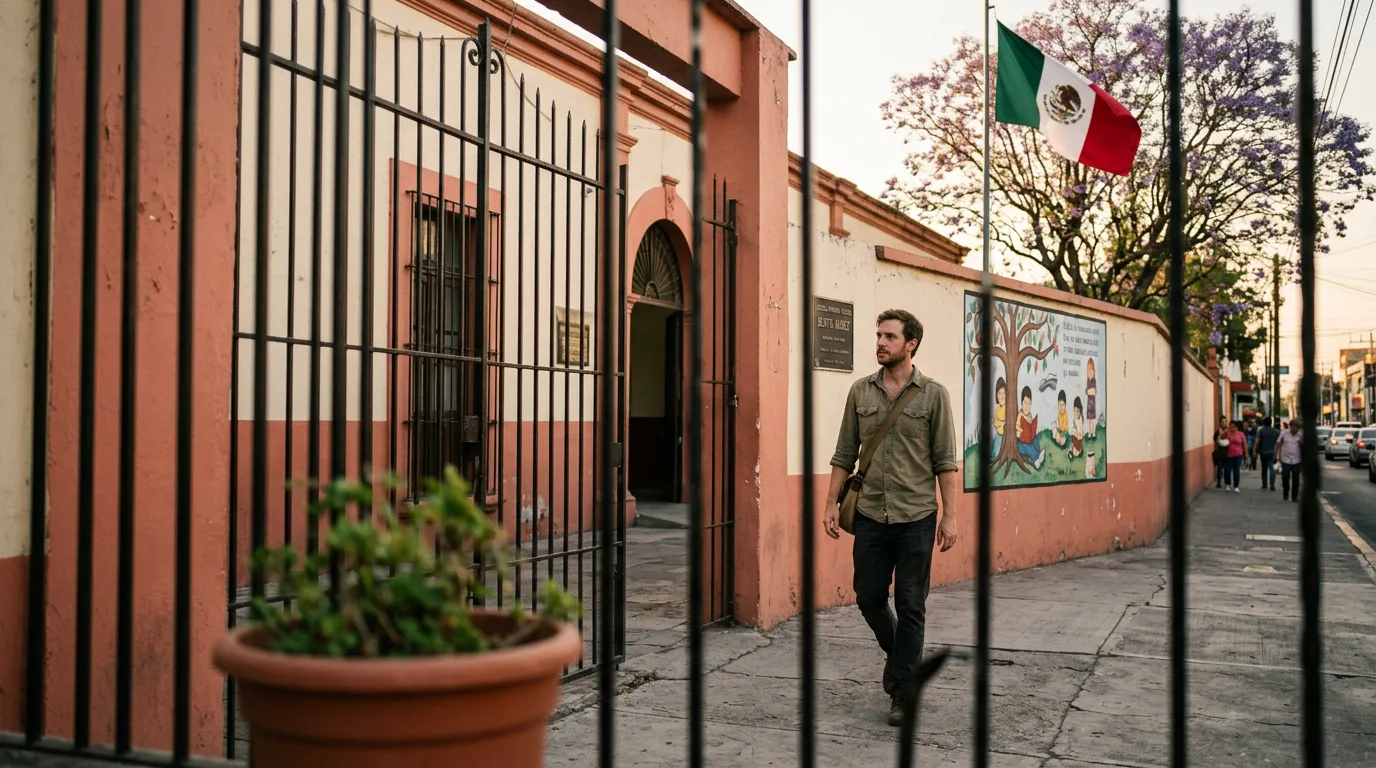

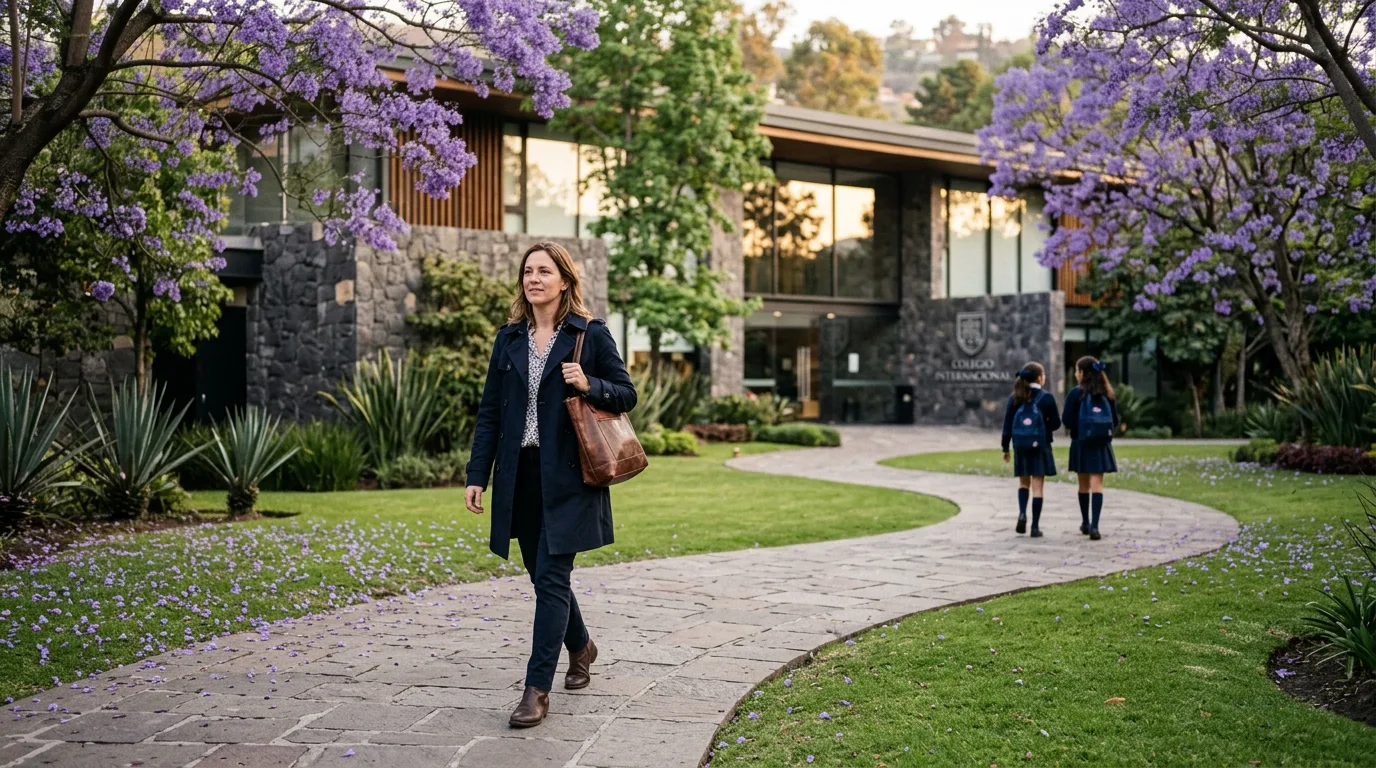
Ready to teach abroad — but not sure where?
TEFL Heaven has placed over 3,000 teachers in paid placements since 2007. If you're considering Southeast Asia alongside Mexico, our Thailand and Southeast Asia programs include guaranteed placement, in-person TEFL certification, and full visa support.
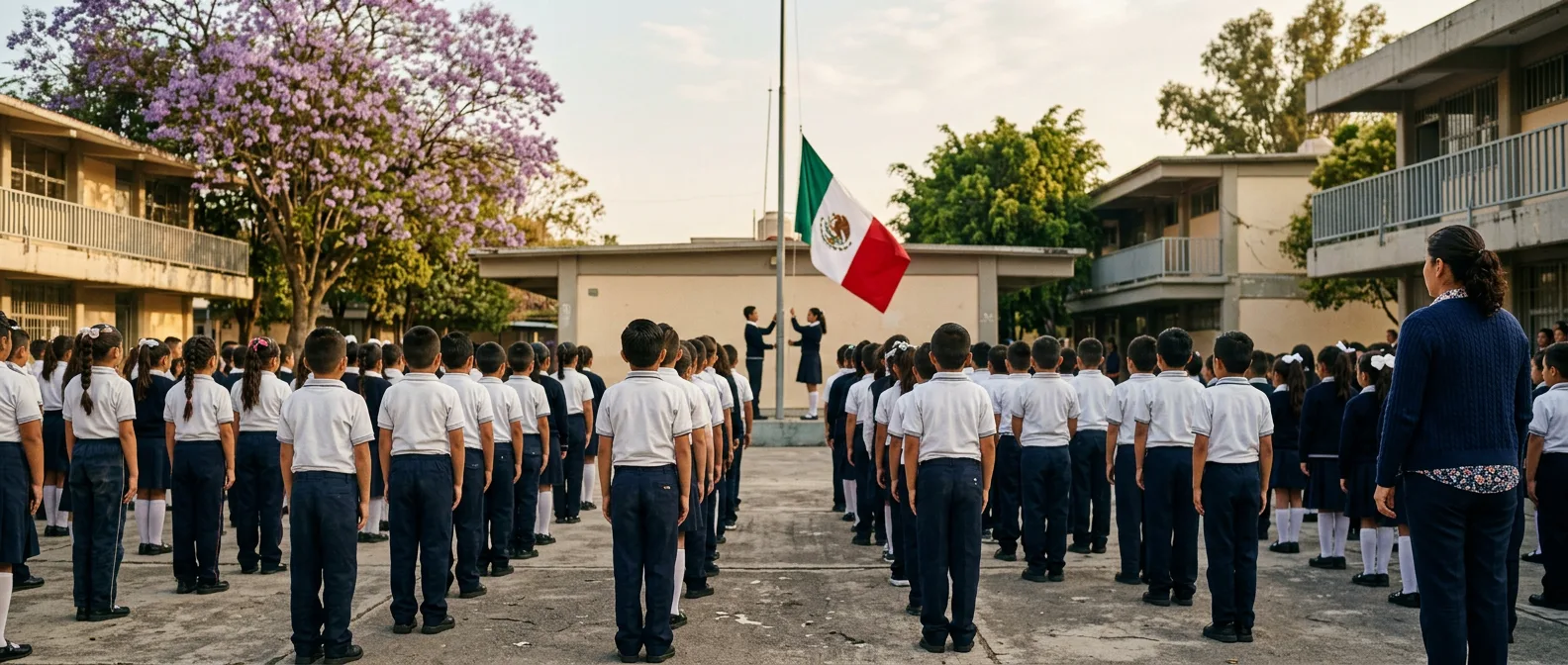
Teaching English in Mexico: Salary & cost of living
The honest picture — what you'll earn by school type, what Mexico actually costs, and what a realistic monthly budget looks like.
Language schools & centres
The most common employer for foreign TEFL teachers. Language schools hire year-round, pay hourly (typically $10–$14 USD/hour), and offer the most flexible entry requirements. Hours can fluctuate, especially for newer teachers — expect 15–25 hours per week to start. Supplementing with private lessons is very common.
Private bilingual K–12 schools
More stable schedules, better benefits (some include housing), but degree and teaching license increasingly expected. School year follows the August–July calendar. Competitive roles in larger cities. Hiring peaks in June–August for the new school year. Better for those with classroom experience.
International schools
The highest salaries in the market. These positions typically require a Bachelor's degree, often a teaching license or Master's for senior roles, and prior international classroom experience. Benefits including housing and healthcare are more common here. Competitive and worth targeting for qualified teachers.
Universities
University roles generally require a Master's degree, especially at UNAM, Iberoamericana, and Tec de Monterrey. Pay is stronger than language schools and usually comes with formal contracts, paid vacation, and sometimes healthcare. High-prestige positions but fewer openings and more competitive hiring.
Typical monthly budget: Mexico City
Ways to increase your income
Private tutoring: The most common income supplement. Rates of $7–$15 USD/hour are typical; up to $250 pesos (~$13 USD) for private lessons. Most teachers in Mexico do this alongside their main job.
Business English: High demand from Mexican companies, especially in Guadalajara's tech sector and Mexico City's corporate hub. Better pay rates than children's classes and more reliable scheduling.
Online teaching: Many Mexico-based teachers supplement in-person work with online platforms — possible on an FM3 for contracted employers, though freelancing online in addition requires care with visa terms.
Start-up costs: Most resources recommend arriving with $1,500–$2,000 USD. This covers FM3 visa fees (~$90–$290 USD in total), first month's rent and deposit, transport, and living costs while you complete in-person interviews and receive your first salary payment. Mexico interviews happen on the ground, so budget for this period.
The FM3 work visa: How to teach legally in Mexico
Mexico's FM3 (now formally the Residente Temporal con permiso para trabajar) is the standard legal route for foreign English teachers. It's employer-sponsored, renewable annually, and one of the more accessible work visas in the TEFL world.
Teaching on a tourist visa is technically illegal. While it's common practice and rarely enforced at smaller language schools, teachers caught doing so can face fines or deportation. If you're committing to a real contract, the FM3 is the right route — and your employer should be willing to sponsor it.
Get your TEFL certificate
A minimum 120-hour accredited TEFL/TESOL certification is required for the FM3 visa application. The certificate is not optional — Mexican immigration legislation specifically cites TEFL certification as the qualifying credential in place of a degree for teaching work visas.
Secure a job offer in Mexico
Your employer must provide a formal offer letter on official school letterhead. This is the key document that triggers the visa process. Most teachers enter Mexico on a tourist visa, interview in person at language schools or private centres, and secure their offer letter on the ground.
Employer submits INM application
Your school submits an application to the Instituto Nacional de Migración (INM) on your behalf. You'll receive a NUT tracking number (typically within 5–10 working days) allowing you to monitor progress online. The school must hold appropriate government authorisation to hire foreign workers.
Pay the fee & submit documents
The INM application fee is approximately $90 USD (by bank transfer or direct deposit). Your key documents include a valid passport (minimum 6 months validity), your TEFL certificate, CV, photos, and the employer's offer letter. Your employer or a representative may be able to complete portions of this process on your behalf with a signed Carta de Poder.
Collect your visa at a Mexican consulate
Once your FM3 is approved, you must collect it in person at a Mexican consulate outside Mexico — typically San Antonio, Texas for US-based teachers, or consulates in Guatemala or Belize. You have 15 days to collect once cleared. You pay a further ~$200 consular fee at this stage. The visa is valid for 12 months on collection.
Renew in Mexico — build towards residency
The FM3 is renewed annually in Mexico. After three renewals, you qualify for permanent residency. It allows you to open a Mexican bank account, access the national healthcare system (IMSS), and work for multiple employers simultaneously — an important benefit given language school teachers often split hours across more than one centre.
FM3 at a glance
Processing time: Allow 3–6 weeks for the full FM3 process from employer submission to consulate collection. Plan around public holidays — the Christmas–New Year period significantly delays INM processing times.
Best cities to teach English in Mexico
Mexico's TEFL market is concentrated in major cities — but each has a distinct profile in terms of pay, lifestyle, and school type availability.

Mexico City (CDMX)
The largest English teaching market in Mexico. Corporate language schools, bilingual private schools, and universities all hire regularly. Strong demand for business English from the capital's finance and tech sectors. Competitive but the most job-rich city in the country. Salaries at the higher end of the national range.

Guadalajara
Mexico's second city and cultural capital — home of mariachi, tequila, and a booming tech industry that creates strong demand for business English teachers. Several international schools cater to expat families. Language schools hire year-round. Cost of living is lower than Mexico City while salaries remain competitive.

Cancún
The resort city that offers more than beaches. International schools, private language centres, and a strong tourism-driven demand for English instruction make Cancún a genuine teaching destination. Lower cost of living than Mexico City but smaller job market. Popular with teachers who want proximity to Caribbean beaches.

Oaxaca
Smaller market but a deeply rewarding place to live. Language schools and private lessons dominate — fewer corporate jobs, but a strong expat community and one of Mexico's most celebrated food and culture scenes. Good for teachers who prefer a slower pace and genuine cultural immersion over a large job market.

San Miguel de Allende
A UNESCO-listed colonial city with a large American and Canadian expat population — meaning sustained demand for private English tuition alongside its small language school scene. Strong for private lessons rather than formal school employment. High quality of life, lower competition than major cities.

Puebla
One of Mexico's largest cities, increasingly popular with TEFL teachers for its large university student population and strong private school sector. Less expensive than Mexico City, with a growing expat community and a high demand for English. Accessible by bus from CDMX — a good alternative for those who want a large city without the capital's intensity.
How to find English teaching jobs in Mexico
The Mexico job market has one important difference from most other TEFL destinations: most schools hire in person. Here's how the process actually works.
Apply directly, in country
The most common and effective method. Most language schools and private centres in Mexico don't advertise openly online — they hire when teachers walk in, introduce themselves, and demonstrate availability. Enter on a tourist visa, walk into language schools across your target city, and arrange interviews directly. This is not just acceptable practice — it's the norm.
Online job boards
Online searching works better for international schools, bilingual K–12 positions, and university roles — all of which tend to post listings. Top resources: Dave's ESL Café, Indeed México, Tefl.com, The TEFL Org's jobs centre, LinkedIn, and ESL Job Feed. International school positions often require applying months ahead of the August school year start.
Placement programs
Third-party placement organisations offer supported routes into Mexico teaching — particularly useful for first-timers who want visa guidance and school vetting included. Programs like IVHQ and Projects Abroad operate in Mexico. If you're coming from Southeast Asia or want a guaranteed placement structure, TEFL Heaven's programs in Thailand and Asia offer a comparable structured route.
Best hiring windows:
January–August is peak hiring season for most language schools. For public and private K–12 schools that follow the August–July academic year, the main hiring windows are June–August (for September start) and December (for January intake). Summer English courses also create openings in May–July.
Want a guaranteed placed position abroad?
Mexico's DIY job search is part of its appeal — but if you want a guaranteed placement, proper visa support, in-country backing, and a structured TEFL training program, TEFL Heaven's placements in Thailand and Southeast Asia offer exactly that. Same lifestyle ambitions, structured program.
What life is like as an English teacher in Mexico
Mexico is one of those TEFL destinations that consistently surprises teachers — particularly North Americans and Europeans who arrive with pre-formed expectations and leave with a completely different picture of what the country actually is.
The working week
Language school schedules in Mexico are split-day heavy. Classes run early morning (7–9am for adults commuting to work) and evenings (7–9pm). The mid-afternoon is often free — making it common to combine a language school contract with private tutoring during that window. Most full-time positions run 20–25 teaching hours per week. Business English contracts for corporate clients can offer more consistent hours.
Culture and community
Mexico's strength as a destination isn't just the food and climate — it's the social infrastructure that exists for foreign teachers, particularly in Mexico City and Guadalajara. Facebook groups, language exchange meetups, and the existing expat networks mean that new arrivals rarely find themselves starting from scratch. Spanish language acquisition happens naturally in a way that's harder to achieve in Asian TEFL markets where the linguistic gap is greater.
Travel and geography
The geography alone is worth noting: Mexico has Pacific and Caribbean coastlines, highland colonial cities, Mayan and Aztec ruins, diverse cuisines by region, and near-infinite weekend destinations within reach of almost any base city. Most teachers are within 4–6 hours (road or budget airline) of a completely different Mexican landscape.
Spanish language skills
You do not need Spanish to teach English in Mexico — classes are conducted in English and schools prefer this. But learning Spanish rapidly improves your quality of life, expands your private tutoring market, and is simply much easier in-country than from home. Most teachers pick up conversational Spanish within a few months of arrival.
Mexico vs Southeast Asia
| Factor | Mexico | Thailand |
|---|---|---|
| Avg salary | $500–1,000 | $800–1,400 |
| Cost of living | Low | Very low |
| Degree required? | Not legally | Yes (Non-B) |
| Visa complexity | Medium | Medium |
| Placement support | DIY-led | Structured |
| Job market size | Large | Very large |
| Learning Spanish | Yes | Thai/Khmer |
Figures are approximate and vary by city, school type, and experience level.
Mexico at a glance
FAQ: Teaching English in Mexico
Do I need a degree to teach English in Mexico?
Not legally. Mexican immigration legislation allows a TEFL certificate (minimum 120 hours) to qualify you for the FM3 work visa in place of a degree. This is one of the key differences between Mexico and most other TEFL destinations. That said, degree holders will find more doors open — international schools, bilingual K–12 schools, and most universities do expect a bachelor's degree, and some require a Master's for senior positions. If you don't have a degree, your most accessible market in Mexico is private language schools.
What TEFL certificate do I need for Mexico?
A minimum 120-hour TEFL, TESOL, or CELTA certification from an accredited provider. The 120-hour minimum is what's cited in Mexican immigration requirements for the FM3 work visa. An in-person TEFL course (as offered by TEFL Heaven in Bangkok) is well-regarded by employers. CELTA is universally recognised for premium positions. An online-only 120-hour course will work for language schools; in-person or blended certifications are stronger for competitive roles.
Is it safe to teach English in Mexico?
This is a common concern and worth a realistic answer. The major cities that form Mexico's TEFL market — Mexico City, Guadalajara, Cancún, Oaxaca, Puebla — have large established expat and foreign-teacher communities. Most TEFL teachers report no safety problems during their time in Mexico. The areas with well-documented security concerns are typically not the same cities where foreign English teachers live and work. Standard urban common sense applies: stick to known neighbourhoods, avoid poorly-lit streets late at night, and follow the same advice the local expat community follows. Many thousands of foreign English teachers have lived safely in Mexico over many years.
Can I teach English in Mexico without speaking Spanish?
Yes — English classes in Mexico are taught in English, and schools prefer it this way. You don't need Spanish to get a job or start teaching. In practice, learning basic Spanish makes daily life significantly easier — navigating housing, supermarkets, and transport becomes much simpler with even conversational Spanish. Most teachers find that living in Mexico accelerates their Spanish acquisition naturally and quickly.
How do I find a job before arriving in Mexico?
International schools and university positions are the most realistic jobs to secure remotely before arrival — these advertise publicly on platforms like Dave's ESL Café, Indeed, and LinkedIn. Language schools, which are the most common employer for foreign teachers, almost universally hire in person. The standard process is: enter on a tourist visa, spend 2–4 weeks interviewing at language schools in your target city, secure an offer letter, then begin the FM3 process. Budget $1,500–$2,000 USD for start-up costs to cover this period.
Can non-native English speakers teach in Mexico?
Yes. Mexico is relatively open to non-native English speakers compared with other TEFL markets. Language schools and private employers look for fluency and communication clarity over passport nationality. A strong TEFL certification and demonstrable proficiency (IELTS, LanguageCert, or TOEFL scores can help) significantly improve your chances. Native speakers will always have an advantage for premium positions, but non-native teachers work across Mexico's language school market without significant barriers.
How does Mexico compare to teaching English in Thailand?
The two countries offer quite different TEFL experiences. Thailand has a larger structured TEFL industry with established programs like TEFL Heaven that include guaranteed placement, in-country support, visa guidance, and training. Salaries in Thailand are modestly higher on average, and the savings potential in Southeast Asia tends to be greater. Mexico offers more flexibility — a DIY market where you navigate the job search yourself, with lower barriers to entry and the benefit of being in Latin America (Spanish acquisition, geographic access). If you want a structured, supported first TEFL experience with guaranteed placement, Southeast Asia programs like TEFL Heaven's Thailand offering tend to be better suited. If you want independence and proximity to the Americas, Mexico is a strong market.
What teachers say about Mexico
From teachers who have taught English in Mexico — on what the experience was actually like.
"I arrived not speaking Spanish, barely knowing anyone, and within six weeks had a job at a language school in Guadalajara and my FM3 in process. The in-person job search is intimidating until you realise every other foreign teacher went through the same thing. The expat network here made it so much easier than I expected."
"My language school started me on 18 hours a week, which felt low — but I added four private students within two months and suddenly I was making more than enough. Mexico City is genuinely one of the best cities in the world to live in once you get past the first few weeks of adjustment."
"The FM3 visa process sounds bureaucratic and it kind of is — but my school's admin department had done it dozens of times and walked me through every step. I picked up my visa at the San Antonio consulate and was back teaching the following week. Once it's done, it's done."
"I was 47 and a career changer — no teaching experience, no degree in education, just a Level 5 TEFL and a lot of determination. No age limit on the FM3 is not a small thing. Mexico genuinely doesn't care how old you are. I teach adults at a corporate language centre and it's the best professional decision I've ever made."
"Oaxaca is small for a TEFL market but it's extraordinary as a place to live. I supplement my language school income with private lessons and weekend cooking class translations. My Spanish is now genuinely conversational. The culture here is unlike anywhere else I've lived."
"The business English side surprised me. I'd expected mostly kids in classrooms. In Guadalajara especially, corporate training contracts pay significantly more than regular school hours and you're teaching genuinely motivated adults. It's a completely different experience — and a much better income."
Looking at Southeast Asia as well as Mexico?
TEFL Heaven places teachers in Bangkok with guaranteed paid placements, in-person TEFL certification, Non-B visa support, accommodation during training, and in-country backing throughout your contract. No DIY job search. No visa uncertainty.
What teaching in Mexico actually feels like




Complete Mexico teaching guides
Deep-dive pages on every aspect of teaching English in Mexico — from the FM3 visa process and salary detail to city guides and day-to-day life.
Salary & cost of living
Earnings by school type, real monthly costs, and realistic savings potential.
Teaching in Guadalajara
Mexico's cultural capital — tech sector demand, international schools, lifestyle.
Mexico is one of the world's great TEFL markets.
For structured placement, Southeast Asia is where we shine.
If Mexico is calling you, this guide gives you everything you need to navigate it independently. If you want a guaranteed placed position with in-country support, TEFL certification, and no DIY visa stress — TEFL Heaven's Thailand program has placed over 3,000 teachers since 2007 and remains the most supported route into paid teaching abroad.
TEFL Heaven · Bangkok · Placing teachers abroad since 2007 · 3,000+ teachers placed worldwide