

Teach English in Vietnam:
Salary, Visa & Requirements (2026)
Southeast Asia's fastest-growing TEFL market — with one of the highest salary-to-cost-of-living ratios in the region, year-round hiring, and a genuine government commitment to English education that shows no sign of slowing.
In this
guide
Why teach English in Vietnam?
Vietnam has moved well past "emerging destination." It is now a fully established, thriving TEFL market — one that offers an exceptional combination of competitive salaries, genuinely low cost of living, and a level of English-education demand that keeps the job market consistently strong.


Outstanding salary-to-cost ratio
Monthly teacher salaries of $1,200–$2,000 go much further than equivalent amounts in Thailand or the Philippines. A comfortable life in Ho Chi Minh City typically costs $600–$900 per month, leaving meaningful savings potential on a standard contract.
Booming demand for English
Since the early 2000s, the Vietnamese Ministry of Education has set national targets for English proficiency, directly tied to the country's economic competitiveness goals. This creates a structural, government-backed demand that is unlike any other market in the region.
Year-round hiring at language centres
While public schools hire mainly for September and January starts, the large private language centre networks — ILA, VUS, Apax, Apollo, Language Link — recruit on a rolling basis throughout the year. New teachers can start almost any month.
Three major cities, very different lifestyles
Ho Chi Minh City is urban, fast, and highly international. Hanoi is more traditional, with a different pace entirely. Da Nang gives you a beach city with a growing language school market and lower living costs than either capital. Few TEFL countries offer this range.
Extraordinary food culture and low daily costs
A street food meal costs as little as $1–2. A local restaurant dinner for two is typically $5–10. Beer at a local bar is under $1. The combination of teacher salaries and these prices makes Vietnam genuinely one of the easiest countries in the world to save on while living well.
A country worth exploring deeply
Vietnam stretches 1,650km from north to south, with Ha Long Bay, Hội An, the Mekong Delta, Sapa, and Phú Quốc all reachable on teachers' day-off budgets. Weekend travel is a core part of teaching life here in a way that few other destinations can match.
Interested in teaching in Southeast Asia?
TEFL Heaven places teachers across Southeast Asia and runs the region's most established certified training and placement program from Bangkok. Enquire to receive full program details, including current intake dates and destination options.
What you need to teach English in Vietnam
Vietnam's legal requirements for foreign English teachers are set out under Decree 219/2025/ND-CP and are among the clearest in Southeast Asia. Understanding these before you plan your move is essential — non-compliance puts you at risk of fines, deportation, and a country ban.
Vietnam requires a bachelor's degree, 120-hour TEFL certificate, clean criminal background check, and medical examination. All foreign-issued documents must be apostilled, translated into Vietnamese, and authenticated before submission. Start this process 6-8 weeks before your intended travel date.

Bachelor's degree (any field)
A four-year bachelor's degree from an accredited institution is legally required to obtain a work permit in Vietnam. The subject field does not matter — education, science, arts, business all qualify equally. Associate degrees and diplomas do not meet the requirement. There is one narrow exception: applicants with five or more years of documented teaching experience may apply for a degree exemption, but this is rarely granted.
TEFL / TESOL / CELTA — minimum 120 hours
A 120-hour TEFL, TESOL, or CELTA certificate is required under current Vietnamese regulations unless you hold a recognised teaching licence from your home country or have 5+ years of verifiable teaching experience. Online TEFLs are accepted but may be scrutinised more carefully. A Level 5 TEFL with an in-class teaching practice component significantly strengthens your application and opens higher-paying positions.
Clean criminal background check
A police clearance certificate from your home country (and any country you've lived in for 12+ months) is mandatory for the work permit application. It must be apostilled and, in most cases, translated into Vietnamese by a certified translator. The document must be no more than six months old at the time of submission.
Medical health check
A health examination completed at an approved Vietnamese hospital or clinic is required as part of the work permit process. This can only be done after you arrive in Vietnam. The certificate is valid for 12 months from the date of issue and is submitted alongside the work permit application by your employer.
Age: 18–60
Vietnamese labour law requires teachers to be at least 18 years old. The maximum age for obtaining a standard work permit is 60. Teachers above this age may still be employed in some institutions under special arrangements, but the standard legal route is not available to them.
Document authentication — start early. All foreign-issued documents (degree, police check, TEFL certificate) must be translated into Vietnamese, notarised by a local notary, and in many cases apostilled or authenticated by the Vietnamese embassy in your home country before submission. This process typically adds 3–6 weeks to your preparation timeline. Start it before you book flights.
Non-native English speakers. Vietnam does accept non-native English teachers. If your degree was not taught in English, you will need to submit a recognised English proficiency certificate — IELTS Band 6.5 or above, or TOEFL iBT 100 or above. A Level 5 TEFL certificate with in-class teaching practice significantly strengthens a non-native application.
What teachers earn — and what life actually costs
Vietnam is one of the most financially rewarding destinations for TEFL teachers, not because salaries are the highest in Asia, but because the gap between what you earn and what you spend is consistently positive. Most teachers save $300–$700 per month on a standard contract.
| School / employer type | Teaching hours / week | Monthly salary | Benefits typically included |
|---|---|---|---|
| Public school (via agency) | 15–25 hrs | $1,200–$1,800 | Visa assistance, health insurance |
| Private language centre (ILA, VUS, Apax, Apollo) | 20–25 hrs | $1,200–$2,000 | Visa support, performance bonuses, some health cover |
| Private / bilingual school | 20–25 hrs | $1,500–$2,500 | Visa, health insurance, sometimes housing |
| University | 15–20 hrs | $1,700–$2,200 | Paid breaks, office hours, some accommodation |
| International school (licensed teacher) | 25–30 hrs | $2,000–$4,000+ | Housing, flights, insurance, full benefits package |
Figures are 2026 estimates. Ho Chi Minh City and Hanoi typically pay 15–25% more than secondary cities. First-time teachers usually start at the lower end of each range.
Cost of living in Vietnam
The figures below reflect a comfortable but not extravagant teacher lifestyle in Ho Chi Minh City. Da Nang and secondary cities run 20–30% lower on most line items.
Ho Chi Minh City — monthly budget
Da Nang — monthly budget
Where foreign teachers work in Vietnam
Vietnam has a more varied teaching landscape than most TEFL countries. Understanding which type of institution suits your qualifications, schedule preferences, and salary goals is one of the most important decisions you'll make before applying.
Private language centres
The backbone of Vietnam's English teaching industry. Major chains like ILA, VUS, Apollo, Apax English, and Language Link operate hundreds of centres across the country and hire on a continuous basis. Classes run evenings and weekends — when working parents can send children. Curriculum is usually provided, keeping lesson prep light. Quality, management style, and pay can vary significantly between chains and individual centres.
$1,200 – $2,000 / month
Public schools (via agency)
Foreign teachers cannot be hired directly by Vietnamese public schools — you must apply through a licensed private agency such as EMG Vietnam or Compass Education, which then places you in state schools across the city. Class sizes are large (40–50 students), daytime hours, and the experience gives you a real window into Vietnamese education. Salaries are competitive for the workload.
$1,200 – $1,800 / month
International schools
The top of the market. International schools in Vietnam (British, American, IB curriculum) pay significantly more than other institution types and typically include housing allowances, flights, insurance, and a full benefits package. Requirements are significantly higher — a licensed teaching qualification (PGCE, state licence) plus 2–3 years of classroom experience is standard. Most positions in Hanoi and Ho Chi Minh City.
$2,000 – $4,000+ / month
Universities
University positions offer lower weekly teaching hours (15–20 periods), access to dedicated office time, and a more autonomous working environment. You are typically responsible for developing your own teaching materials. High-ranking universities in major cities pay significantly more and expect advanced qualifications. A good option for teachers who want a slower pace and to develop professionally.
$1,700 – $2,200 / month
Three school types in Vietnam
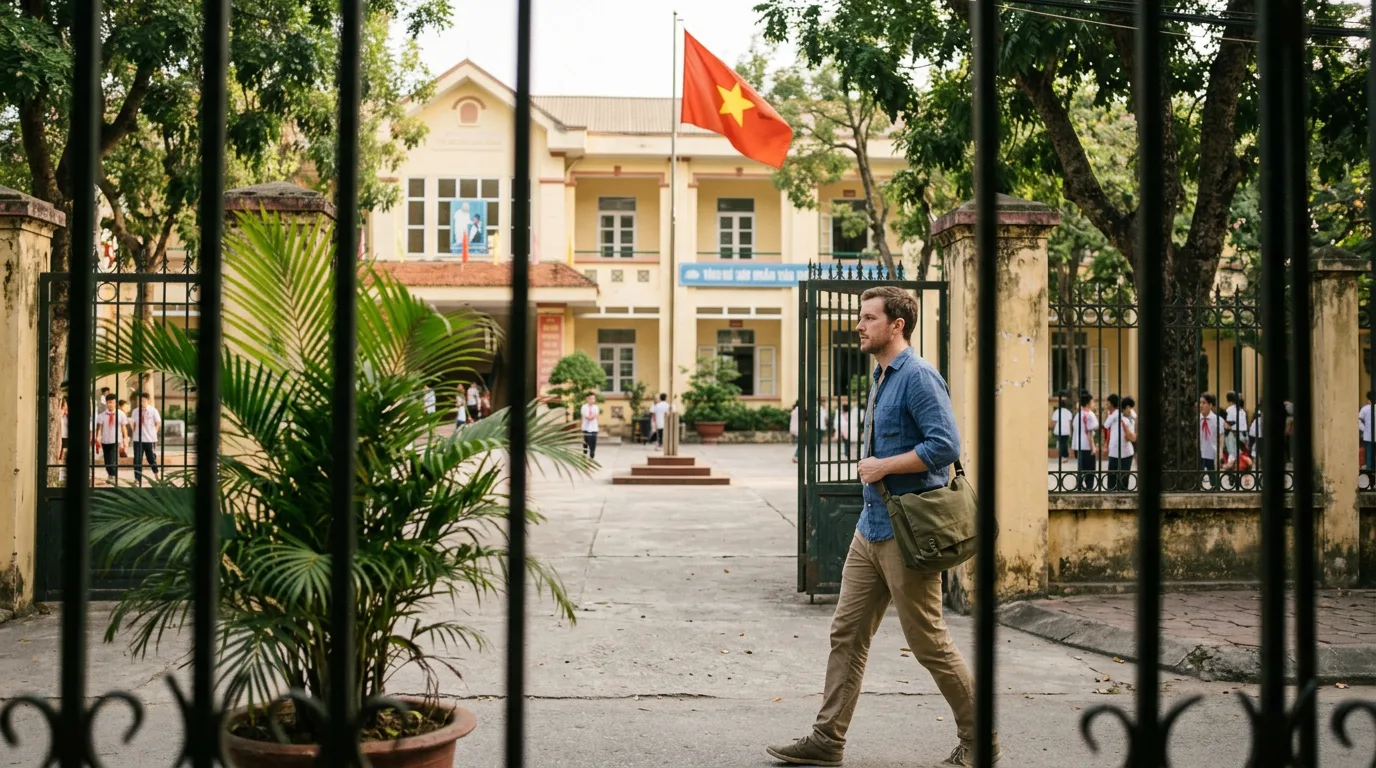


TEFL Heaven places teachers across Southeast Asia
Our Thailand program includes in-person TEFL certification, guaranteed paid placement, full visa and work permit guidance, and ongoing in-country support. If Vietnam is on your radar, Thailand is the natural starting point — and we've been placing teachers there since 2007.
The legal route: LD2 visa and work permit
To teach legally in Vietnam, you need both a work permit and an LD2 visa. The process is straightforward when your documents are in order, but document authentication must start before you travel. Your employer handles the Vietnam-side submissions — your job is to arrive with properly prepared paperwork.
Authenticate your documents at home
Your degree certificate, TEFL certificate, and police clearance check must be apostilled or legalised and then translated into Vietnamese by a certified translator. In many cases, the Vietnamese Embassy in your home country must also verify the documents before they can be used in Vietnam. Start this 6–8 weeks before your intended start date.
Start 6–8 weeks before travelSecure a job offer from a licensed employer
Your employer must be registered to sponsor foreign workers in Vietnam. Language centres, schools, and universities that are legally compliant will have this in place. If an employer cannot or will not sponsor your work permit, that is a significant red flag. Only proceed with employers who confirm they will handle the work permit submission.
Do not accept cash-in-hand arrangementsEnter Vietnam on a business (DN) visa
While your work permit is processed, you will enter Vietnam on a business DN visa arranged by your employer. This allows you to legally remain in the country while the work permit is being submitted and approved. Your employer typically arranges this visa before you travel.
2–3 weeks processing timeComplete your medical examination in Vietnam
A health check at an approved Vietnamese hospital or clinic is mandatory. This can only be done after you arrive. Your employer will direct you to an approved facility. The certificate is valid for 12 months and is submitted with your work permit application.
Completed within first week of arrivalWork permit submitted and approved
Your employer submits all documents — including your degree, TEFL, police check, medical certificate, and employment contract — to the Department of Labour. Processing typically takes 10–15 working days. Once approved, your work permit is valid for the duration of your contract (up to two years).
10–15 working daysConvert to LD2 visa or Temporary Residence Card
Once your work permit is approved, your employer converts your status to an LD2 visa or a Temporary Residence Card (TRC). The TRC allows longer stays (1–2 years) and removes the need for visa renewals during your contract. Your employer manages this step on your behalf.
Mirrors your work permit validityDocuments checklist
Where to teach in Vietnam
Vietnam's teaching market is concentrated in three cities, each of which offers a genuinely different quality of life. Your choice of city matters almost as much as your choice of school type — pick based on what kind of life you want to lead, not just which salaries are highest.

Largest TEFL market
The commercial capital and the centre of Vietnam's private English education industry. The largest concentration of language centres, international schools, and corporate English programs. Fast, loud, genuinely international — and the highest average teacher salaries in the country. The city that most first-time teachers land in.
Ho Chi Minh City teaching guide
Capital & cultural heart
Vietnam's capital is older, more traditional, and markedly different in character from the south. A strong university market alongside language centres, a distinct food culture, and a city that rewards teachers who want to go deeper into Vietnamese history and culture. Slightly lower cost of living than HCMC; comparable salaries.
Hanoi teaching guide
Beach city, growing market
Central Vietnam's largest city sits on a beautiful stretch of coastline with mountains inland. Lower cost of living than either capital, a more relaxed pace, and a growing language school market. A popular choice for teachers who've already done a year in HCMC or Hanoi and want a different experience. Hội An is just 30 minutes away.
Da Nang teaching guide
UNESCO heritage town
Just 30 minutes from Da Nang, Hoi An is one of Southeast Asia's most beautiful and well-preserved historic towns. Lantern-lit streets, tailor shops, and a growing market for private English tutoring. A popular weekend base for Da Nang teachers.

Imperial capital
Vietnam's former imperial capital sits along the Perfume River in central Vietnam. UNESCO-listed citadel, royal tombs, and a slower pace of life. A smaller teaching market but lower costs and deep cultural immersion for teachers who want something different.

Mountain retreat
Terraced rice paddies cascading down mountain slopes in Vietnam's far north. Sapa is primarily a weekend escape destination for Hanoi-based teachers rather than a teaching market itself, but its dramatic landscapes make it one of Southeast Asia's most photographed places.
What life actually looks like as a teacher in Vietnam
Vietnam is one of those countries that surprises teachers who come primarily for the work. The food is extraordinary. Travel within the country is inexpensive and easy. The expat and teacher community is large and welcoming. And the Vietnamese people have a reputation for genuine warmth that extends well beyond tourist interactions.

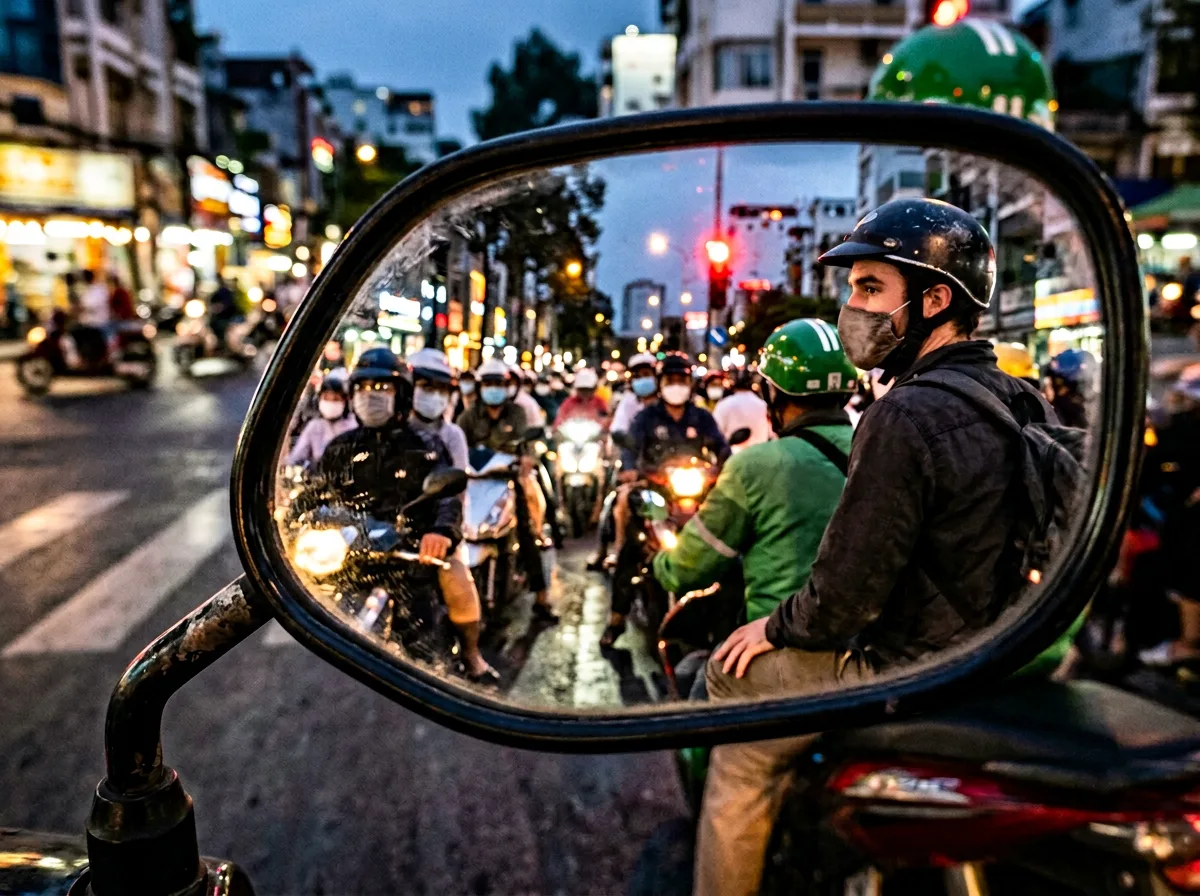


Food that costs almost nothing and tastes extraordinary
Phở, bánh mì, bún chả, gỏi cuốn, cơm tấm — Vietnamese street food is widely considered among the best in the world, and eating locally on a teacher's salary is entirely sustainable. A bowl of phở costs $1–2. A full meal at a local restaurant rarely exceeds $3–5. This fundamentally changes what your salary feels like.
Motorbike culture and city navigation
Renting a motorbike ($40–60/month) is the standard way teachers get around Vietnam's cities. Traffic, especially in HCMC, can feel overwhelming at first — but most teachers adapt within two to three weeks. Grab (the local Uber equivalent) is a cheaper alternative for those who prefer not to ride themselves.
Weekend and holiday travel
Vietnam's geography means you're never far from something remarkable. Ha Long Bay is a short bus or flight from Hanoi. Hội An and the central highlands are accessible from Da Nang. The Mekong Delta and Phú Quốc island are day or weekend trips from HCMC. Budget airlines make Sapa, Đà Lạt, and even Bali or Bangkok accessible for longer breaks.
A large, established expat and teacher community
Vietnam has one of the largest expat teacher communities in Southeast Asia. Facebook groups, regular social events, teacher meetups, and a well-developed infrastructure of English-friendly restaurants, clinics, gyms, and coworking spaces mean you are never isolated. Building a social life in HCMC or Hanoi is genuinely easy.
Climate: tropical south, distinct seasons in the north
Ho Chi Minh City has a consistent tropical climate — hot and humid year-round, with a rainy season from May to November. Hanoi has distinct seasons, including a genuinely cool winter (15–20°C). Da Nang sits in between. Weather is rarely a dealbreaker but is worth factoring into your city choice.
"I came expecting to stay six months. Three years later I was still there. Vietnam does that to people — the food, the cost of living, the travel on weekends. It's very hard to leave once you've settled in."
Tom H. — TEFL teacher, Ho Chi Minh City (3 years)
When to apply for teaching jobs in Vietnam
Vietnam's hiring calendar differs significantly by institution type. Language centres are the most flexible — they hire throughout the year. Public schools and universities work to fixed academic terms. Planning your timeline around the right window can make the difference between a smooth start and a two-month wait.
Private language centres
The large chains (ILA, VUS, Apax, Apollo, Language Link) hire on a rolling basis. New intakes happen monthly. This is the most common entry point for first-time teachers and the most flexible if you want to start without a long wait.
Public schools & bilingual schools
For the September start (the main academic intake). Apply in June and have your documents authenticated by early August. Agencies like EMG Vietnam and Compass Education manage most public school placements.
January / second semester start
A smaller but real hiring window for public schools and universities ahead of the January semester. Useful if you miss the September window. Language centres hire for this period too, but the bulk of public school roles fill in the August window.
Document authentication takes time. Whatever your target start date, begin the apostille and translation process at least 6–8 weeks beforehand. Many teachers underestimate this step and end up delayed by several weeks. Starting early is the single most effective thing you can do to ensure a smooth arrival.
How to find a teaching job in Vietnam
Vietnam has a well-developed infrastructure for finding teaching work, with multiple channels that work in parallel. The most important thing is to target employers who can legally sponsor your work permit — not just any employer willing to interview you.
Job boards and placement platforms
Vietnam Teaching Jobs (VTJ), Teaching Nomad, and Dave's ESL Cafe all list positions across the country. Filter specifically for roles that include work permit sponsorship. Most major language centres list directly on these platforms.
Facebook groups
The Vietnam expat and teacher community on Facebook is large and active. Key groups include "ESL Teaching in Vietnam," "English Teaching Jobs in Vietnam (The Original)," and city-specific groups like "Hanoi Massive" and "Expats & Locals in Ho Chi Minh City." Reputable schools post directly here.
Direct applications to school chains
ILA, VUS, Apollo English, Apax English, and Language Link all have dedicated recruitment pages on their websites. Applying directly means skipping intermediaries and often leads to faster responses. Most chains run Skype or Zoom interviews before you travel.
Placement agencies for public schools
To teach in Vietnamese public schools, you must go through a licensed agency. EMG Vietnam and Compass Education are the most established. They handle the matching process, work permit coordination, and school liaison — and are the only legal route into the state school system.
What to watch out for
Red flags include employers unwilling to sponsor a work permit, "cash in hand" arrangements, requests to pay a deposit before employment, and vague or unsigned contracts. If a school cannot confirm it is registered to hire foreign workers, do not accept the position.
What schools want to see
A clear, one-page CV in English; scanned copies of your degree and TEFL certificate; a short video introduction (increasingly requested by language centres); and references from any prior teaching or tutoring experience. Prepare these before you start applying.
Vietnam is a great fit — for the right kind of teacher
Vietnam suits some teachers exceptionally well and is a less natural fit for others. This is an honest summary of who thrives here and what you should think carefully about before committing.
Vietnam tends to work well if you:
- Have a bachelor's degree and a 120-hour TEFL certificate (or are willing to get one before travelling)
- Want to live in a genuinely dynamic, culturally rich city with a large expat community
- Are comfortable with a busy, fast-moving urban environment — particularly in HCMC
- Want to save money while living well — the salary-to-cost ratio is hard to match in Southeast Asia
- Enjoy Southeast Asian travel and want easy access to the rest of the region on weekends and during breaks
- Are patient with bureaucracy — document authentication and work permit processes require advance planning
- Want year-round entry points, without waiting for a specific academic term to start
Think carefully if you:
- Don't yet have a bachelor's degree — the legal route for work permits is limited without one
- Want a quieter, more rural lifestyle — Vietnam's teaching market is concentrated in major cities
- Prefer a destination with employer-provided housing included in the contract — Vietnam typically doesn't include accommodation
- Are sensitive to air pollution or heavy traffic — both HCMC and Hanoi have significant urban congestion
- Want to relocate immediately without time to authenticate documents — the paperwork process takes 6–8 weeks
- Are looking for a placement program with in-country support throughout — Vietnam's market is primarily self-directed unless you work through a specific agency
"Vietnam is the destination I recommend to teachers who ask which country will let them actually save money while still having an extraordinary life. The food, the community, the travel — and the fact that rent and food cost a fraction of what you earn. It's a genuinely exceptional combination."
Mike Maitland — Founder, TEFL Heaven · Bangkok, 2007–present
Questions teachers ask about Vietnam
Do I need a degree to teach English in Vietnam?
Yes — a four-year bachelor's degree in any field is legally required to obtain a work permit in Vietnam. This requirement is set out in Decree 219/2025/ND-CP and is non-negotiable for the standard legal route. There is one narrow exception: applicants with five or more years of documented teaching experience may apply for a degree exemption, but this is rarely granted in practice. Some schools do hire without a degree, but only on unofficial arrangements that carry significant legal risk for the teacher.
Can non-native English speakers teach in Vietnam?
Yes. Vietnam accepts non-native English teachers, and there is an active market for them — particularly at private language centres and universities. If your degree was not taught in English, you will need to submit an English proficiency certificate: IELTS Band 6.5 or above, or TOEFL iBT 100 or above. Native speakers do have an advantage at some employers, but a strong TEFL qualification with in-class teaching practice significantly levels the field. Non-native teachers are well represented in Vietnam's teaching community.
How long does the work permit process take?
The in-Vietnam processing time for a work permit is typically 10–15 working days after all documents are submitted. However, the document authentication stage — apostilling your degree, police check, and TEFL certificate, then having them translated — must be completed before you travel, and this process usually takes 4–6 weeks in your home country. The total timeline from deciding to move to legally working in Vietnam is typically 8–12 weeks. Start the document process as early as possible.
Is accommodation included in Vietnamese teaching contracts?
Generally no. Vietnam is one of the few major TEFL destinations where employer-provided housing is not standard. International schools at the top end of the market do sometimes include housing allowances or rent subsidies, but for language centres and public schools, finding your own accommodation is the norm. The good news is that rental costs are low — a comfortable one-bedroom apartment in Ho Chi Minh City can be found for $350–$550 per month, and less in Da Nang or secondary cities.
What are the best private language centre chains to work for?
The major chains — ILA, VUS, Apollo English, Apax English, and Language Link — are the largest and most established. They have structured onboarding, provide teaching materials, and typically support the work permit process. However, quality varies significantly between individual centre managers, and it's worth reading recent reviews from teachers on platforms like GoOverseas, Glassdoor, or Facebook groups before accepting a position. The biggest red flags across any chain are unclear contracts, inconsistent pay, and reluctance to discuss the work permit process.
What happens to my visa when I change employers?
Your work permit is tied to your employer. If you change jobs, your new employer must sponsor a fresh work permit application, and you will typically need to resubmit your documents (some may need to be re-authenticated if they are out of date). Your visa status may need to be adjusted during this period. Plan ahead — leave enough lead time when changing positions, and ensure your new employer confirms they will manage the work permit process before you hand in notice at your current school.
Is Vietnam safe for foreign teachers?
Yes. Vietnam is consistently ranked among the safer countries in Southeast Asia for foreign residents. Violent crime directed at foreigners is rare. The most common risks are petty theft in busy tourist areas (particularly bag-snatching on motorbikes in HCMC) and motorbike traffic accidents — the latter being the most significant practical safety concern for daily life. Standard precautions apply: don't walk around with expensive items visible, use reputable Grab or taxi services at night, and take time to get comfortable with traffic before riding a motorbike yourself.
Can I teach English in Vietnam and save money?
Yes — this is one of Vietnam's strongest selling points. On a standard language centre salary of $1,400–$1,800 per month, and with living costs of $700–$1,000 in Ho Chi Minh City, most teachers save $300–$700 per month after all expenses. In Da Nang or secondary cities, where costs are lower, savings can be higher. This is significantly better than most destinations in Southeast Asia at equivalent salary levels, and makes Vietnam one of the few TEFL markets where meaningful financial progress — paying down debt, building savings, funding further travel — is genuinely achievable on a standard contract.
Real teachers. Real experiences in Vietnam.
From teachers who've taught in Vietnam — on what the experience actually looks like on the ground.
"The document process before flying out took longer than I expected — about six weeks from starting to sort my degree apostille to having everything ready. Once that was done, my school handled the Vietnam side completely. I was legally working within three weeks of landing."
"I'd been told to expect $1,200 per month at my first language centre job. I actually negotiated $1,600 by the time I signed, because I had a Level 5 TEFL and could demonstrate real classroom experience. Qualifications genuinely move the needle in Vietnam — don't undersell yourself."
"The cost of living is genuinely as low as people say. I'm saving $500 a month on a salary I'd have lived paycheck to paycheck on back home in Canada. The food is extraordinary and cheap. The community here is full of people who've made the same discovery."
"Hanoi is not HCMC — it's quieter, more traditional, less intense. I chose it deliberately after reading about both and I don't regret it for a second. The Old Quarter is beautiful to live near, the food is different, and the teaching market is just as active."
"I was nervous about the traffic in Ho Chi Minh City — every video online makes it look like chaos. It took me about three weeks to feel comfortable on a motorbike. Now I wouldn't go back to public transport. It's genuinely one of the most efficient ways to get around the city."
"Ha Long Bay for a weekend. Hội An for another. Bali during Tet. The travel you can do on a teacher's salary in Vietnam is something I never expected. I've seen more of Southeast Asia in one year here than in ten years of taking annual leave at home."
Want a guaranteed placement with full support?
TEFL Heaven's Thailand program includes in-person TEFL certification, guaranteed paid placement, full visa and work permit guidance, accommodation during training, and ongoing in-country support. If you're drawn to Southeast Asia, Thailand is the most supported entry point — and TEFL Heaven has been doing it since 2007.
Everything you need to know about teaching in Vietnam
Deep-dive guides on every aspect of teaching in Vietnam — from the visa process and salary details to city guides and day-to-day life.
Requirements guide
Degree, TEFL, background check, document authentication — everything you need to prepare before you fly.
Salary & cost of living
What teachers earn by school type, what HCMC and Hanoi actually cost, and where the savings come from.
LD2 Visa & work permit
The full legal route — step by step — from pre-departure document authentication to in-country permit submission.
Teaching in Ho Chi Minh City
School types, districts, salaries, and what life in Vietnam's commercial capital really looks like.
Teaching in Hanoi
The northern capital — more traditional, cooler in winter, and home to a strong university and language school market.
Teaching in Da Nang
Beach city, lower costs, more relaxed pace — and a growing demand for English teachers in central Vietnam.
Finding jobs in Vietnam
Job boards, agency placements, direct applications, and what to check before accepting any offer.
Vietnam vs other Southeast Asia TEFL destinations
Each Southeast Asian country has a different market, salary level, legal framework, and quality of life. Here's how Vietnam sits alongside its closest neighbours.
| Country | Avg. monthly salary | Monthly costs | Hiring ease | Key note |
|---|---|---|---|---|
| 🇻🇳 Vietnam | $1,200–$2,000 | $600–$950 | Year-round (language centres) | Best salary-to-cost ratio in SEA |
| 🇹🇭 Thailand | $900–$4,500 | $700–$1,200 | Strong year-round market | Widest salary range; Non-B visa well established |
| 🇰🇭 Cambodia | $700–$1,500 | $500–$900 | Easy to enter; less formalised | Lower salaries; simpler bureaucracy |
| 🇮🇩 Indonesia | $800–$2,000 | $600–$1,000 | Moderate; Bali/Jakarta strongest | Growing market; complex permit process |
Vietnam is one of the world's best TEFL markets.
Thailand is where we'll get you ready for it.
TEFL Heaven's Thailand program includes in-person TEFL certification, guaranteed paid placement, full Non-B visa and work permit guidance, accommodation during training, and ongoing in-country support. Placed teachers who want to move on to Vietnam afterward have the qualification and experience to compete at the top of the market.
TEFL Heaven · Bangkok · Placing teachers abroad since 2007 · 3,000+ teachers placed worldwide