

Teach English in Japan: Salary, Visa & Requirements (2026)
One of Asia's biggest and most established English teaching markets. Government-backed programs, 18,000+ ALT positions, respected private schools, and a quality of life that keeps teachers coming back year after year.
What makes Japan one of TEFL's biggest markets
Japan has mandated English education in public schools since the early 2000s — and has invested heavily in the infrastructure to support it. The result is a well-organised, professionally run market with clear pathways for foreign teachers at every experience level.
Six reasons teachers keep choosing Japan
Japan is not the easiest TEFL destination — costs are higher and the culture requires real adjustment. But it rewards teachers who commit with an experience that's genuinely hard to replicate elsewhere.

Government-backed infrastructure
The JET Programme — run by Japan's Ministry of Education — has placed foreign teachers in public schools since 1987. Tens of thousands of teachers have moved through it. The systems work and the support is real.
Competitive, stable salaries
Entry-level ALT positions start around ¥250,000 per month. JET teachers earn ¥280,000+ from year one with annual raises. University and international school roles can reach ¥600,000 — among the highest in Asian TEFL.
Infrastructure and safety
Japan is consistently ranked among the world's safest countries. Trains are famously punctual. Healthcare is excellent. The logistics of daily life — getting to school, finding food, navigating cities — are largely stress-free.
Cultural depth unlike anywhere else
Ancient temples alongside neon-lit tech districts. Ryokan inns and Michelin-starred ramen. Cherry blossom season, autumn leaves, ski resorts. The richness of Japan's culture is one of the main reasons teachers extend their contracts.
Career-building credentials
A year teaching in Japan — especially through JET or a major eikaiwa chain — is taken seriously by international employers. The structured classroom environment and professional expectations build skills that transfer directly into education careers globally.
Diversity of teaching environments
From elementary ALT positions in rural Hokkaido to business English at Tokyo corporates and university English for exam preparation — Japan offers every kind of teaching context, at every level and age group.
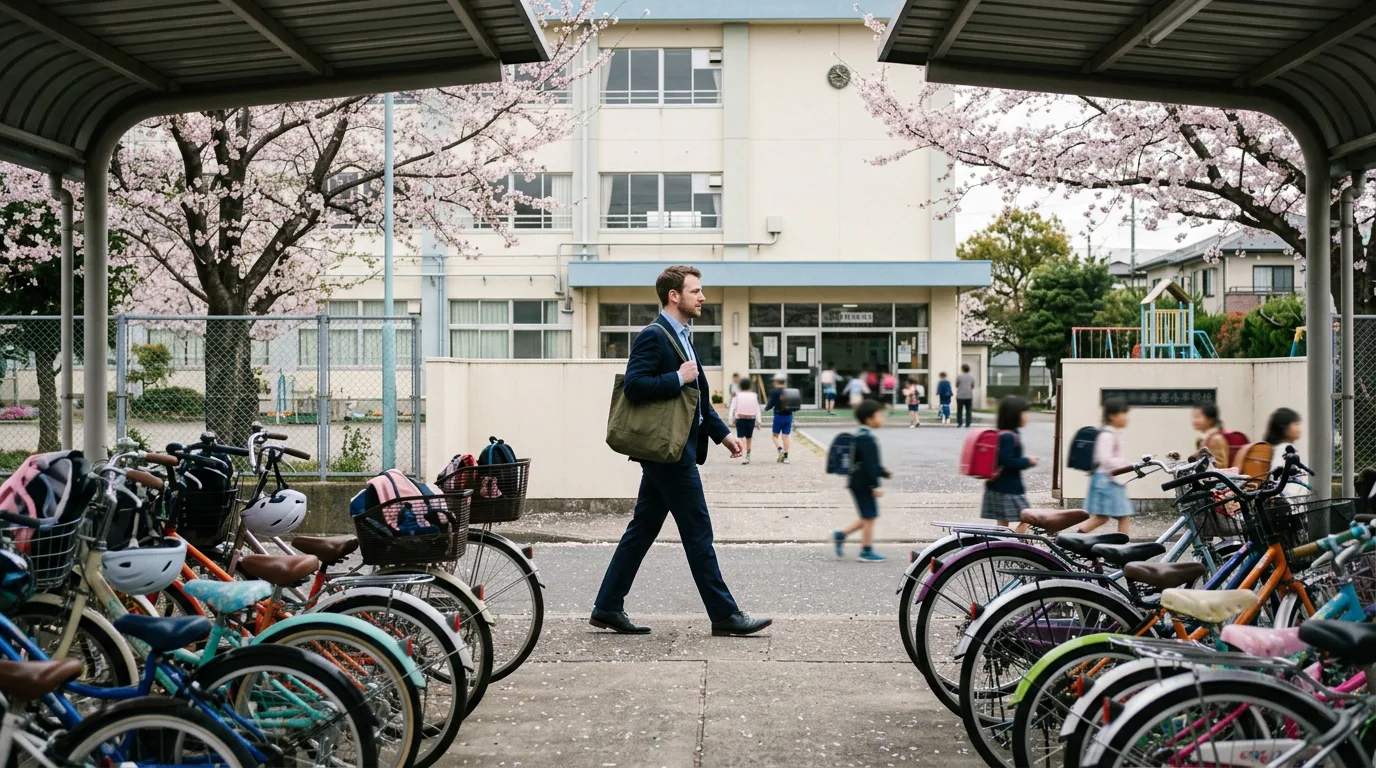
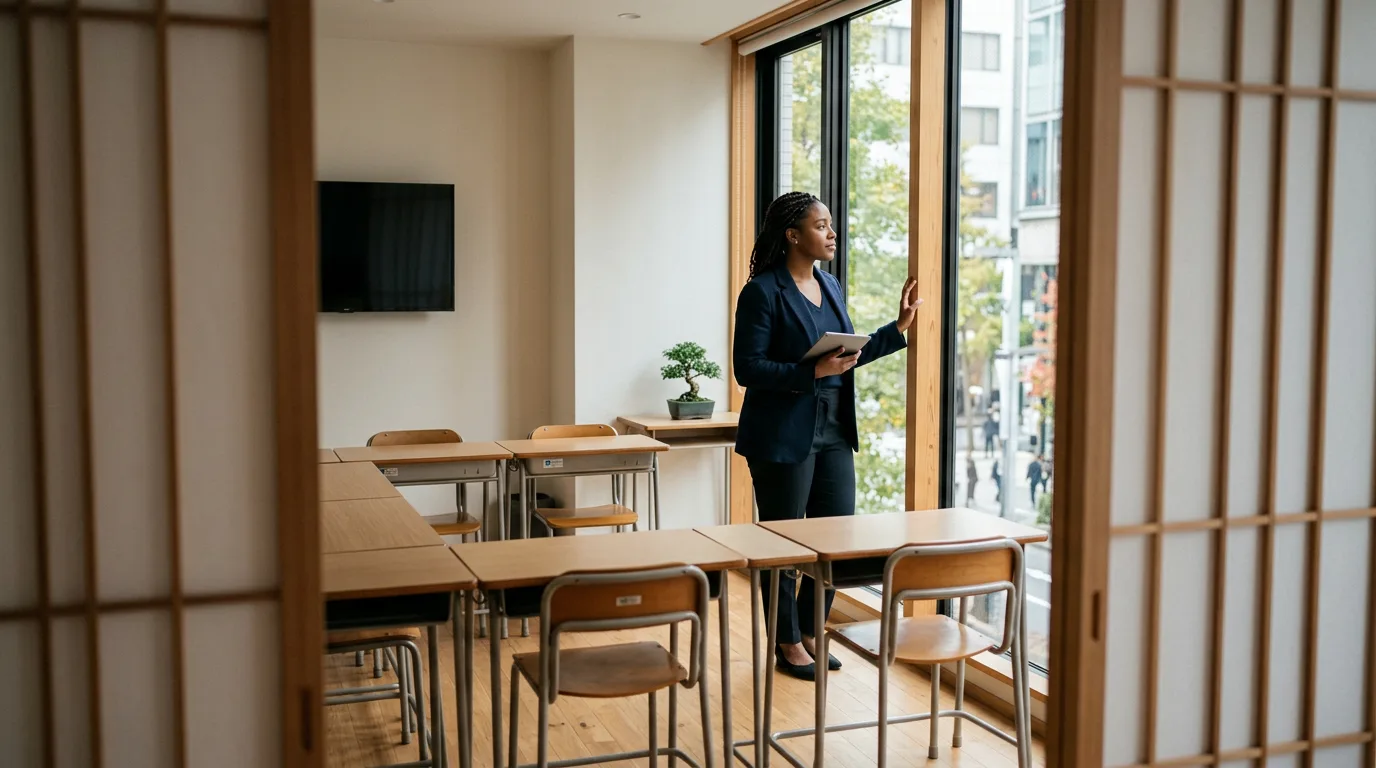
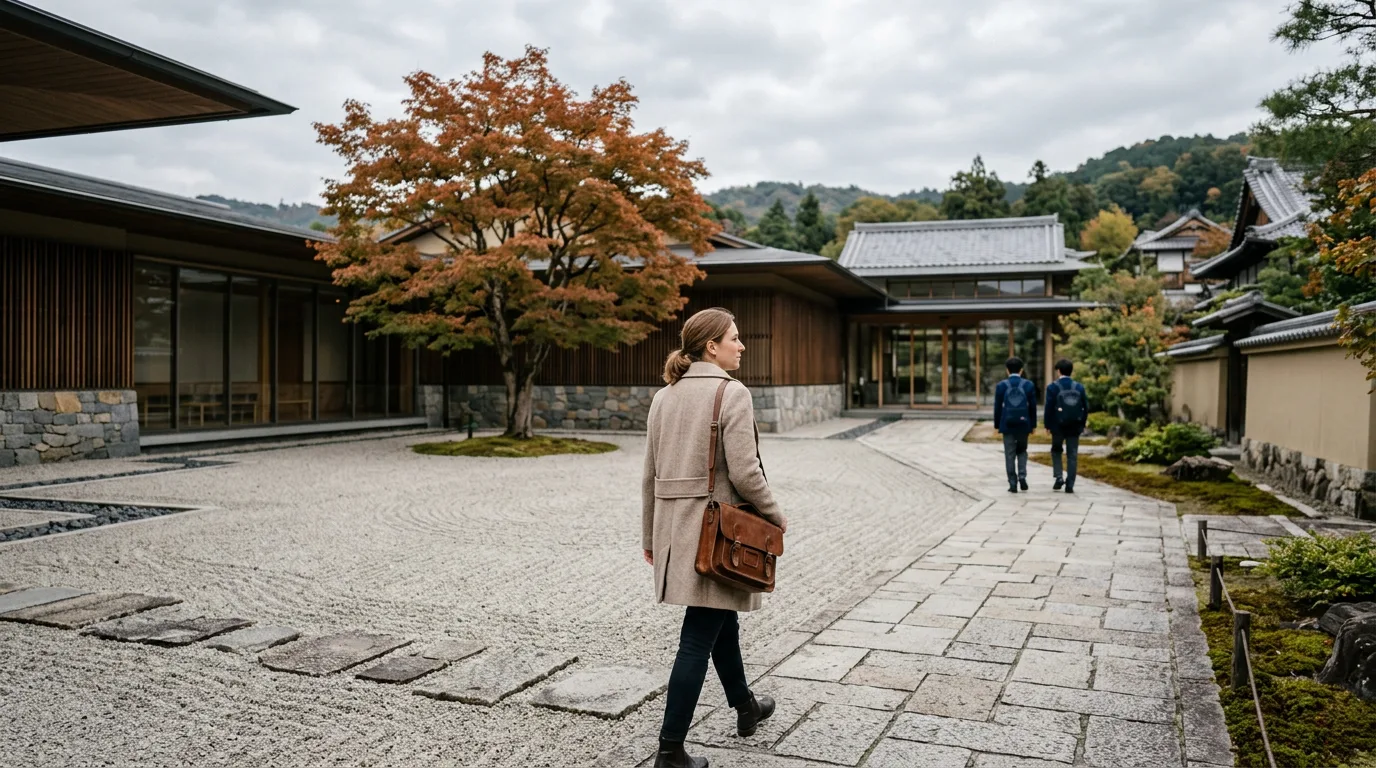
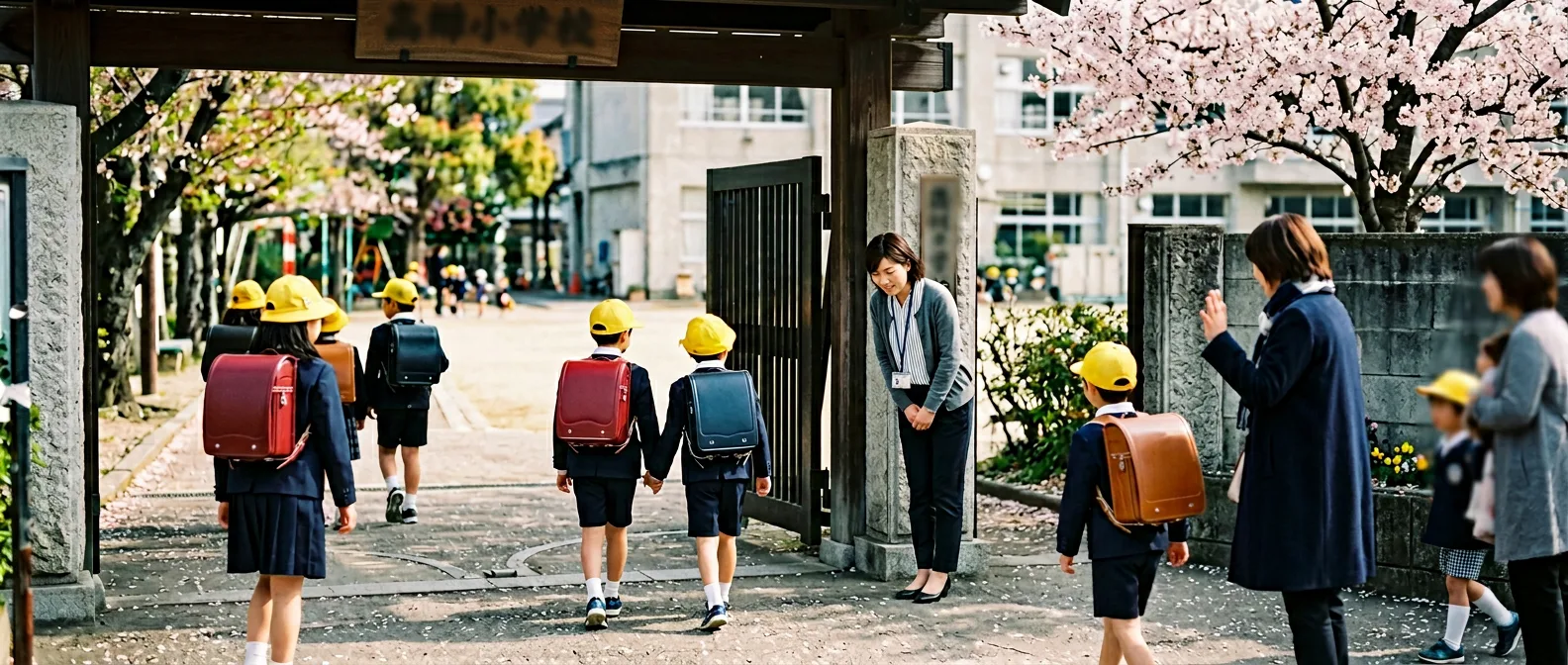
Three school types in Japan
Not placed in Japan yet?
TEFL Heaven places teachers across Asia. If Japan is your goal, our team can advise on the best route in — whether that's JET, an eikaiwa, or an ALT dispatch company — and how to combine Japan preparation with a guaranteed placement elsewhere.
What you need to teach English in Japan
Here's what you'll need to teach English in Japan — from qualifications and documents to the practical details that make your application stand out.
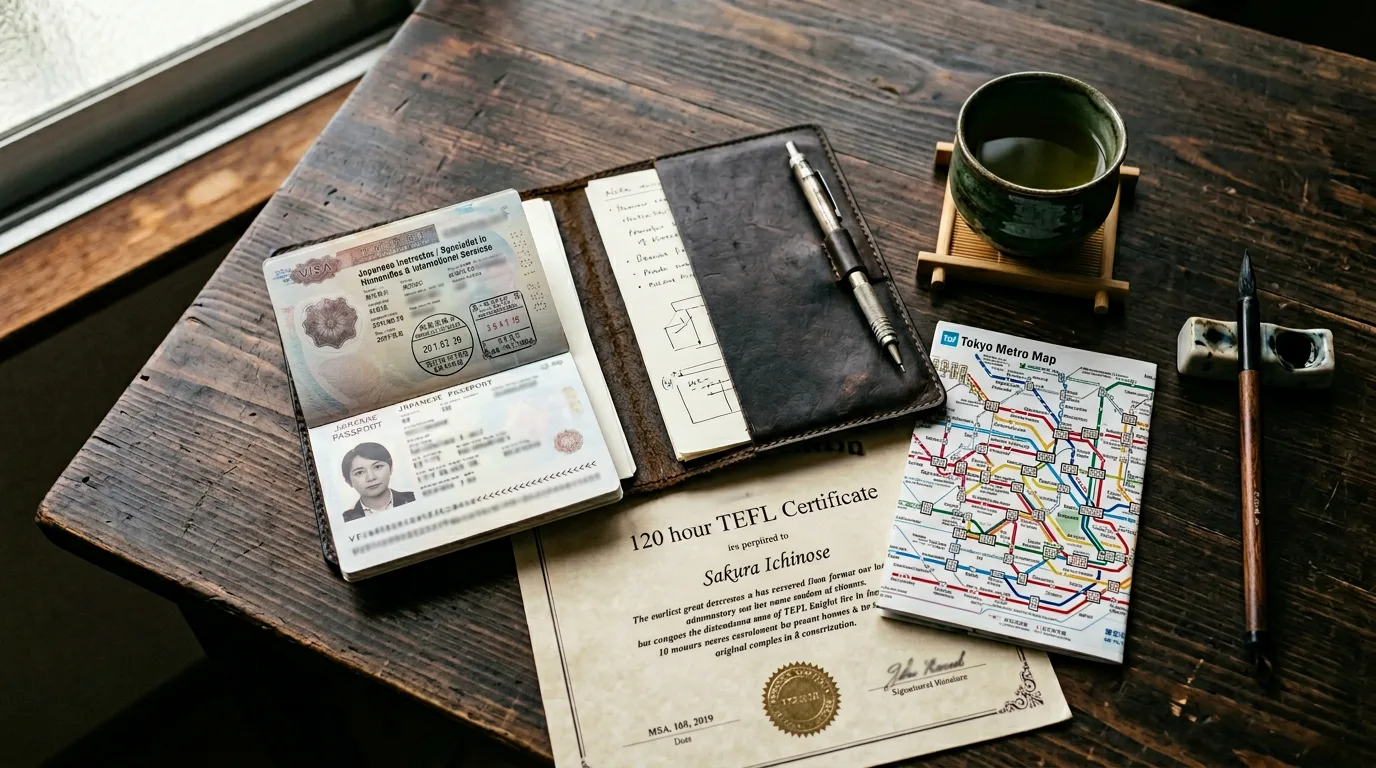
Japan's requirements are straightforward but non-negotiable. The bachelor's degree is a legal requirement for obtaining a work visa — not just a preference. Everything else depends on the school type and route you choose.
Bachelor's degree — any subject
A full bachelor's degree from a recognised university is the only non-negotiable requirement for a Japanese work visa. Subject does not matter — English Literature, Engineering, and Marine Biology all qualify equally. Diplomas or associate degrees do not meet this requirement.
120-hour TEFL/TESOL certification
Not legally required for every position (including JET), but strongly recommended and expected by most employers. A 120-hour Level 5 TEFL gives you a significant competitive edge in a market where schools have their pick of candidates, especially for higher-paying eikaiwa and university roles.
Native or near-native English fluency
Most positions — particularly JET and the major eikaiwa chains — expect candidates from recognised English-speaking countries: UK, USA, Canada, Australia, New Zealand, Ireland, or South Africa. Some employers also accept candidates from non-native English-speaking countries with strong qualifications.
Clean criminal background check
Required as part of the work visa application. Your employer will request a certified copy during the onboarding process. Arrange this from your home country well before departure.
Teaching experience (for some routes)
Not required for JET, most eikaiwa, or entry-level ALT positions. Valuable — sometimes essential — for university teaching, international school, and senior eikaiwa roles. A TEFL practicum providing real classroom hours counts meaningfully.
No degree? Options still exist. Working holiday visas are available for citizens of eligible countries (Australia, UK, Canada, New Zealand, Ireland, and others) and allow you to teach in Japan without a degree. Spouse visas and student visas also permit some teaching work. These routes have limitations — confirm with the Japanese embassy in your country before applying.
Age limit: Most Japan teaching routes run 21–35, with narrow case-by-case options to 59 for applicants with a teaching or education degree, relevant experience, and a driving licence.
The four main routes into English teaching in Japan
Japan's English teaching market has distinct tiers. Understanding which route suits your goals — government program, private chain, public school dispatch, or university — shapes everything from salary to lifestyle.
Japan's Ministry of Education–run programme placing foreign graduates as Assistant Language Teachers (ALTs) in public schools across Japan. Established in 1987, JET is one of the largest cultural exchange programmes in the world — and the most prestigious English teaching route into Japan.
Key details
- Applications open each autumn (typically September–November) for the following academic year
- First-year salary ¥3,360,000/year; rises to ¥4,320,000 by years 4–5
- Round-trip flights provided; housing assistance from host school or board of education
- No formal teaching experience required — but highly competitive; TEFL strengthens applications
- Placement can be urban or rural — you typically cannot specify your preferred region
Private English conversation academies — known as eikaiwa — are the most accessible route into Japan for first-time teachers. Chains like AEON, ECC, Gaba, and NOVA hire year-round, operate in major cities, and provide structured training and support on arrival.
Key details
- Evening and weekend working hours are common — students study after school or work
- Major chains: AEON (~250 branches), ECC, Gaba (one-to-one model), NOVA, Winbe, Berlitz
- Starting salaries typically ¥250,000–¥260,000; bonuses and raises available
- Accommodation assistance and housing allowances often included in packages
- Best route for teachers who want city living and faster job access
Private dispatch companies like Interac and Altia Central place foreign teachers in public elementary, junior high, and high schools nationwide. This is Japan's largest single employer category for foreign English teachers — over 18,000 ALT positions are filled this way annually.
Key details
- Interac is Japan's largest private ALT provider — hiring year-round with a degree as the primary requirement
- Salary lower than JET but more accessible — no formal application exam or competitive screening
- Often placed in suburban or rural schools — good for teachers wanting the "real Japan" experience
- Team-teaching model: you assist a Japanese English teacher (JTE) rather than solo-teaching
- School lunch, sports days, cultural events — the most immersive public school experience available
University EFL lectureships and international school positions are the top tier of Japan's English teaching market — offering the best salaries, shortest teaching hours, and longest holidays. They require stronger credentials and are harder to access as a first-time teacher.
Key details
- University roles typically require 2+ years of teaching experience plus a strong TEFL/TESOL certificate
- A Master's degree in TESOL, linguistics, or education significantly improves your application
- International schools often follow UK or US curricula and hire from summer before the school year
- JALT (Japan Association for Language Teaching) is the best network for finding university roles
- Housing, settlement allowances, and flights commonly included at this level
What English teachers earn in Japan
Japan's salary range is wide — from ¥200,000/month at the entry-level dispatch end to ¥600,000+ at international schools. The middle of the market sits around ¥250,000–¥280,000, which is enough to live comfortably and save, especially outside Tokyo.
| Role / route | Monthly (JPY) | Monthly (USD approx.) | Annual (JPY) | Notes |
|---|---|---|---|---|
| ALT via dispatch (Interac etc.) | ¥200,000–250,000 | $1,350–$1,700 | ¥2.4–3.0M | Entry level; rural likely |
| JET Programme — Year 1 | ¥280,000 | ~$1,900 | ¥3,360,000 | Government; competitive |
| JET Programme — Years 4–5 | ¥360,000 | ~$2,400 | ¥4,320,000 | Annual salary increases |
| Eikaiwa (major chain: AEON, ECC) | ¥250,000–300,000 | $1,700–$2,000 | ¥3.0–3.6M | City-based; evenings/weekends |
| University EFL lecturer | ¥300,000–600,000 | $2,000–$4,000 | ¥3.6–7.2M | Experience + MA often required |
| International school | ¥400,000–600,000+ | $2,700–$4,000+ | ¥4.8–7.2M+ | Full teaching license usually needed |
| Business English / corporate | ¥2,000–6,000/hr | $14–$40/hr | Varies | Freelance; no visa sponsorship |
Important on the Yen: The Japanese Yen has fluctuated significantly in recent years. USD/GBP equivalent figures above are approximate and based on 2025–26 rates. Always confirm current exchange rates when planning your budget — ¥250,000 can represent meaningfully different USD/GBP values depending on market conditions.
Most full-time teaching packages also include flight reimbursement (common in JET and many eikaiwa), health insurance via Japan's shakai hoken system, a commuter pass allowance, and either subsidised or fully-provided accommodation. These benefits add materially to your effective income.
What life actually costs in Japan
Japan has a reputation for being expensive — and Tokyo is, by any measure, a costly city. But Japan outside Tokyo is significantly more affordable, and many teachers placed in mid-size cities or rural areas find they live comfortably and save meaningfully.
Tokyo monthly budget
Regional city monthly budget
Key money: Moving into a Japanese apartment typically involves upfront costs: a deposit (usually 1–2 months' rent), key money (1–2 months' non-refundable), and agency fees. Budget ¥150,000–300,000 for setup costs before your first paycheck arrives. JET and many eikaiwa provide housing or heavily subsidise accommodation — factor this in when comparing programs.
Japan's convenience store and supermarket culture keeps grocery costs manageable. Lunch sets at local restaurants often run ¥600–900. Transport passes cover commuting and, once you have one, exploring nearby cities on weekends is straightforward and relatively cheap. The higher cost burden in Japan compared to Southeast Asian TEFL markets is real — but so is the salary advantage over countries like Thailand.
Want to teach in Asia with guaranteed placement?
TEFL Heaven's Thailand program includes in-person TEFL certification in Bangkok, guaranteed paid placement, full visa support, and ongoing in-country assistance. It's a clean, proven route for teachers who want to live and work in Asia without navigating the process alone.
How the Japan teaching visa works
Japan's visa process is organised and employer-led — meaning your school or program handles most of the heavy lifting. Your job is to have the right documents ready and follow each step cleanly.
For teachers working in public schools — including all ALT positions at elementary, junior high, and high school level, whether via JET or a dispatch company like Interac.
For teachers at private language schools (eikaiwa), conversation academies, corporate English programs, cram schools, and some university positions. The most common route for privately-placed teachers.
Secure a job offer
You cannot apply for a Japanese work visa independently — you need an employer to sponsor you. Apply to JET through your country's Japanese Embassy, or directly to eikaiwa chains, dispatch companies, or schools. Hiring seasons: January–March for April starts; June–August for September starts. JET applications: September–November for the following year.
Timeline: 1–4 months depending on routeEmployer applies for your Certificate of Eligibility (COE)
Once you have a job offer, your employer submits a COE application to Japan's Immigration Services Agency on your behalf. This document confirms you meet the legal criteria to live and work in Japan. You'll need to provide your degree certificate, passport copy, background check, and sometimes a medical certificate.
Processing time: 4–8 weeksApply for the visa at your nearest Japanese Embassy
Once the COE is issued and sent to you, take it (along with your passport, photos, and completed visa application form) to your nearest Japanese Embassy or Consulate. This stage is typically straightforward and quick — usually 3–7 working days. You'll be without your passport during processing.
Processing: 3–7 working daysArrive and complete in-country registration
Within 14 days of arrival, register your address at your local city hall (this is a legal requirement). Your employer will guide you through additional steps: enrolling in shakai hoken (national health and pension insurance), opening a Japanese bank account, and setting up your residence card — your primary ID document in Japan.
Complete within 14 days of arrivalVisa renewal and longer-term status
Work visas are issued for 1, 3, or 5 years and are renewable with continued employment. If you change employers, the new school must update your visa sponsorship — report this change within 14 days. After 10 years of continuous residence, you may qualify for permanent residency. Highly skilled professionals may qualify sooner through Japan's points-based system.
Renew within 3 months of expiryWorking holiday visa alternative: Citizens of Australia, UK, Canada, New Zealand, Ireland, France, Germany, and several other countries can obtain a Working Holiday visa for Japan, which allows teaching work without a degree requirement. Valid for 12 months, non-renewable. A useful route for gap-year teachers or those without a degree who want to test the market before committing to a full work visa route.
Where to teach English in Japan
Japan's teaching market covers the whole country — from Tokyo's enormous urban sprawl to small rural towns in Tohoku and Kyushu. Each placement type has its own character. Here are the six cities and regions teachers most commonly choose.

Tokyo
The largest market for English teaching jobs in Japan — and the most competitive. High salaries, but also Japan's highest living costs. Best for eikaiwa, international school, and corporate English. Placements across 23 wards and surrounding prefectures.
Osaka
Japan's second city and arguably its most vibrant food and nightlife scene. Salaries close to Tokyo, costs ~25–30% lower. Strong eikaiwa market, growing international school sector, and easier access to Kyoto and Nara on weekends.

Kyoto
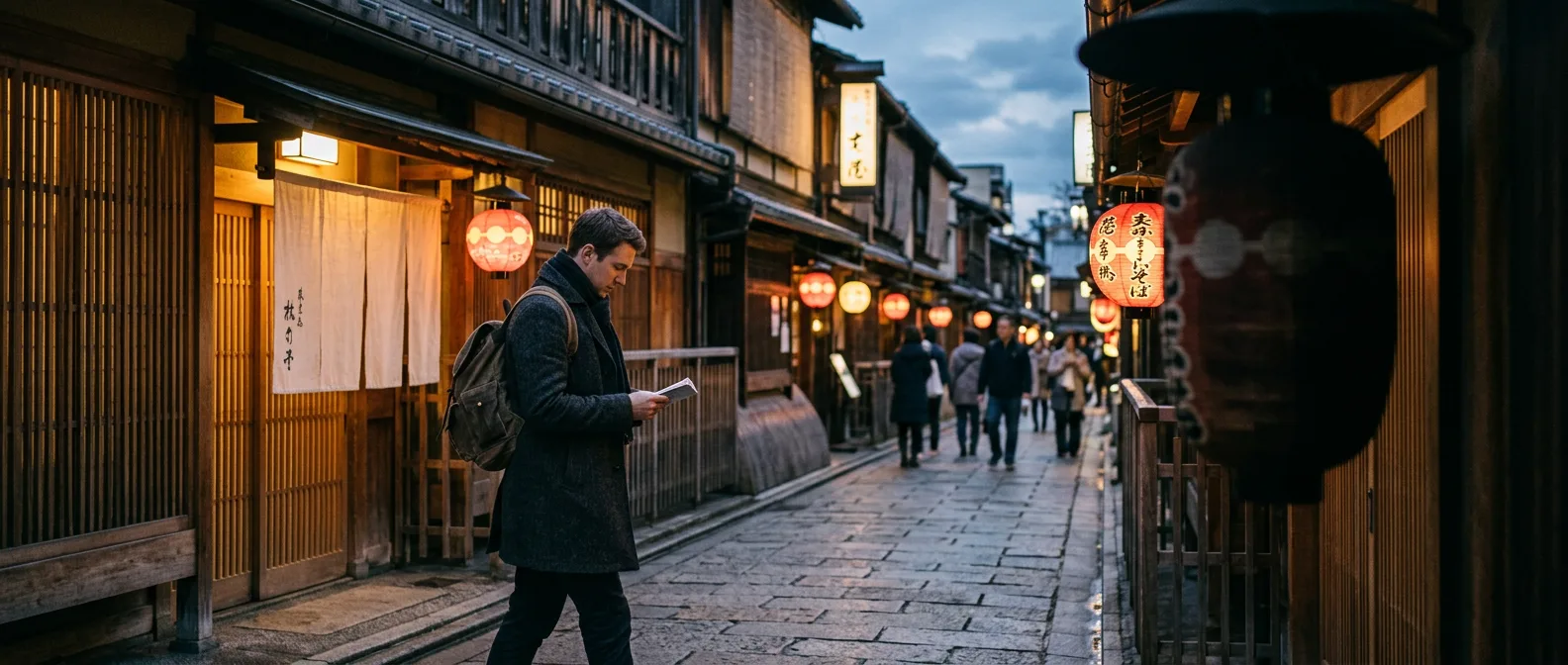
Historic capital and university city with a strong language school market. Smaller than Osaka or Tokyo but culturally rich. A top destination for teachers who want the "traditional Japan" experience alongside a manageable city lifestyle.

Nagoya
Japan's fourth-largest city sits between Tokyo and Osaka on the Shinkansen corridor. Strong manufacturing economy means solid demand for business English. Lower profile internationally but very liveable — and significantly cheaper than the big two.
Fukuoka
Kyushu's largest city is consistently ranked Japan's most liveable. Compact, walkable, with ramen culture that rivals Tokyo's. Growing English teaching market, noticeably lower living costs than Honshu cities, and easy access to Korea and China.

Rural Japan (Tohoku, Hokkaido, Shikoku)
JET and dispatch ALT placements often land you in small towns — and many teachers end up loving it. Lower costs, deep cultural immersion, and extraordinary landscapes. You'll be genuinely part of a community, not just passing through.
Japan's government teaching programme — what you actually need to know
JET is the most talked-about route into Japan for good reasons. But it's also the most competitive, the least flexible on placement, and the most paperwork-intensive. Here's an honest breakdown.
JET fast facts
Who can apply
Citizens of eligible countries with a bachelor's degree. No age limit above 35 was introduced historically, but current guidance has no upper cap beyond 65. Teaching experience is not required. Japan's MEXT specifically notes TEFL certification strengthens applications. (TEFL Heaven’s own Japan program places ages 21–35, case by case to 59.)
Salary progression
Year 1: ¥3,360,000 (¥280,000/mo). Year 2: ¥3,600,000. Year 3: ¥3,900,000. Years 4–5: ¥3,960,000–¥4,320,000. Contract is renewable annually for up to 5 years.
Benefits
Round-trip flights provided. Health insurance (shakai hoken). Paid public holidays. Housing assistance varies by host institution — some provide subsidised housing, others help you find and rent privately.
No placement control
You cannot specify which city or prefecture you're placed in. JET assigns placements based on its own criteria. You may end up in rural Akita or central Osaka — both are possible. Most JET participants don't know their placement until a few months before departure.
JET application timeline
Applications open
Apply through the Japanese Embassy/Consulate in your country. Online portal. Expect to submit academic transcripts, a statement of purpose, letters of recommendation, and language assessment.
Application deadline
Deadlines vary by country. UK and US deadlines typically fall in November. Check your local Embassy for exact dates.
Shortlisting and interviews
Successful applicants are invited to interview at their local Japanese Embassy. Competitive — demonstrating cultural interest and classroom readiness matters.
Departure and orientation
Accepted applicants depart in July/August. JET provides a mandatory orientation in Tokyo before placement. The academic year starts in April but new JETs arrive at the beginning of Q2.
What day-to-day life looks like as a foreign teacher
Teaching in Japan is not just a job — it's a genuinely different way of living. The cultural adjustment is real, but so is the reward. Here's an honest look at what to expect.
Transport that actually works
Japan's train network is the world's most reliable. Your commuter pass covers your route and often allows travel on connected lines. Getting around — even in rural areas — is more manageable than in most TEFL countries.
Food culture unlike anywhere else
Convenience stores serve genuinely good food. Ramen, sushi, izakaya, tonkatsu, gyudon — eating well in Japan does not require spending much. A serious food culture runs from ¥500 konbini bento all the way to Michelin-starred kaiseki.
Four seasons, all worth experiencing
Cherry blossom season in March/April. Summer festivals and fireworks in July/August. Autumn leaves in October/November. Winter skiing in Hokkaido or Nagano. Japan's seasonal rhythm is one of the things teachers miss most after leaving.
Healthcare and safety
Japan's national health insurance (shakai hoken) covers employed workers — your employer enrols you on arrival. Medical costs are reasonable by international standards. Japan is consistently ranked one of the world's safest countries by every major index.
The language barrier is real
Japan scores low on EF's English Proficiency Index. Day-to-day errands — at banks, city hall, landlords — can be challenging without Japanese. Learning basic Japanese significantly eases your life. Most schools support this; many offer free Japanese lessons for foreign staff.
Cultural expectations at work
Japanese workplace culture has specific expectations: punctuality, group harmony, professional formality with seniors. Understanding these norms — not just tolerating them — makes your placement significantly more enjoyable. Most schools provide orientation support, and the TEFL community in Japan is large and helpful.
TEFL Heaven is a Bangkok-based teacher placement company founded in 2007. We don't currently operate a Japan-specific program — but Japan is a destination our placed teachers frequently explore after their first contract. Our Thailand program gives you the qualification, the classroom experience, and the Asia base that makes a Japan application significantly stronger.
- 120-hour Level 5 TEFL certification delivered in Bangkok
- Guaranteed paid teaching placement in Thailand
- Full Non-B visa and work permit guidance — step by step
- Cultural orientation week before training begins
- Ongoing in-country support for the full placement period
- Digital Marketing Program — build secondary income alongside teaching
Japan vs Thailand — which suits you better?
Both are major TEFL markets in Asia, but they attract different types of teachers. Japan offers higher salaries, more structure, and a deeper cultural challenge. Thailand is more accessible to first-time teachers, cheaper to live in, and offers a path with less competition.
Common questions about teaching English in Japan
Do I need to speak Japanese to teach English in Japan?
No — your classes will be conducted entirely in English. In fact, most schools prefer teachers to keep Japanese out of the classroom to maximise student immersion. That said, the day-to-day realities of living in Japan — registering your address, dealing with banks, navigating bureaucracy, speaking to your landlord — are much easier with basic Japanese. Most schools provide free or subsidised Japanese lessons for foreign staff, and learning even basic phrases significantly improves your experience outside the classroom.
What is the difference between JET and teaching with a dispatch company like Interac?
Both routes place you as an ALT in Japanese public schools, but the experience is quite different. JET is a government-run program with a competitive application process, higher salaries (¥280,000+ from year one), flight reimbursement, and strong institutional support. The tradeoff is no control over your placement — you could end up anywhere in Japan. Dispatch companies like Interac are more accessible (the primary requirement is a degree), hire year-round, pay slightly less (¥200,000–250,000), and also tend to place you in suburban or rural locations. Both routes use the Instructor Visa and operate on the same team-teaching model in classrooms.
Can I teach in Japan without a degree?
The standard work visas for teaching (Instructor and Specialist in Humanities) legally require a bachelor's degree. Without one, your options are: a Working Holiday visa (available to citizens of Australia, UK, Canada, Ireland, New Zealand, and some others) which allows teaching without a degree but is valid for 12 months and non-renewable; or a spouse or dependent visa if applicable. Private tutoring is technically possible on certain visa types but has restrictions. If you're planning a long-term career in Japan, pursuing your degree first is strongly recommended.
Is Japan expensive to live in as a teacher?
Tokyo is genuinely expensive — rent alone can reach ¥75,000–90,000/month for a basic apartment, and total living costs can exceed ¥200,000/month. Outside Tokyo, costs drop significantly. Osaka, Nagoya, and Fukuoka are all meaningfully cheaper. Rural placements — common with JET and dispatch ALT roles — can bring monthly costs down to ¥100,000–130,000. Many programs include housing subsidies or fully-provided accommodation (particularly JET in rural areas), which changes the equation significantly. On ¥250,000/month in a regional city with housing support, saving ¥80,000–120,000/month is realistic.
When should I apply to teach in Japan?
The timing depends heavily on which route you're pursuing. JET applications open in September/October for the following year's July departure — this is the most rigid timeline. Major eikaiwa chains (AEON, ECC, NOVA) hire year-round, with peak seasons in January–March for April starts and June–August for September starts. Dispatch companies like Interac also hire year-round. University positions are typically advertised 6–9 months before the role starts. In general, starting your applications at least 6 months before your intended start date is advisable.
Will I be solo-teaching or assisting a Japanese teacher?
In public school ALT positions (JET, Interac, and most dispatch routes), you work as an Assistant Language Teacher alongside a Japanese English Teacher (JTE). You co-plan lessons and the JTE leads — you support, model pronunciation, lead activities, and provide the native-speaker input. In eikaiwa (private language schools), you are typically the sole teacher running your own classes. University positions also have you as the primary instructor. International schools operate most similarly to home-country teaching: you plan and deliver independently.
How does the working holiday visa work for teaching in Japan?
Japan's working holiday visa allows citizens of eligible countries (including Australia, UK, Canada, New Zealand, Ireland, France, Germany, and others — check the latest eligibility list at your country's Japanese Embassy) to live and work in Japan for 12 months without the need for a full work visa or degree requirement. The visa allows part-time teaching and eikaiwa work, though it's not specifically a teaching visa and cannot be renewed. It's a useful route for people who want to test Japan before committing to a full application, but it's not a long-term solution.
Does TEFL Heaven operate a Japan program?
TEFL Heaven does not currently run a Japan-specific placement program. We are a Bangkok-based placement company specialising in Thailand, with programs across Southeast Asia. Many of our placed teachers go on to explore Japan independently after their first placement year — arriving with a strong TEFL qualification, classroom experience, and a body of evidence that makes JET and eikaiwa applications considerably more competitive. If Japan is your long-term goal, our Thailand program is a proven first step. You can view program details and make an enquiry on our Thailand program page.
What teachers say about Japan — and the path to get there
Perspectives from teachers who have taught in Asia — including those who used a first placement elsewhere to build toward Japan.
"I'd been rejected from JET twice before doing a year teaching in Thailand first. Coming back with classroom experience, a Level 5 TEFL, and a full year of independently navigating Asia — I got through on the third application. The Thailand year was the thing that changed it."
"My AEON interview was basically all about classroom experience and how I handled discipline in an Asian school context. Having taught in Bangkok for a year meant I could answer those questions with real stories, not hypotheticals. It's a different quality of answer and they know it."
"Japan is genuinely unlike anywhere else I've taught. The students are respectful, the schools are well-organised, and the country itself is endlessly fascinating. It's not as immediately easy as Southeast Asia — but the longer you stay the better it gets. I'm into my fourth year now."
"I had no idea what eikaiwa actually meant when I first looked at Japan jobs. Understanding the difference between the school types — JET, dispatch, eikaiwa, university — is the most important research you can do before applying. Once I understood it, finding the right fit was much easier."
"Rural Japan sounds daunting but it was the best possible introduction. My Board of Education was incredibly supportive, my colleagues helped me navigate everything from the city hall registration to finding a dentist. The quiet, the nature, the actual Japan — I wouldn't trade it."
"The cultural adjustment takes about six months to settle. After that, Japan starts to make sense in a way that's hard to describe. I've now taught in three countries and Japan is the one I keep coming back to. The work is meaningful, the pay is fair, and the place is extraordinary."
Perspectives from the TEFL Heaven teacher community and wider TEFL networks · TEFL Heaven has placed 3,000+ teachers abroad since 2007
Build the profile Japan's employers want
An in-person TEFL certification, real classroom hours, and a year of in-country Asia experience — the three things that separate competitive Japan applicants from everyone else. TEFL Heaven's Thailand program delivers all three, with guaranteed placement and full support included.
What teaching in Japan actually feels like




Everything you need to know about teaching in Japan
Deep-dive guides on every aspect of teaching in Japan — from visa steps and salary data to city guides and school-by-school breakdowns.
Requirements guide
Degree, TEFL, background check, working holiday options — everything you need to prepare before applying.
Salary & cost of living
What teachers earn by school type, what Tokyo and regional cities actually cost, and realistic savings estimates.
Visa guide
The Instructor and Humanities visas explained — COE process, documents, timelines, and renewal.
JET Programme guide
Application timeline, requirements, salary progression, placement realities, and how to make your application stand out.
Teaching in Tokyo
School types, neighbourhoods, salaries, commuting, and what teaching in Japan's capital actually looks like.
Teaching in Osaka
The eikaiwa market, the food scene, the costs — and why Osaka beats Tokyo for many first-time Japan teachers.
Eikaiwa guide
AEON, ECC, NOVA, Gaba — how Japan's private language schools compare and which chain suits which type of teacher.
Japan is the goal.
Thailand is the proven path to get there.
Our Thailand program gives you the in-person TEFL certification, guaranteed paid placement, Asia classroom experience, and the legal work visa documentation that makes Japan applications — JET, eikaiwa, dispatch — significantly more competitive. Over 3,000 teachers placed since 2007.
TEFL Heaven · Bangkok · Placing teachers abroad since 2007 · 3,000+ teachers placed worldwide