
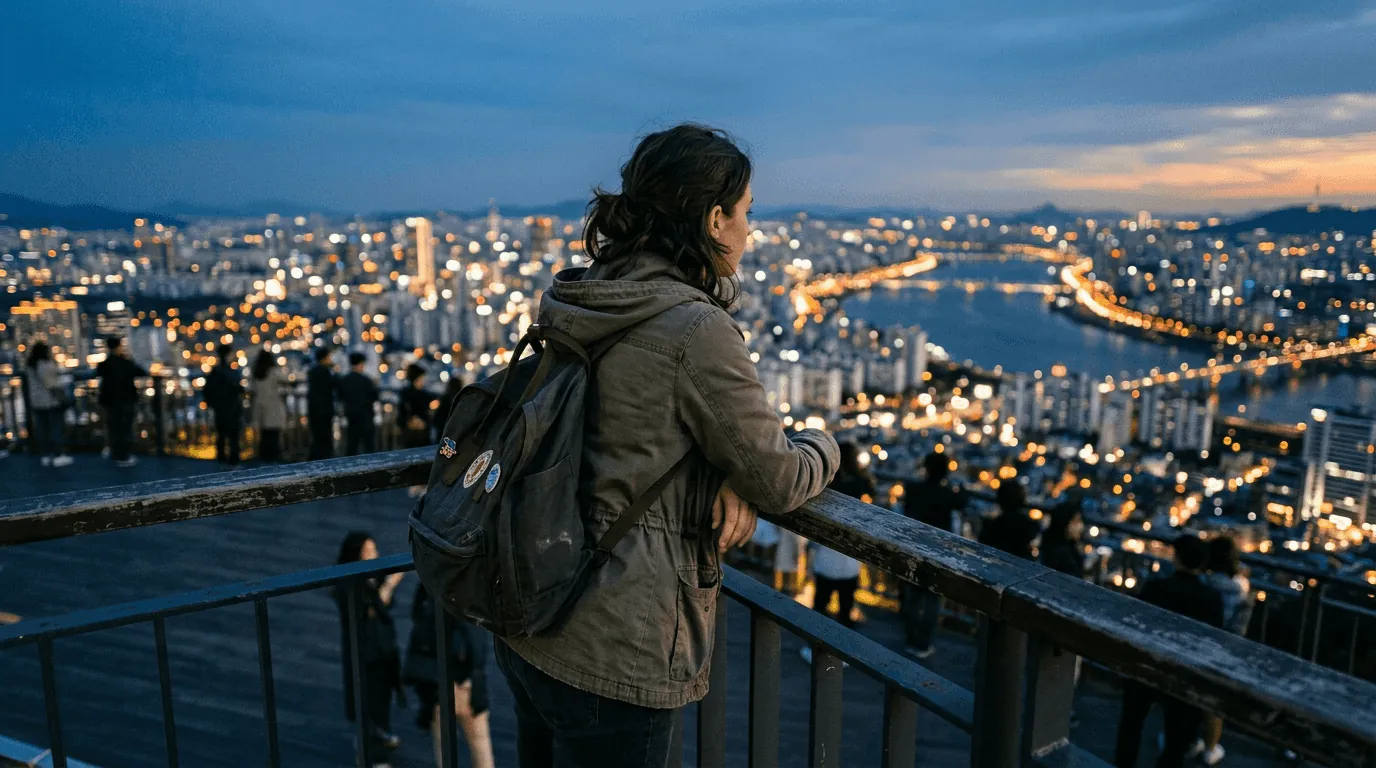
Teach English in South Korea
The highest-savings teaching market in our network. Free apartment from the school, $1,000 flight reimbursement, 13th-month bonus salary at end of contract, and savings of $400–$1,000+ per month. Korea is where teachers go to actually finish their year with money in the bank.
Still researching? Read the South Korea country guide →
Change your life — and others' — through teaching abroad.
Bring meaning and fulfilment by developing your leadership, teaching, and organisation skills. Let others be grateful for your contribution, while you grow in ways you never expected.
"Korea is the most savings-friendly TEFL country we send teachers to. Period.
Free apartment. Flight reimbursement up to $1,000. Thirteenth-month bonus at end of contract. Tax of just 4–7%. Teachers from select countries can claim a 2-year tax exemption on top of all that. The take-home maths just doesn't exist anywhere else.
The trade-off is the structure. The schools are demanding, the kids work hard, and the visa rules are strict. If you can handle that, this is the program that will leave you with $5,000–$15,000 in the bank at the end of a year."

What's included in the South Korea program
Everything you need to land safely in a paid teaching role at a Korean public school or Hagwon.
Free apartment from your school
School provides housing. You only pay utilities (~$75/month). Single biggest reason Korea outsaves every other Asian market.
Flight reimbursement up to $1,000
Flights reimbursed up to $1,000. Plus a 13th-month bonus salary at the end of your 12-month contract.
120-hour accredited TESOL course
4-week course with a 1-week culture/language orientation. Korean BBQ welcome, Taekwondo, cooking class, Hanbok experience, palace tour.
E-2 Teaching Visa support
Full visa support via Visa Confirmation Number. If your visa isn't ready before the in-class TESOL, a 4–5 day visa run to Japan or Vietnam ($500–$750).
Week by week, what your TESOL course looks like
Mapped out so you know exactly what you're walking into.
Korea culture & language
Korean BBQ welcome, Taekwondo, Korean cooking, War Memorial tour, beginner Korean lessons, Hanbok experience, Gyeongbokgung palace tour.
Methodology & planning
Modern TEFL methodology, classroom management, grammar from the learner's view. Your first lesson plans and micro-lessons.
Live teaching
Specialist modules in young learners and online teaching. Real classroom hours with feedback in the same session.
Final practice + placement
Final observed teaching at a local Korean school. CV, video and mock interview prep. Job contacts shared. Onward to your placement.
Everything we include in your South Korea program
We handle the friction so you can focus on the work.
Real teachers in South Korea, real reviews.
 Sara’s video reviewWatch on our reviews page
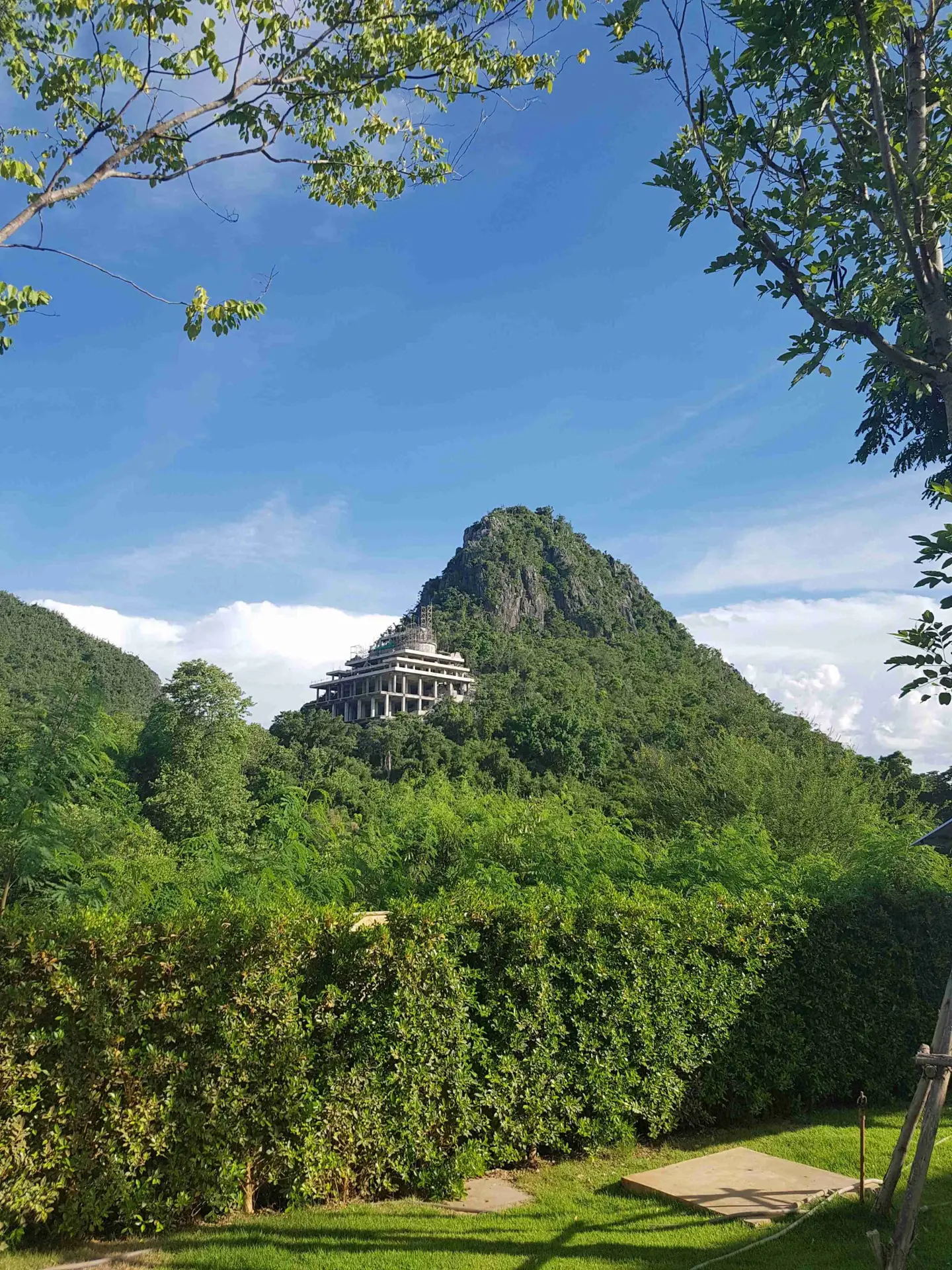 John · ThailandRead the written story
 Jemina’s video reviewWatch on our reviews page
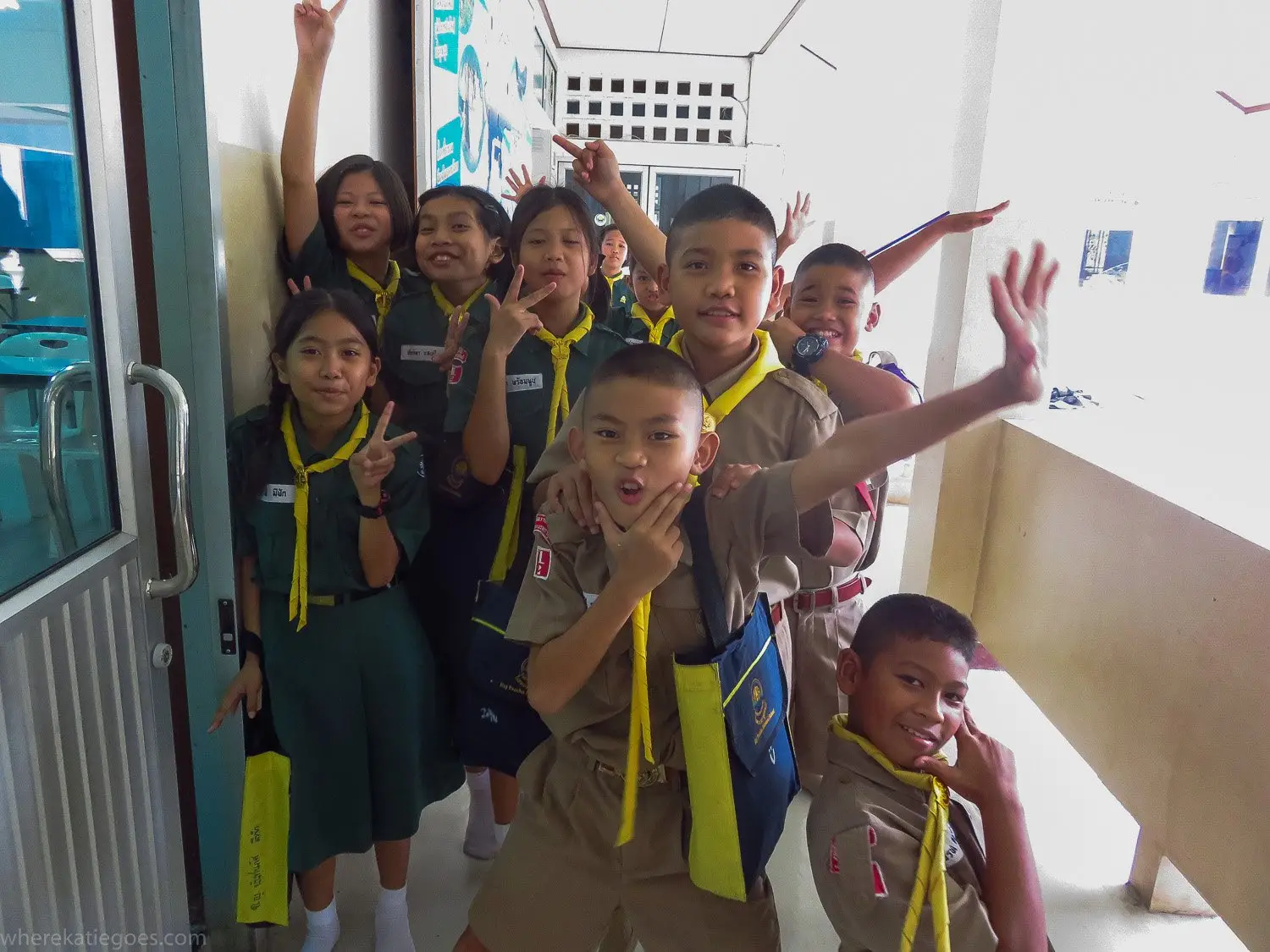 Katie · ThailandRead the written story
 Rachel’s video reviewWatch on our reviews page
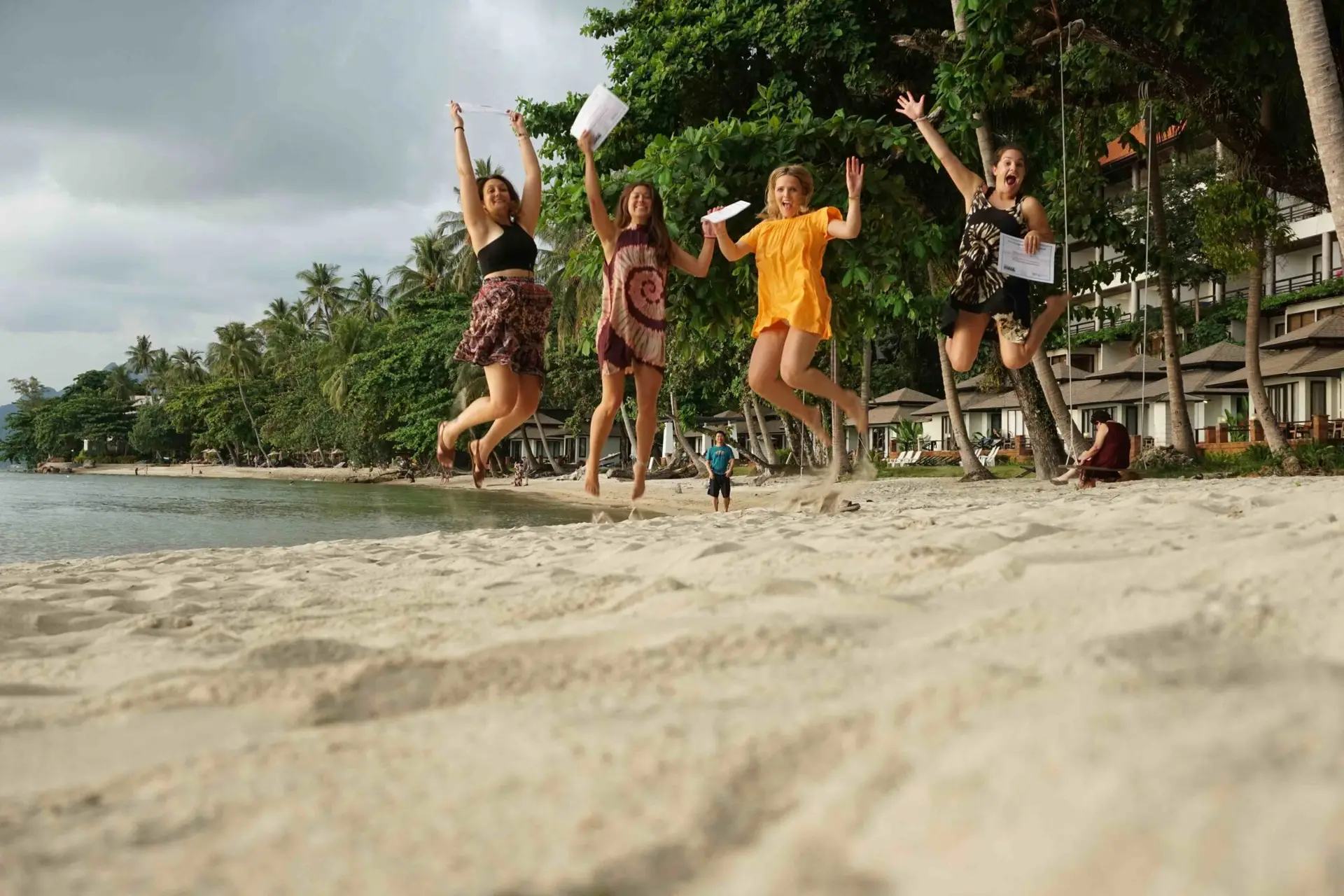 Kristen · ThailandRead the written story
 Peter’s video reviewWatch on our reviews page
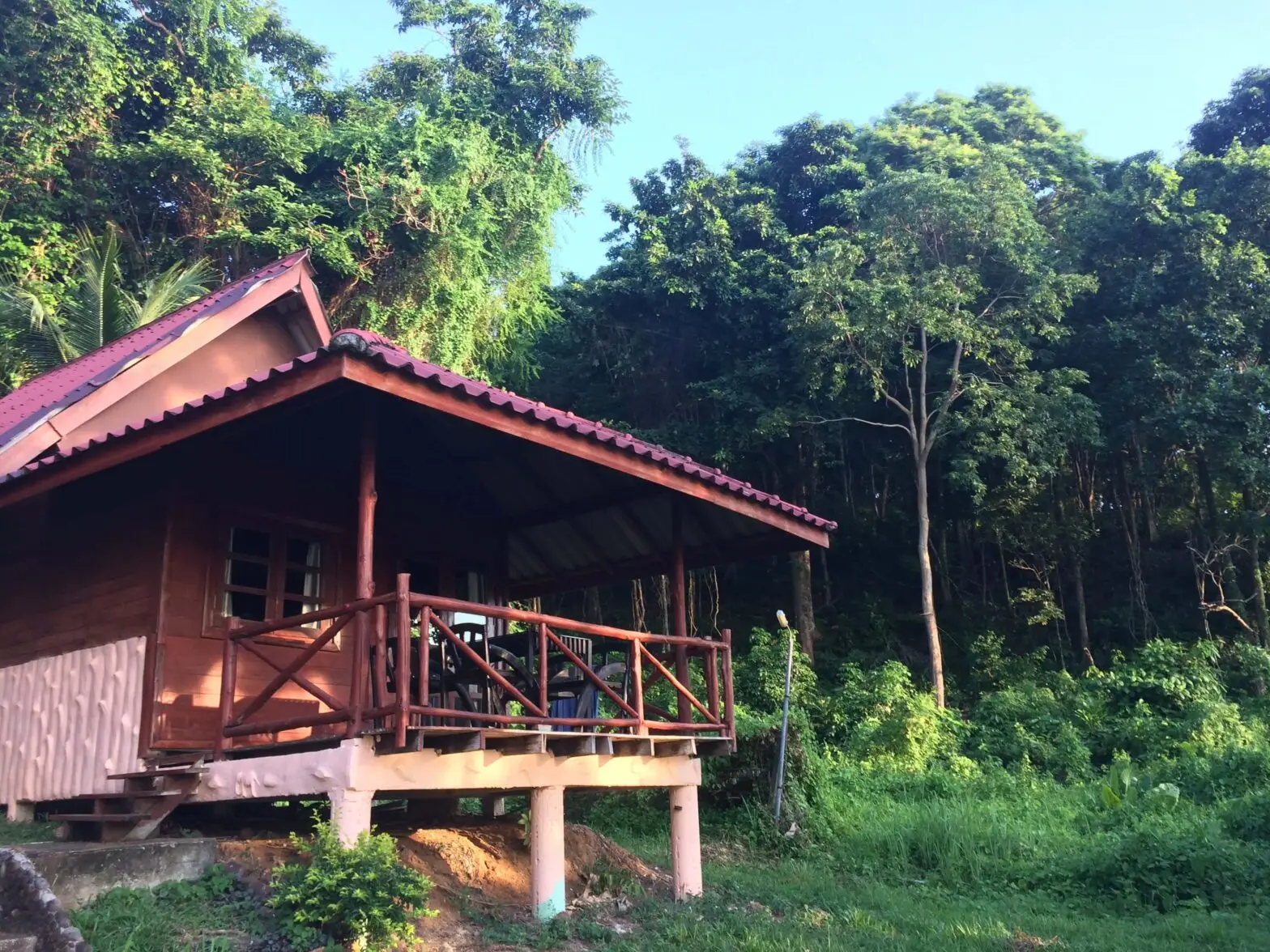 Siobhan · ThailandRead the written story
 Kaley’s video reviewWatch on our reviews page
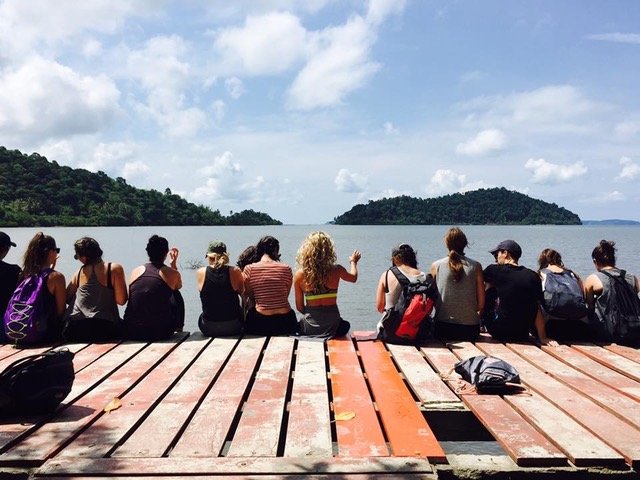 Stephanie · ThailandRead the written story
 Emily’s video reviewWatch on our reviews page
 Eva · VietnamRead the written story
 Michelle’s video reviewWatch on our reviews page
 Jamie · VietnamRead the written story
 Christina’s video reviewWatch on our reviews page
 Laura · VietnamRead the written story
100 video reviews and 67 written stories, all on our reviews page.
Sound like your kind of place?
Tell us you're interested and we'll send the full program pack.
Teach abroad. Get paid to create.
You're already going to post photos and stories from your year abroad. Mike will show you how to do it properly — and we'll pay you $200 every time a friend books a program through your personal link. Included free.
A 14-lesson Creator Course
Learn content creation and storytelling properly — our Creator Framework, audience-building, and the viral blueprint. Taught by founder Mike Maitland (Bangkok, since 2007). Included free.
$200 for every booking
Share your personal link with friends, classmates and followers. Every person who books a TEFL Heaven program through it puts $200 USD straight in your pocket — real cash while you teach.
A teacher-creator community
Swap what's landing with the other TEFL Heaven teachers abroad — content ideas, what's working, what flops. Real teachers, not influencers.
This isn't a sales gimmick — it's our way of saying thank you for telling your friends. We've been doing it for our alumni for years; we just made it official.
Why South Korea
Korea is the country teachers pick when they want to actually save money. The combination of free housing + flight reimbursement + 13th-month bonus + low tax makes it mathematically impossible to beat for first-year savings. Add a serious teaching culture, world-class infrastructure, and a country that rewards effort, and you have the most popular East Asian destination in our network.
What teaching in South Korea is really like
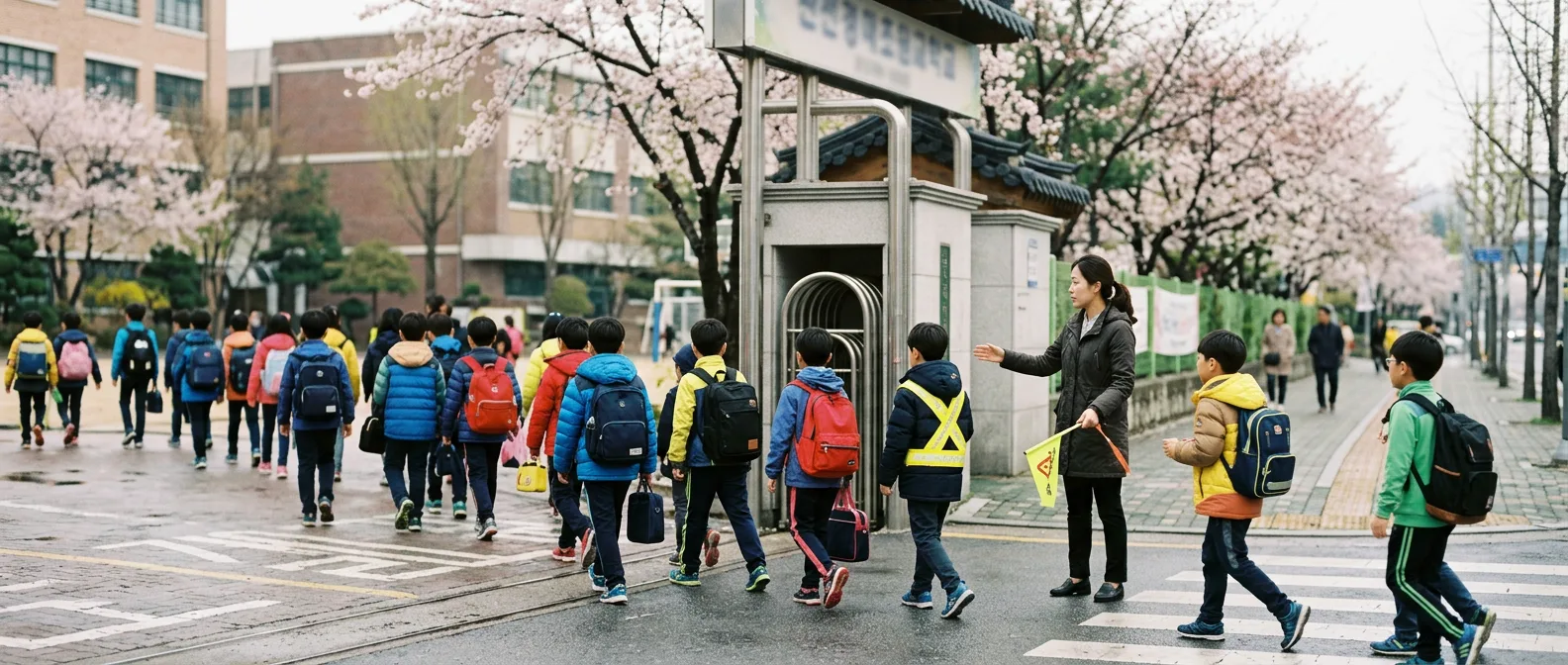
Korea has two main school types: Public schools (Mon–Fri 8:30–16:30, ~25–30 kids per class, you co-teach with a Korean teacher, 21–26 paid vacation days) and Hagwons private schools (Mon–Fri schedule, classes of 5–15 kids, you teach alone, 11 paid vacation days).
You teach kids ages 4 to 16. No high school. No adults. Hours run roughly 9:00–18:00 for younger learners and 12:00–22:00 for older learners. Total workweek is around 40 hours with 25–35 of those teaching.
Korean classrooms are demanding and respectful. Kids work harder than you'd expect. The schools take performance seriously. It's not Thailand's relaxed energy — it's structured, fast-moving, and rewards teachers who show up prepared.
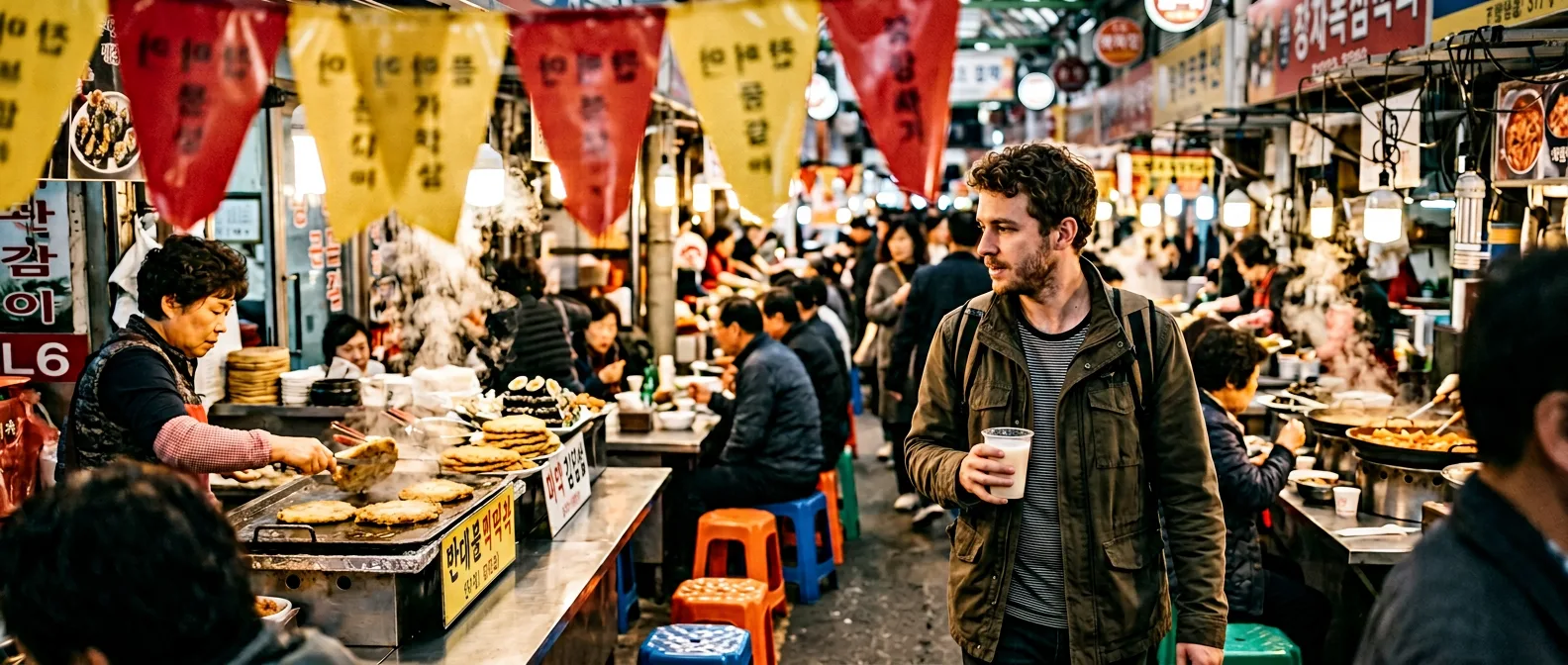
Cities we place teachers in
Placements happen across Korea. Top areas are around Seoul (Gyeonggi-do), Daegu, Ulsan, Daejeon, Sejong, Gwangju, and Gangwon-do.
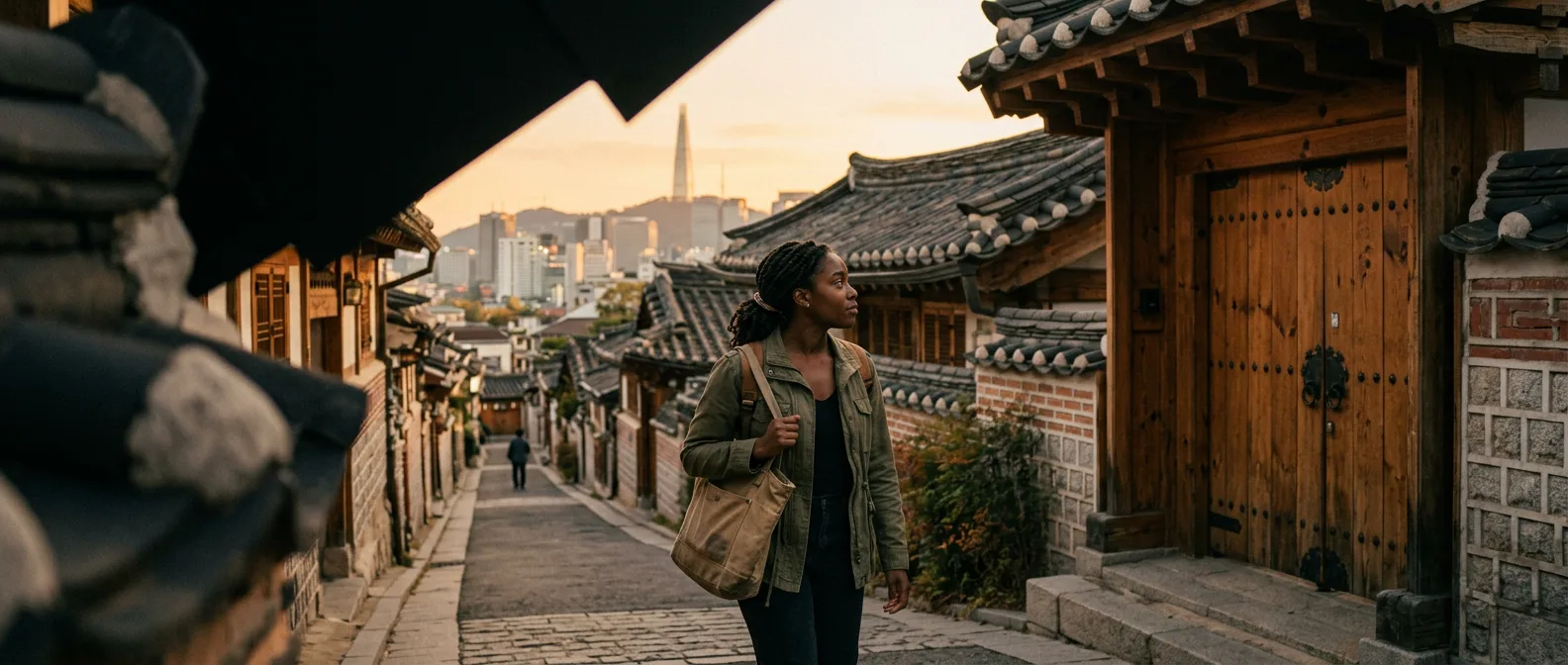 Seoul / Gyeonggi-do
Most placements. Mega-city energy, the best food and nightlife in Asia, and excellent transport. Many teachers default here.
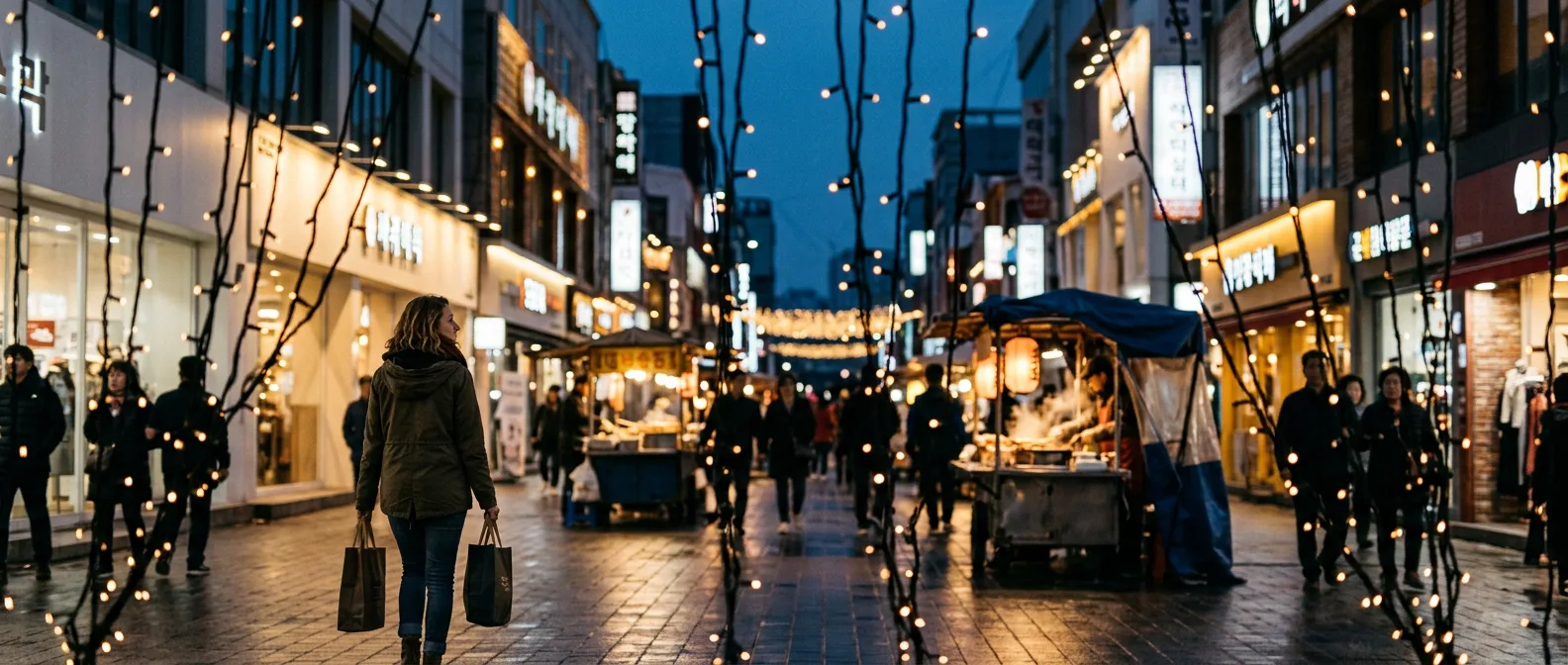 Daegu, Daejeon, Gwangju
Smaller than Seoul but proper cities with strong teacher communities. Lower rent (though housing is free either way), more relaxed pace.
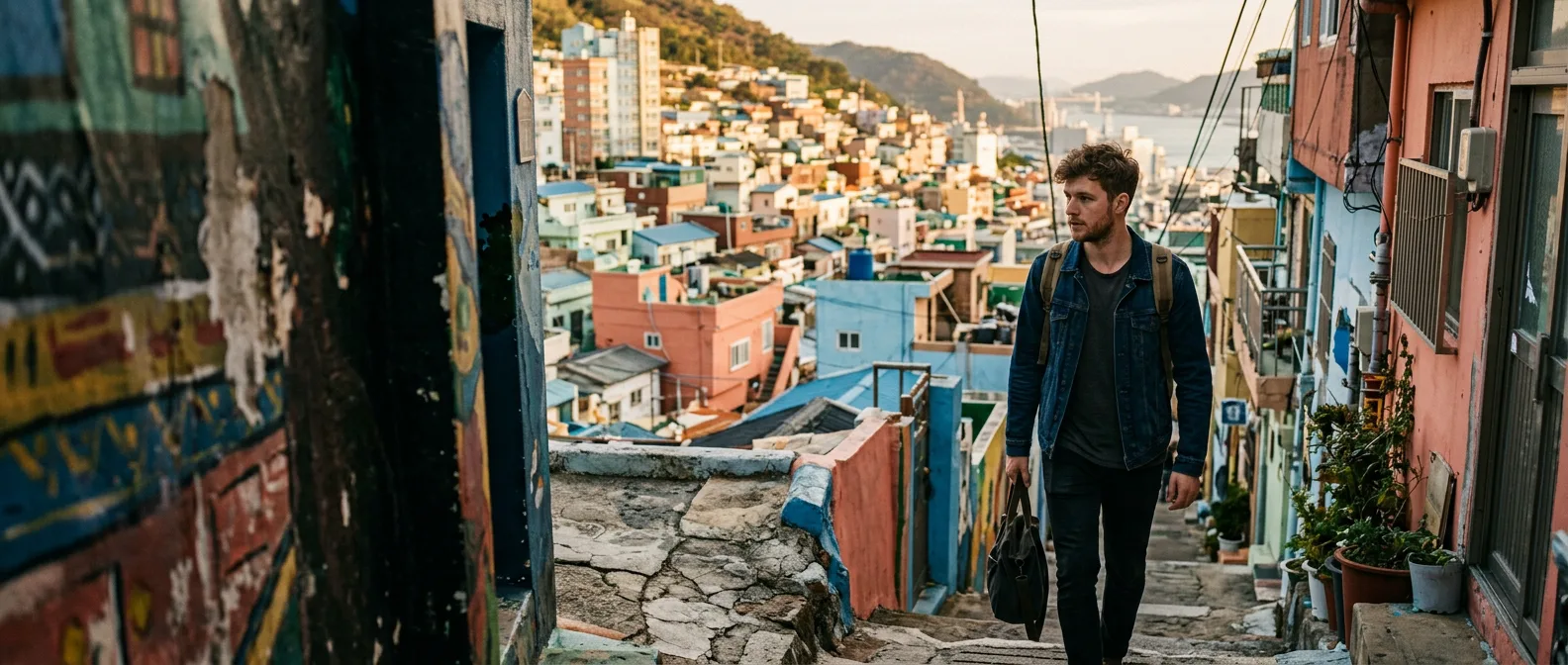 Smaller towns & Gangwon-do
Where the country actually lives. Beach towns, mountains, smaller class sizes, and the kind of community that makes you stay for a second year.
This could be you in a few months.
We'll walk you through every step — visa, flights, accommodation, and landing your first teaching job.
What it really costs to live in South Korea
Honest numbers on what teachers spend and what they save. Korea's free housing changes everything.
School provides your apartment. You only pay utilities — about $75/month. This single perk is why Korea outsaves every other market.
Korean BBQ, kimbap, the world's cheapest convenience-store dinners. Eating Korean is cheap; importing Western food adds up fast.
T-money card, KTX trains, taxis. Korean public transport is among the best on earth.
The highest savings rate in our network. Tax is just 4–7%. Some teachers save $15,000+ over a 12-month contract.
We tell you this upfront — the ones who plan for it love their first year.
The E-2 visa process is strict. Once placed, your school sends you a Visa Confirmation Number (VCN). You take this to a Korean consulate to get the visa stamped. If the visa isn't ready before the in-class TESOL, you may travel on a tourist visa and do a 4–5 day visa trip to Japan or Vietnam ($500–$750).
We recommend arriving with around $1,250 USD for the Placement Program, or $2,500–$3,500 for the In-class TESOL + Placement combo (covers visa trip if needed). Lower than Japan because Korean schools provide free housing.
Mental health medication is the most-asked-about realism issue. If you say "yes" to any mental health question on the visa form, the visa will be rejected. Anti-anxiety / antidepressant medications can fail drug tests. You must be off these meds for 6 months before applying, and have a doctor's note. We're upfront about this because it's a real disqualifier and we'd rather tell you now.
What life is really like as a teacher in South Korea
Korea is infrastructure-perfect modern Asia. Trains run on time. The internet is 5G everywhere. Convenience stores are better than half the supermarkets back home. The country is built for getting things done.
Weekends are for Seoul nights, Busan beaches, Jeju Island, snowboarding in Pyeongchang, hiking Bukhansan, Korean BBQ + soju with your cohort. And once a year, fly to Japan or Vietnam for $200 round-trip. Many teachers extend year after year. Some never leave.

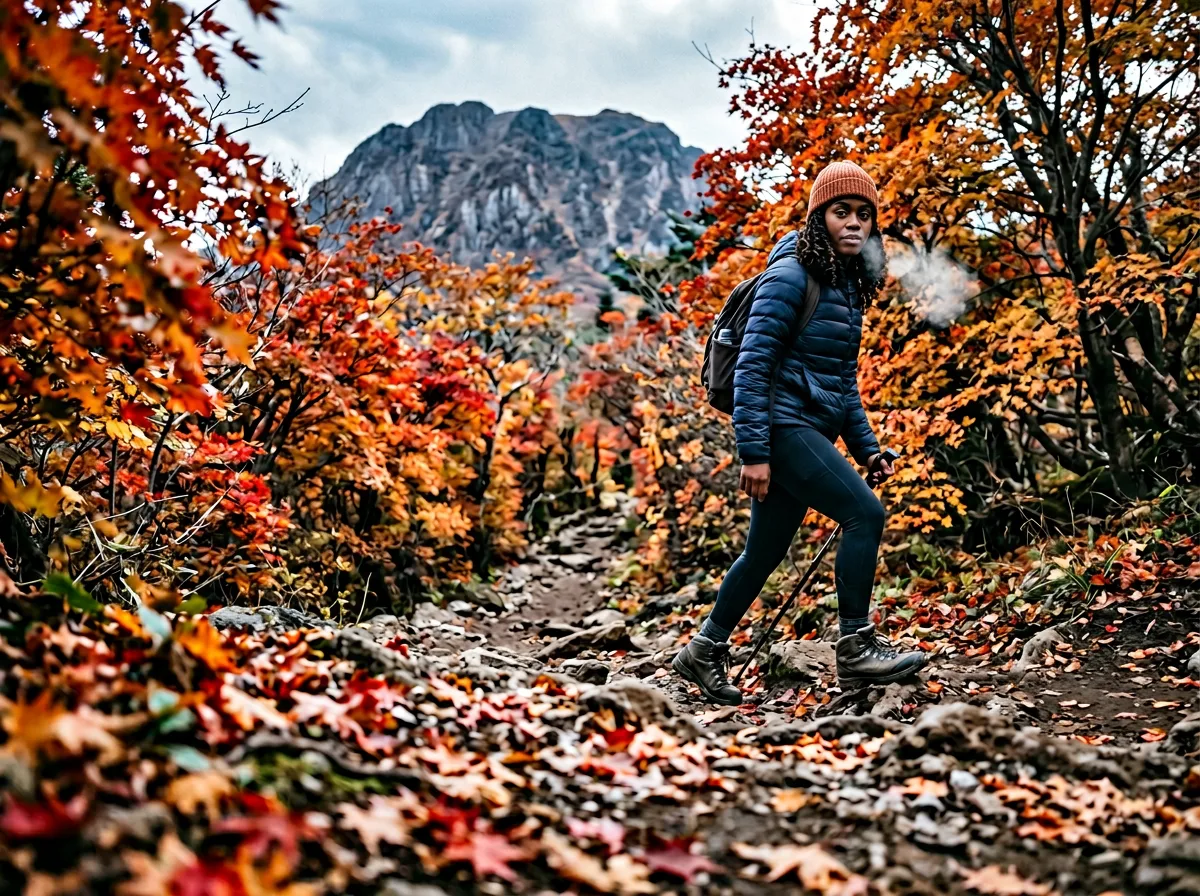
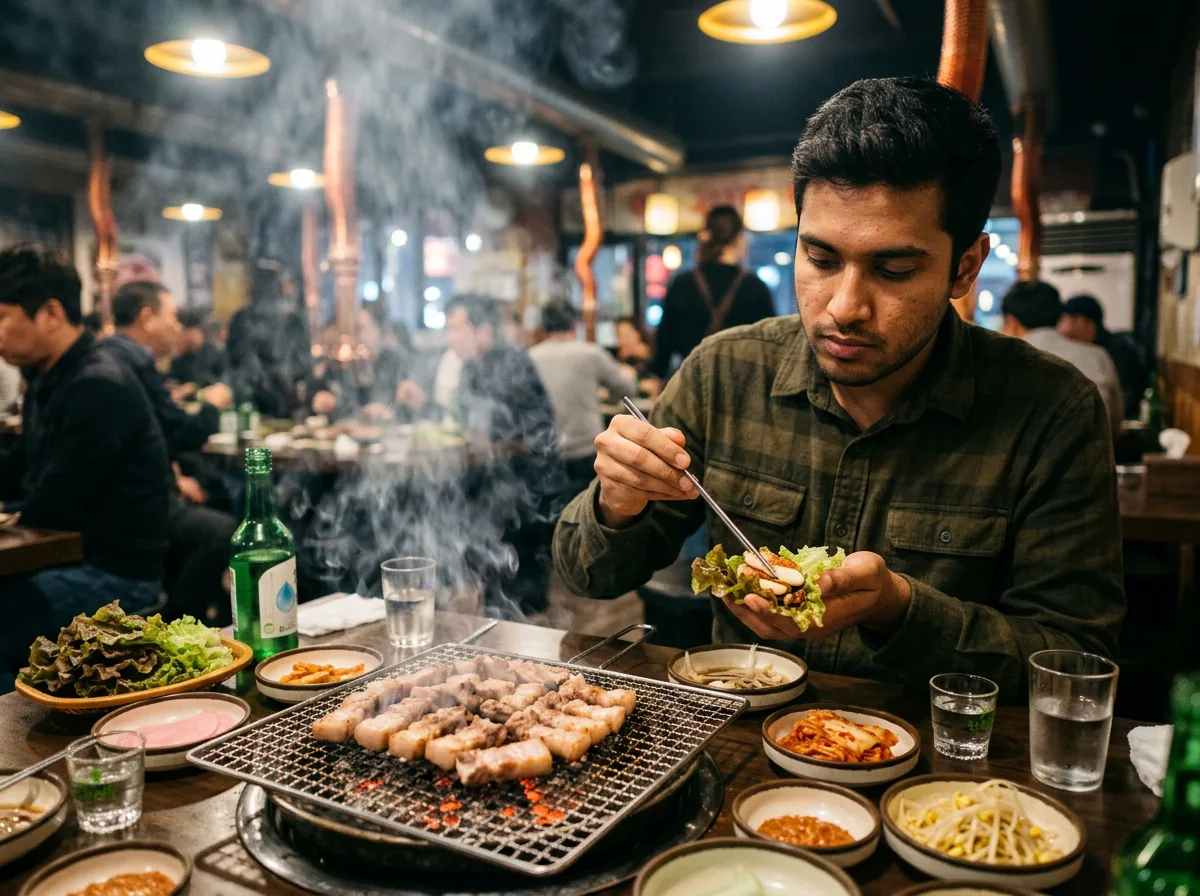
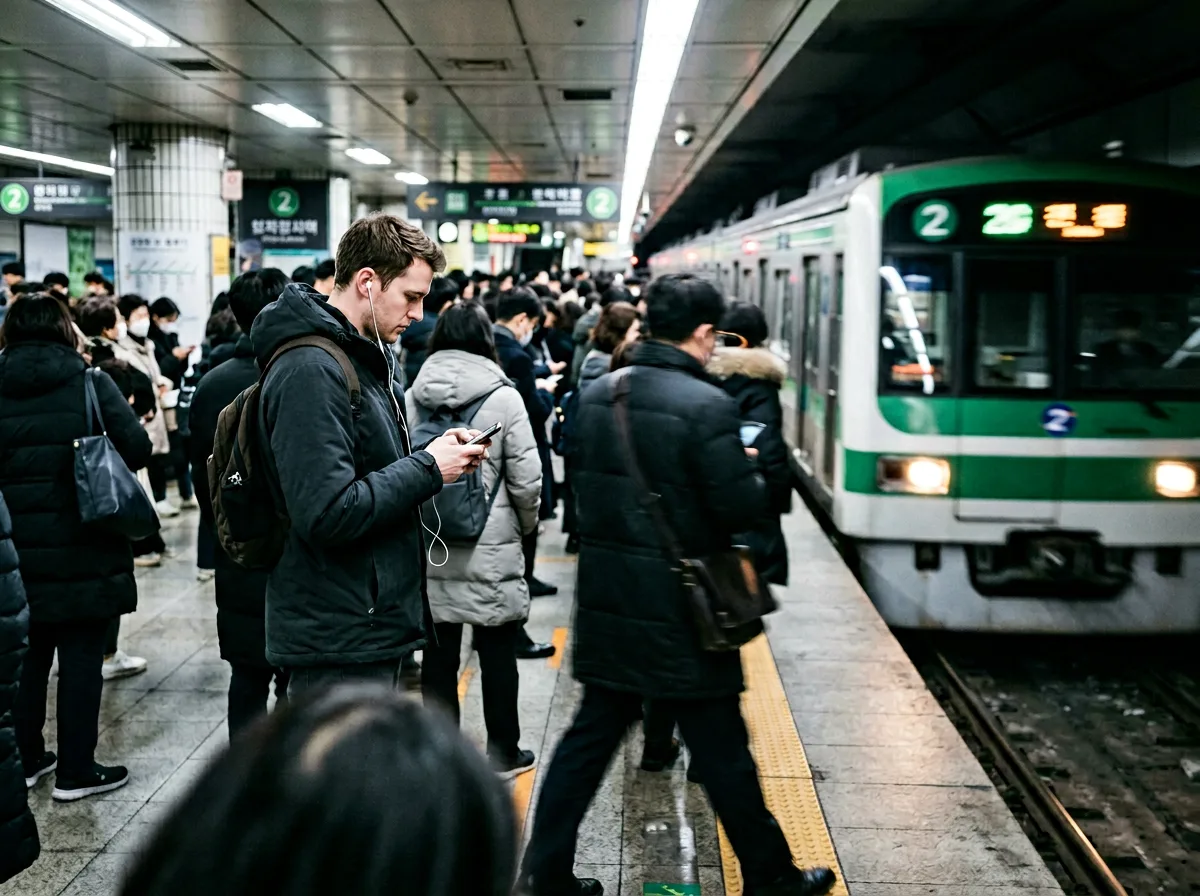
Korea is the program for teachers who want to finish a year with $10,000+ in the bank. The free apartment alone is worth $5,000–$8,000 in unspent rent. Add the bonus, the flight reimbursement, and the low tax — and the maths just doesn't exist anywhere else in our network.
"It's 8:25 on a Tuesday morning. You're walking from your school-provided apartment to your public school in Gyeonggi-do. Coffee from CU convenience store, ₩2,500. The kids in your homeroom will line up and bow when you walk in — every Tuesday, without fail. By 4:30 you're back at your apartment, lesson notes done. By 6 you're at a 김밥천국 with two graduates from your cohort. By December you've been here seven months, you've saved $5,000, and your KTX ticket to Busan for the weekend is already booked."
A Tuesday in month sevenTEFL Heaven vs doing it alone
An honest look at your three options for getting into a Korean classroom.
- ✕No accredited TEFL certificate
- ✕No live teaching practice
- ✕Find your own school + E-2 sponsor
- ✕No employer contacts
- ✕Arrival in Korea = on your own
- ✕Support when things go wrong: none
- ~120-hour online cert
- ✕No live teaching practice
- ✕No E-2 visa support
- ✕No job guarantee
- ~Forum access / generic advice
- ✕No in-country team
- ✓120-hour accredited TESOL certificate
- ✓Real classroom teaching practice
- ✓Full E-2 visa & VCN guidance
- ✓Guaranteed paid placement + free apartment + flight reimbursement
- ✓Airport pickup + cohort community from day one
- ✓17 years of in-country experience behind you
What you get that a standalone Seoul school can't give you
The Korea course is delivered by our partners on the ground — vetted across 17 years of placing teachers. Behind it: a family-run global network built since 2007, with placements across Czechia, Japan, Spain, Vietnam, Mexico and more.
If Korea is your first teaching year but not your last, we've already placed your next move. And if things go sideways — visa hiccups, contract issues, anything — you've got a team you know, not a reception desk.
Teachers who pick South Korea tend to be…
✓ This fits
Savings-focused. Want the highest-savings TEFL year possible. Comfortable with structure, demanding kids, and the strict E-2 visa process. Have a Bachelor's degree (any subject). Off any mental health medication for 6+ months (visa rule). Open to placement anywhere from Seoul to a smaller town. Want the free apartment + flight reimbursement + 13th-month bonus combo.
✗ Pick a different program
You're on antidepressants/anti-anxiety meds and aren't willing to come off them. You want public schools or weekends-only schedules without trade-offs (Thailand fits better). You want adult learners (Korea is 4–16 only). You want a relaxed Asian classroom (Korea is structured and demanding). You can't handle visible-tattoo restrictions.
Upcoming start dates
Korea's TESOL intakes run roughly every 2 months. Apply 5–6 months ahead. Spring intakes have a Dec 1 final-payment deadline; Fall intakes Jun 1.
Oct 26, 2026 is the next available intake · apply ~3 months ahead
Mental health medication rule: you must be off antidepressants/anti-anxiety for 6 months before applying, with a doctor's note. We tell you this early because it's a real disqualifier on the visa.
FAQ
Do I need a degree?
Yes — Korea requires a Bachelor's degree from a university for the E-2 work visa. Native English proficiency is also required as a placement-relevant teaching skill (a Bachelor of Education can replace the 120-hour TEFL requirement).
How much will I save?
$400–$1,000+ per month. The free apartment is the single biggest factor — that's $5,000–$8,000 in unspent rent over a year. Add the 13th-month bonus, flight reimbursement, and 4–7% tax (with 2-year tax exemption available for some nationalities at public schools), and Korea is the highest-savings TEFL market in our network.
How much money should I bring for the first month?
$1,250 USD for the Placement Program (lower than other markets because housing is free), or $2,500–$3,500 for the In-class TESOL + Placement combo (includes visa trip if needed).
How does the E-2 visa work?
Once placed, your school sends you a Visa Confirmation Number (VCN). You take this to a Korean consulate and get the visa stamped in your passport. If the visa isn't ready before the in-class TESOL, you may travel on a tourist visa and do a 4–5 day visa trip to Japan or Vietnam ($500–$750).
What about mental health medication?
If you say "yes" to any mental health question on the visa form, the visa will be rejected. Anti-anxiety / antidepressant medications can also fail drug tests. You must be off these meds for 6 months before applying, with a doctor's note. We're upfront about this because it's a real disqualifier — we'd rather tell you now than have you fail the medical.
Public school vs Hagwon — which is better?
Public schools: Mon–Fri 8:30–16:30, co-teaching with a Korean colleague, 25–30 kids per class, 21–26 paid vacation days. Hagwons (private): smaller classes (5–15), you teach alone, 11 paid vacation days. Public schools generally pay slightly less but offer more time off and the 2-year tax exemption.
Where will I live?
Free apartment provided by your school post-placement. You pay utilities (~$75/month). During the TESOL course, twin room is ~$450/mo, single room ~$900/mo (subject to availability).
Can I bring a partner, kids or pets?
No — Korea placements don't accommodate dependents on this program.
What about tattoos?
Small visible tattoos are usually fine but must be checked case by case. Tell us at signup. Korean schools are stricter than Thai or Mexican schools — we'll be honest about what your specific schools will accept.
What's the 6-month option?
Some Hagwons offer a 6-month contract. Salary ₩1.8M–₩2.2M ($1,300–$1,600), savings $250–$700+. No flight reimbursement or 13th-month bonus unless extended to a full year. Most teachers go for the 12-month for the full benefits package.
The South Korea Full Program Pack
When you enquire, we'll send you the full Korea program pack — start dates, what's included, arrival logistics, E-2 visa checklist, monthly salary + savings breakdown, and a sample week in the classroom. Sent straight to your inbox.
Send me the South Korea details →
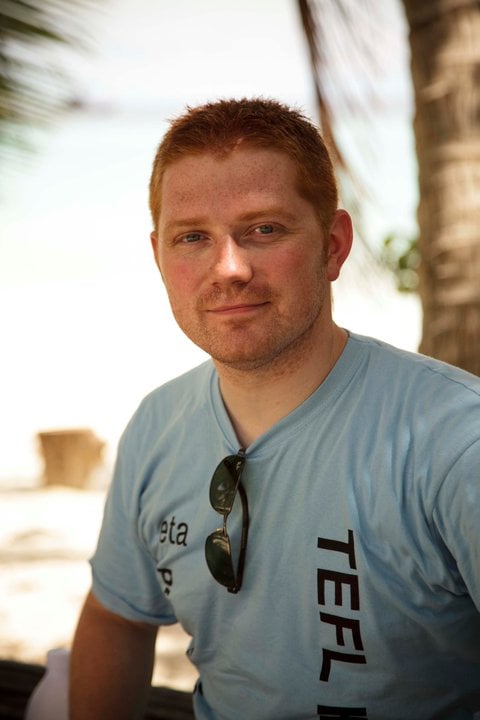
Andy handles South Korea enquiries
Andy replies within 24 hours — usually same day. He'll be honest about whether the E-2 visa rules fit your situation, and what realistic earnings + savings look like over a year.
Let's get you teaching in South Korea.
We'll walk you through the next steps — start date, E-2 visa, flights, and everything else. Takes about 10 minutes.
Included free: Mike's Creator Course + $200 every time a friend books
No pressure, no commitment — we'll just answer your questions.
— Mike Maitland, Bangkok