
 >
>
Teach English in Poland
EU member. One of Europe’s strongest growing economies. A booming Business English market in Warsaw and Kraków. Affordable living, vibrant cities, and one of the most accessible TEFL markets in Europe for both EU and non-EU teachers alike.
 The case for Poland
Why Poland is one of Central Europe’s best TEFL markets
Poland has been one of the European Union’s economic success stories since the mid-2000s. GDP growth has been consistently strong, a large and educated middle class has emerged, and the English language has become the professional currency of the country’s booming tech, finance, and services sectors. The result: genuine, structural demand for English teachers at every level of the market.
For teachers, this means a market that is active year-round, accessible for both experienced and new teachers, and offers a quality of life that surprises many who arrive expecting something modest. Polish cities — Warsaw, Kraków, Wrocław, Gdańsk — are genuinely excellent places to live: architecturally beautiful, socially vibrant, historically layered, and significantly more affordable than Western European counterparts.
Poland is not the highest-paying TEFL market in the world. Salaries at language schools are modest on an absolute basis. What makes Poland work financially is the cost structure: rent, food, transport, and entertainment are all substantially cheaper than in Germany, France, or the UK. A teacher earning PLN 6,000/month in Kraków lives considerably better than the same earning power suggests anywhere west of Poland.
The EU advantage: Poland’s EU membership is its most practically important feature for teachers. EU citizens have full freedom of movement — no visa, no work permit, no employer sponsorship. Irish teachers (native English speakers with EU work rights) are among the most sought-after in the Polish market. The EU framework also means clear employment rights, access to the Polish healthcare system (NFZ), and a familiar legal structure.
Poland’s English teaching job market
Private language schools
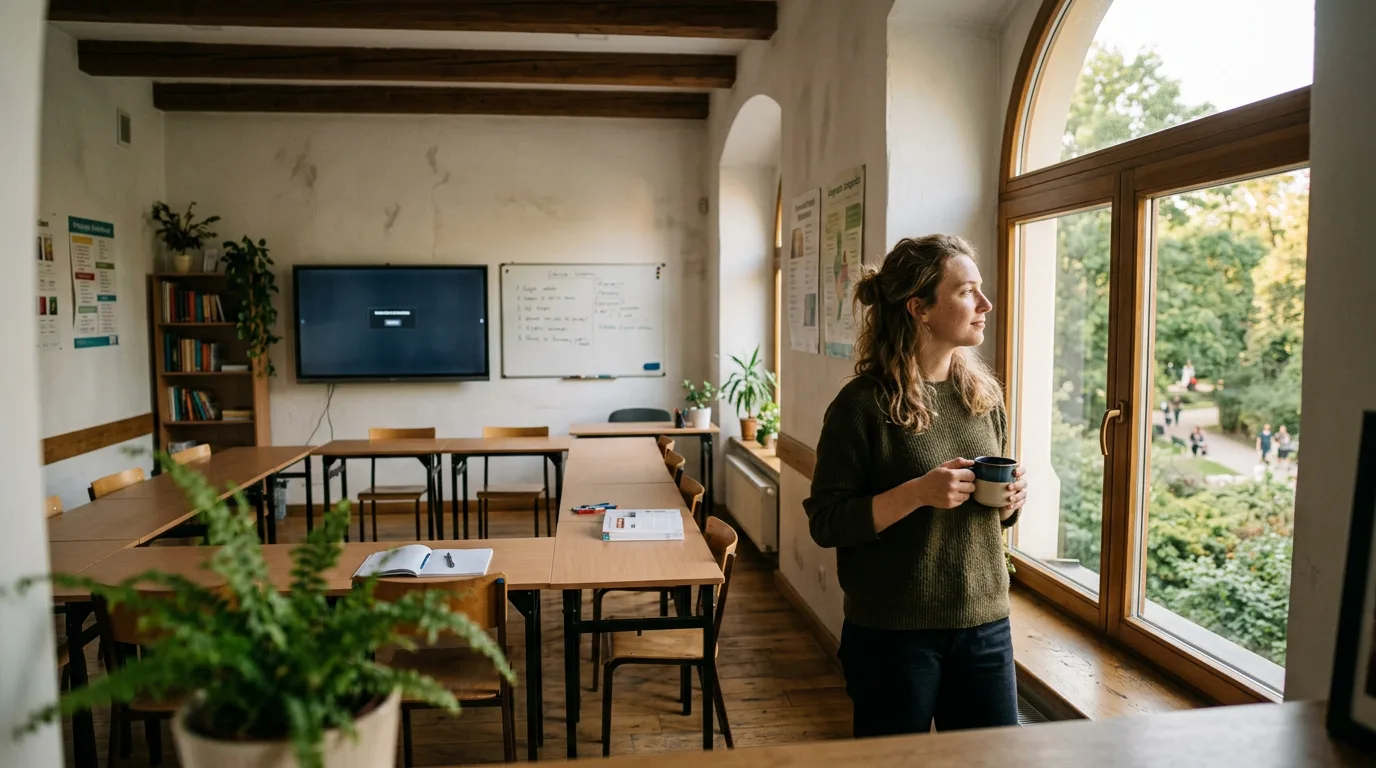
The primary entry point and the most accessible route for new TEFL teachers. Poland has thousands of private language institutes (szkoły językowe) teaching adults, professionals, and students. Most have evening and weekend schedules. Hourly rates of PLN 40–80. Full-time equivalent: PLN 4,000–7,500/month. Year-round demand with peak intakes September/October and January.
Business English / Corporate
Poland’s strongest-paying TEFL niche. Warsaw, Wrocław, and Poznań are particularly strong — major European tech hubs, financial centres, and BPO (business process outsourcing) clusters, all requiring English-proficient staff. Corporate rates of PLN 100–200+/hour. Most corporate work is arranged through language schools or as freelance, supplementing a school base salary.
International schools
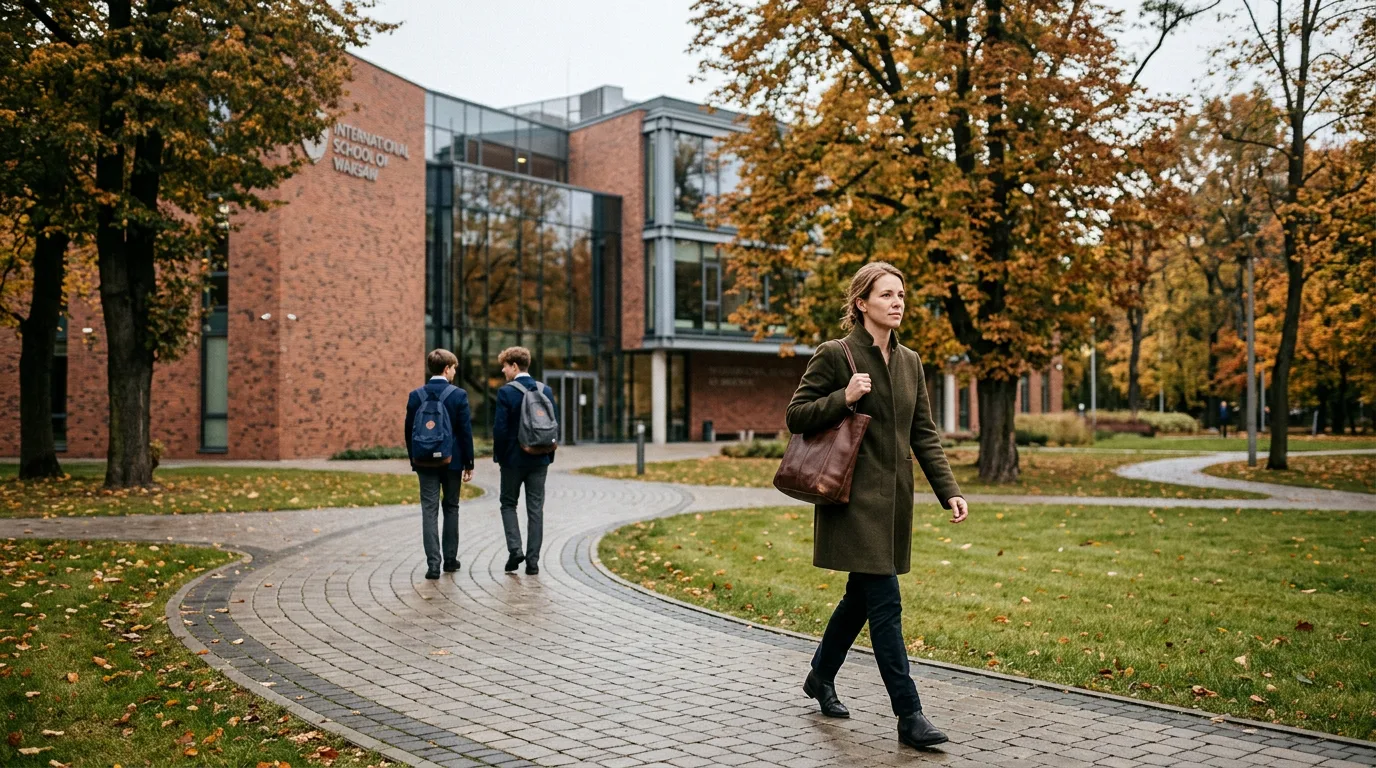
Poland has a growing international school sector in Warsaw and Kraków. British, American, IB, and bilingual schools with salaries of PLN 8,000–15,000/month. Require proper teaching qualifications (PGCE or equivalent), experience, and often Polish right to work or EU citizenship. Best packages in the Polish market for qualified teachers.
Public schools
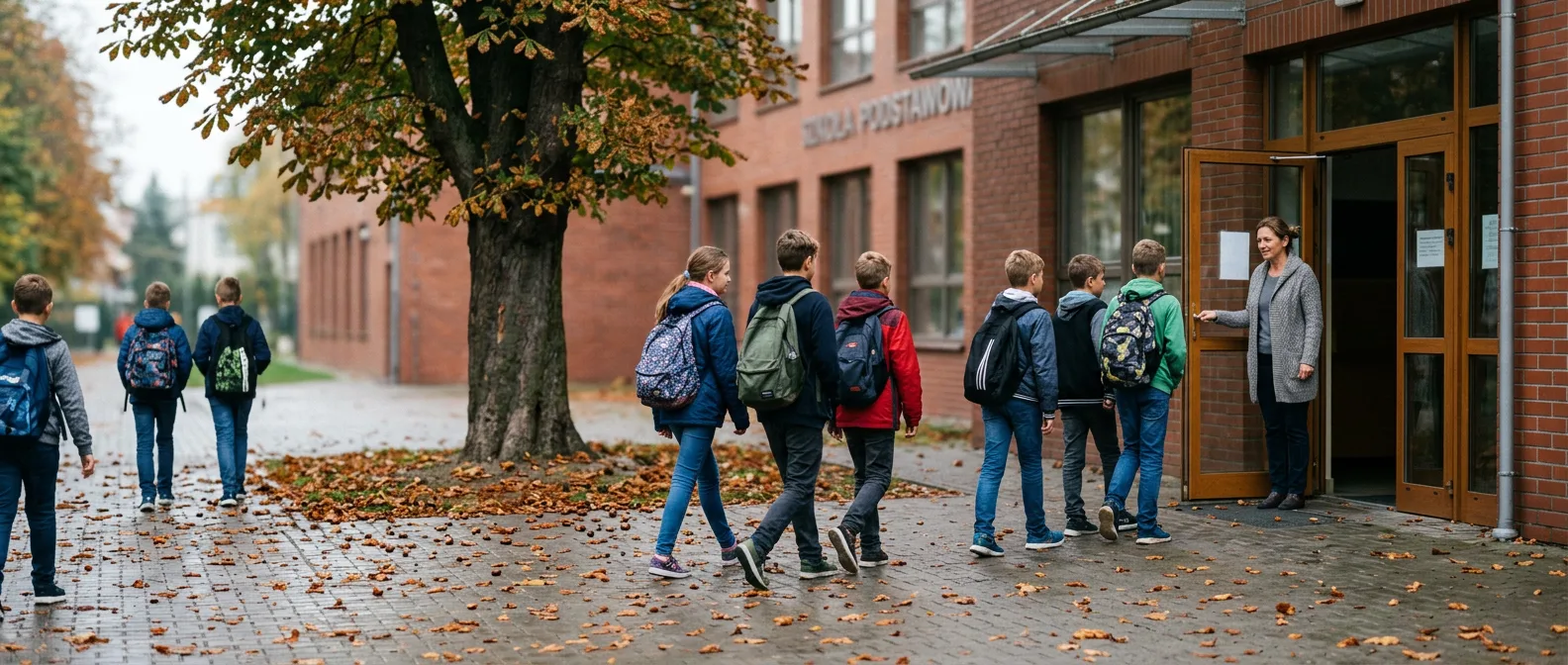
Poland’s state school system employs foreign English teachers, particularly in smaller cities and towns where native speaker teachers are less common. Structured academic year (September–June), regular hours, good benefits. Requires teaching qualification and sometimes Polish language ability. More competition in Warsaw and Kraków; more accessible in smaller cities.
Private tutoring
A near-universal income supplement. PLN 50–150/hour for one-to-one lessons. University students, professionals preparing for Cambridge or IELTS exams, and business people wanting conversational practice are the primary market. Most teachers build a private student base within the first month of arrival through school referrals and language exchange contacts.
Summer camps
English summer camps run throughout Poland in June–August. Board and accommodation included, with small stipend. The primary option for teachers who want to experience Poland before committing to a full academic year. Some camps run entirely in English; others take place in rural Poland and provide a very authentic immersion into Polish culture.
Three school types in Poland
Ready to teach English abroad?
Browse TEFL Heaven’s full range of teacher placement programs — from Southeast Asia to Europe and Latin America.
What English teachers earn in Poland
Poland’s salary picture requires the same multi-source framing as Italy: most teachers build income from a language school base plus private tutoring and, in some cities, corporate English. The combined income model is the norm, not the exception.
| Income source | Typical earnings | Notes |
|---|---|---|
| Language school (full-time) | PLN 4,000–7,500/mo | PLN 40–80/hr; 20–30 hrs teaching/week |
| Private tutoring | PLN 50–150/hr | Standard supplement; PLN 80–100 effective rate in major cities |
| Corporate English | PLN 100–200+/hr | Warsaw, Wrocław, Poznań strongest; via school or freelance |
| International school | PLN 8,000–15,000/mo | Requires formal teaching qualification + experience |
| Public school | PLN 3,500–6,000/mo | Better benefits; less accessible for non-EU without Polish |
| Combined (school + tutoring) | PLN 5,000–9,000/mo | Typical for an active, well-networked teacher |
PLN exchange rate context: At approximately 4.0 PLN per USD (2026 rates), PLN 6,000 = ~$1,500 USD and PLN 8,000 = ~$2,000 USD. Poland’s lower cost of living means these figures stretch further than equivalent USD amounts in Western Europe. Rent, food, and transport are all substantially cheaper than France, Germany, or the UK.
Requirements to teach English in Poland
Here's what you'll need to teach English in Poland — from qualifications and documents to the practical details that make your application stand out.
TEFL certificate
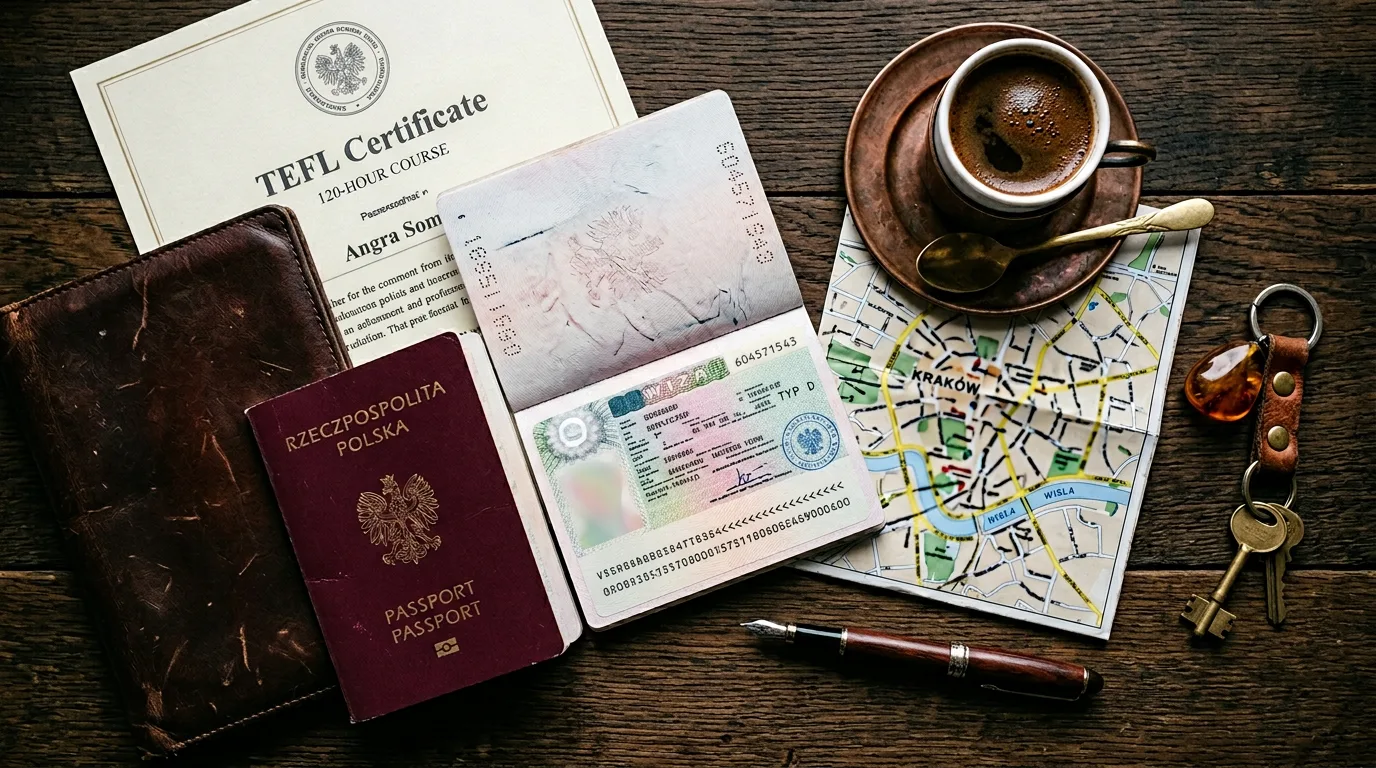
A 120-hour accredited TEFL or TESOL certificate is the consistent market requirement for language school positions. CELTA commands meaningfully higher hourly rates (PLN 80–150 vs PLN 40–80 for basic 120-hour) and is required or strongly preferred at international schools and universities.
Degree
A bachelor’s degree is preferred by most language schools and required for public schools, international schools, and work visa applications. Not all private language schools strictly require it, but it strengthens applications significantly and is legally required for the work permit process for non-EU teachers.
Work rights
EU/EEA citizens have full freedom of movement — no visa or permit needed. Non-EU citizens (including UK post-Brexit) need an employer-sponsored work permit and D-type visa. This is the most important practical distinction in the Polish market; many schools strongly prefer EU candidates precisely because hiring is simpler.
Native or fluent English
Native speakers from the UK, Ireland, USA, Canada, Australia, New Zealand, and South Africa are preferred by most language schools. Non-native speakers with near-native fluency can find work, especially with strong TEFL qualifications and relevant experience. Non-native EU citizens have a meaningful advantage over non-native non-EU candidates.
Visa and work permit overview
✓ EU / EEA citizens
Full freedom of movement applies. No visa, no work permit, no employer sponsorship needed. Register residence at your local municipal office (urząd gminy) within 90 days for long-term stays. Immediately eligible to work at any school or as a freelance tutor.
⚠ Non-EU (US, UK, Canada, Australia, etc.)
Must obtain: (1) D-type national visa before entering Poland to work, OR temporary residence permit applied for after arriving on tourist visa. Work permit required — employer-sponsored. Total process: 6–12 weeks typically. Schools that hire non-EU candidates handle most of the administrative process.
Full visa guide on the Poland Visa page, including D-type visa process, temporary residence permit route, and the self-employment (JDG) option for experienced freelancers.
Best cities for English teachers in Poland



What life as a teacher in Poland is actually like
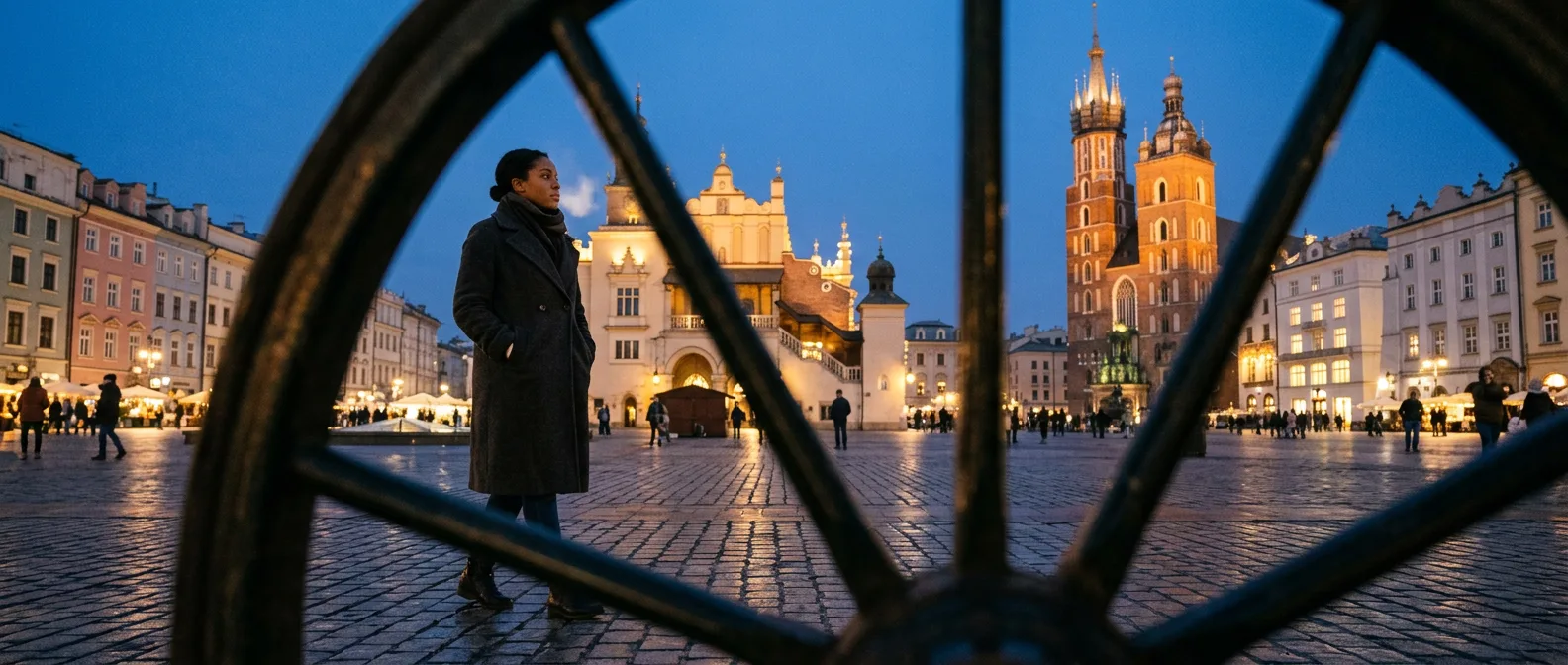
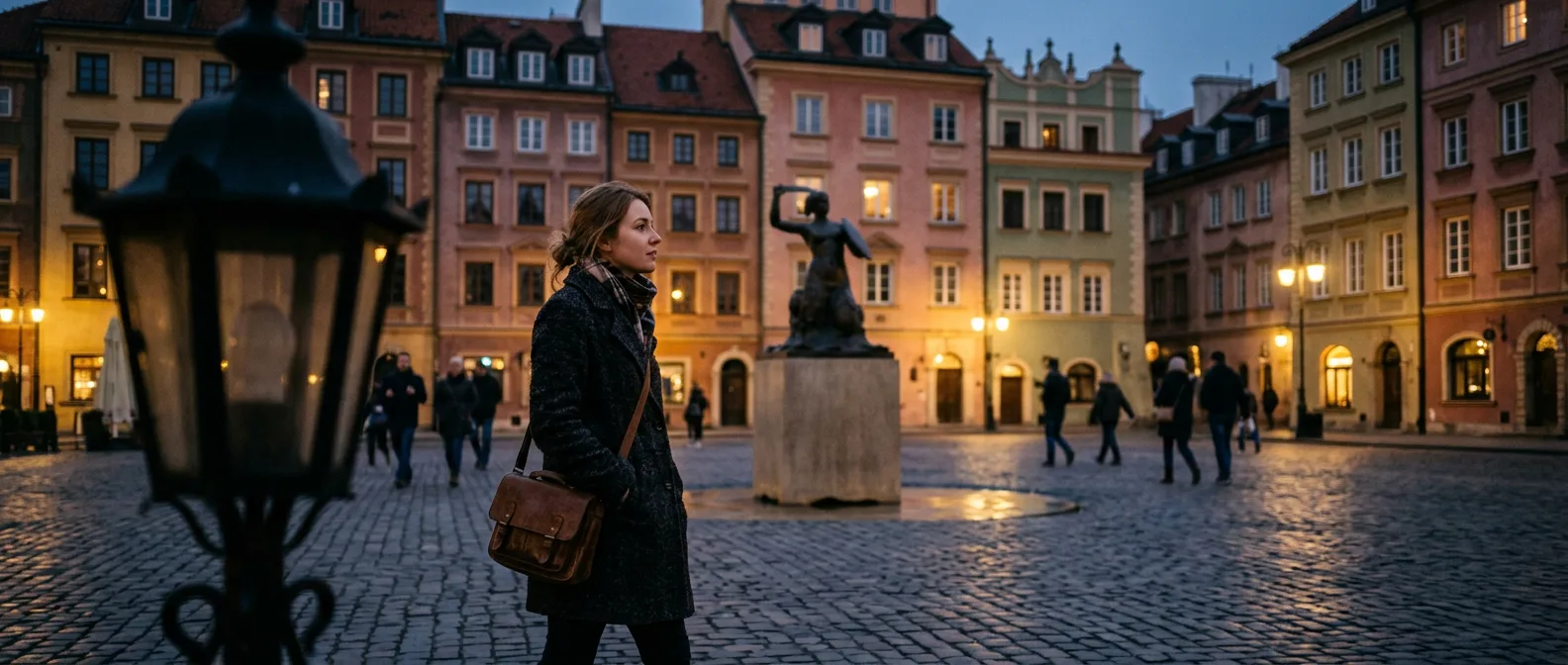
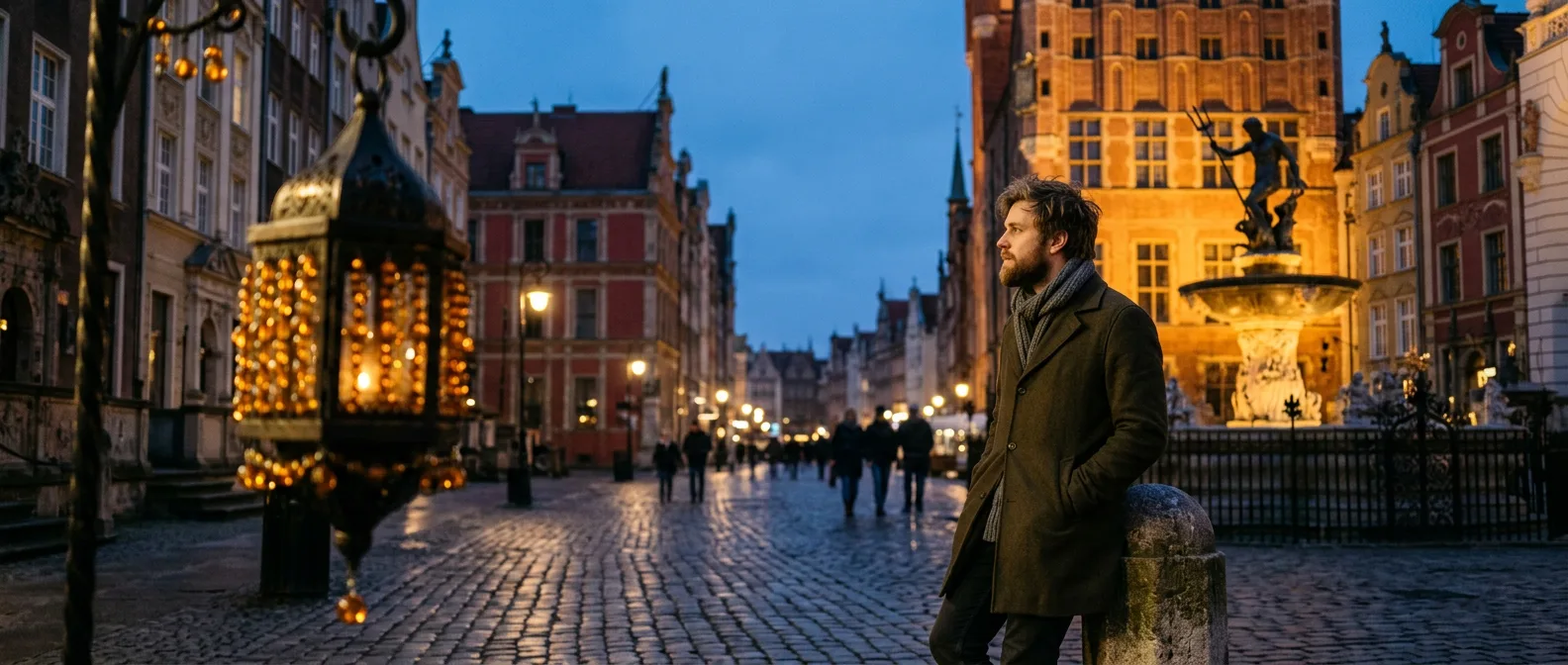
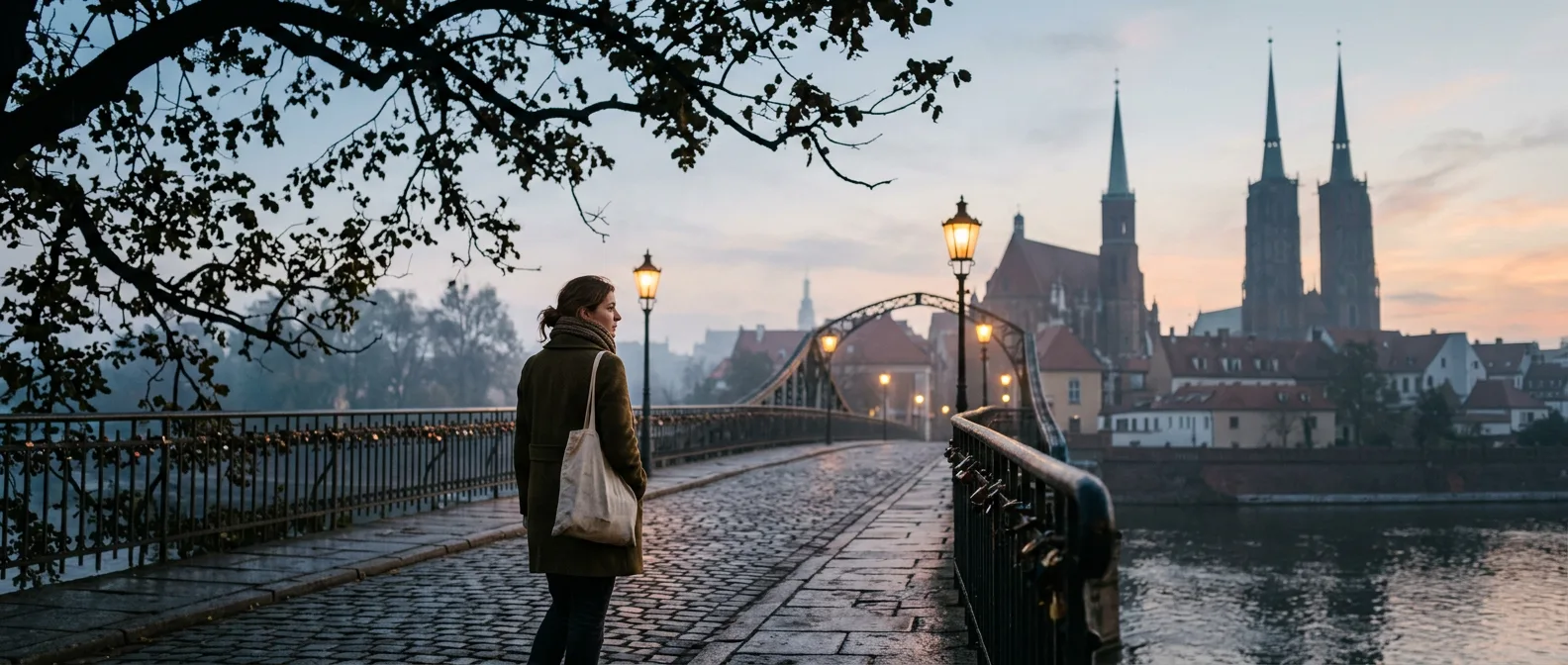
Poland in 2026 is a genuinely excellent place to live. The combination of EU membership, rapid economic development, extensive cultural infrastructure, and Central European location means teachers here enjoy a quality of life that consistently surprises those who arrive with low expectations. Kraków’s old town is one of Europe’s most beautiful urban environments. Warsaw’s nightlife and cultural scene is world-class. Wrocław’s canal district on a summer evening is genuinely exceptional.
Polish food is also substantially better than its international reputation. Pierogi (dumplings in dozens of variations), żurek (sour rye soup), bigos (hunter’s stew), Polish bread, and the country’s excellent craft beer scene provide a food culture that most teachers describe discovering with genuine pleasure. Eating at milk bars (bar mleczny — communist-era subsidised canteens now operating as cheap, excellent traditional Polish restaurants) is a specifically Polish experience that teachers reliably love.
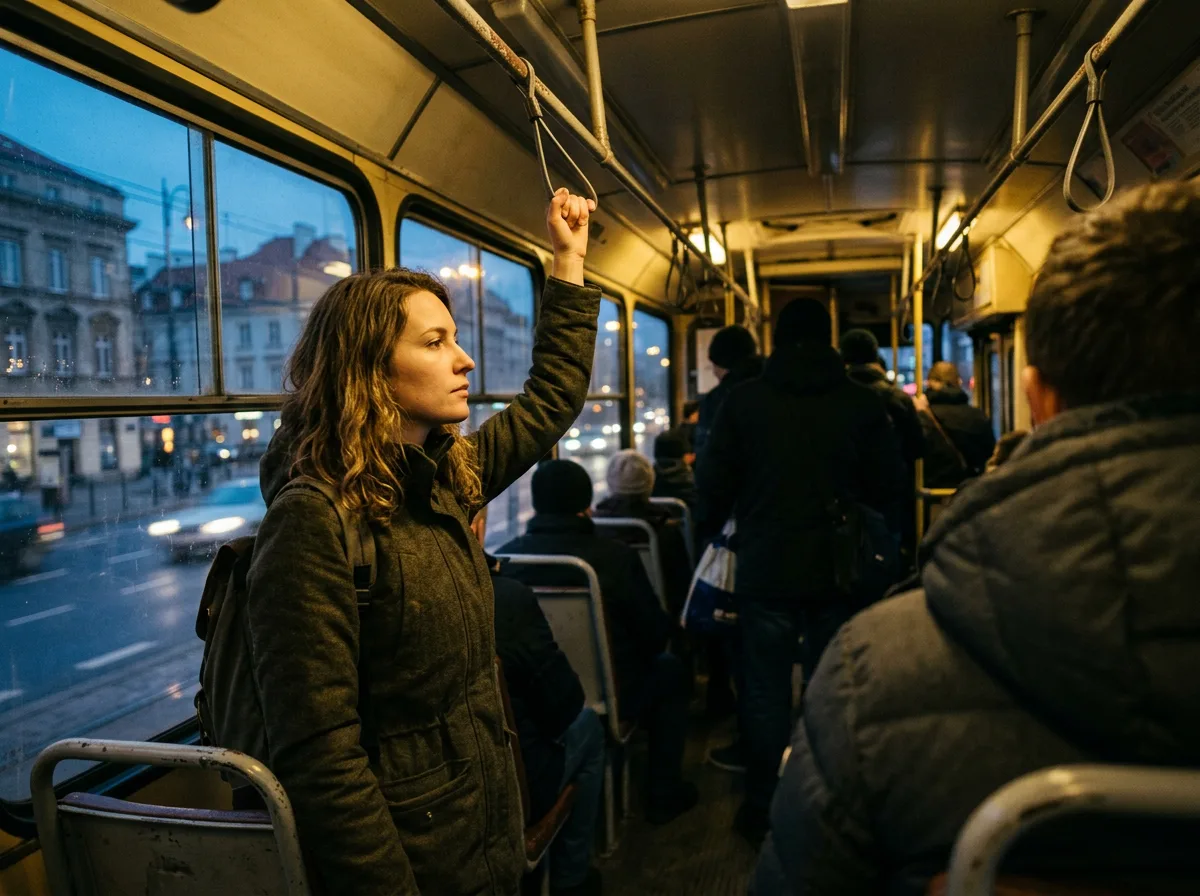
The honest challenge: Polish is one of Europe’s more difficult languages, and most teachers arrive with none. Administrative life — finding a flat, setting up banking, navigating any bureaucratic process — requires effort when you don’t speak the language. This is not insurmountable, and the expat teacher community in all major cities is well-established and genuinely helpful to new arrivals. But it’s worth preparing for.
What teaching in Poland actually feels like



Complete Poland teaching guides
FAQ: Teaching English in Poland
Can Americans teach English in Poland?
Yes — but the visa process requires planning. Americans need an employer-sponsored work permit and D-type visa before legally working in Poland. Some schools actively hire Americans; others strongly prefer EU candidates for administrative simplicity. The best approach is to secure a position with a school that has experience hiring non-EU teachers — they will guide the work permit process. Allow 6–10 weeks for the full process.
Does Poland use the Euro?
No — Poland uses the Polish Złoty (PLN). Despite being an EU member, Poland has not adopted the Euro. This is actually advantageous for teachers: the Złoty’s lower exchange rate vs the Euro means Poland’s cost of living is lower than most Eurozone countries, and Poland sits clearly below Germany, France, or the Netherlands in expense. Sending money home from PLN is straightforward through modern transfer services.
Do I need to speak Polish?
Not for English teaching positions — classes are in English. But Polish is very useful for daily life, and the effort to learn even basic Polish (A1–A2) is extremely well received by Polish students and colleagues. Polish is one of Europe’s more challenging languages for English speakers, but most teachers describe making meaningful functional progress within 3–6 months of daily immersion with deliberate study.
Is Poland a good TEFL destination for first-time teachers?
Yes — particularly for EU citizens. Language schools hire first-time teachers with 120-hour TEFL certificates, and the market is large enough that well-prepared candidates find work. EU citizenship removes the visa complexity that makes Poland more challenging for American or Canadian first-timers. Warsaw and Kraków are both excellent for first-year teachers: large enough to have well-established expat communities with practical support, small enough that building a private student base happens quickly.
Ready to teach English abroad?
Poland is one of Central Europe’s most rewarding TEFL destinations. TEFL Heaven places teachers across Southeast Asia, Europe, and Latin America — browse our full program range to find your best fit.
TEFL Heaven · Placing teachers abroad since 2007 · 3,000+ teachers placed worldwide